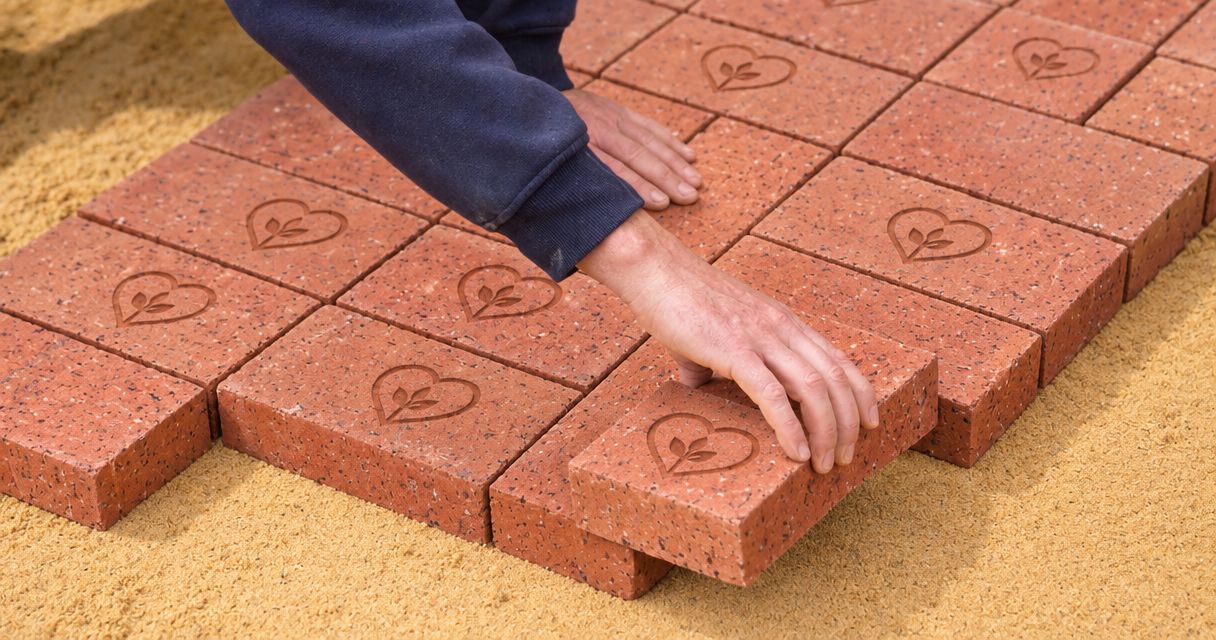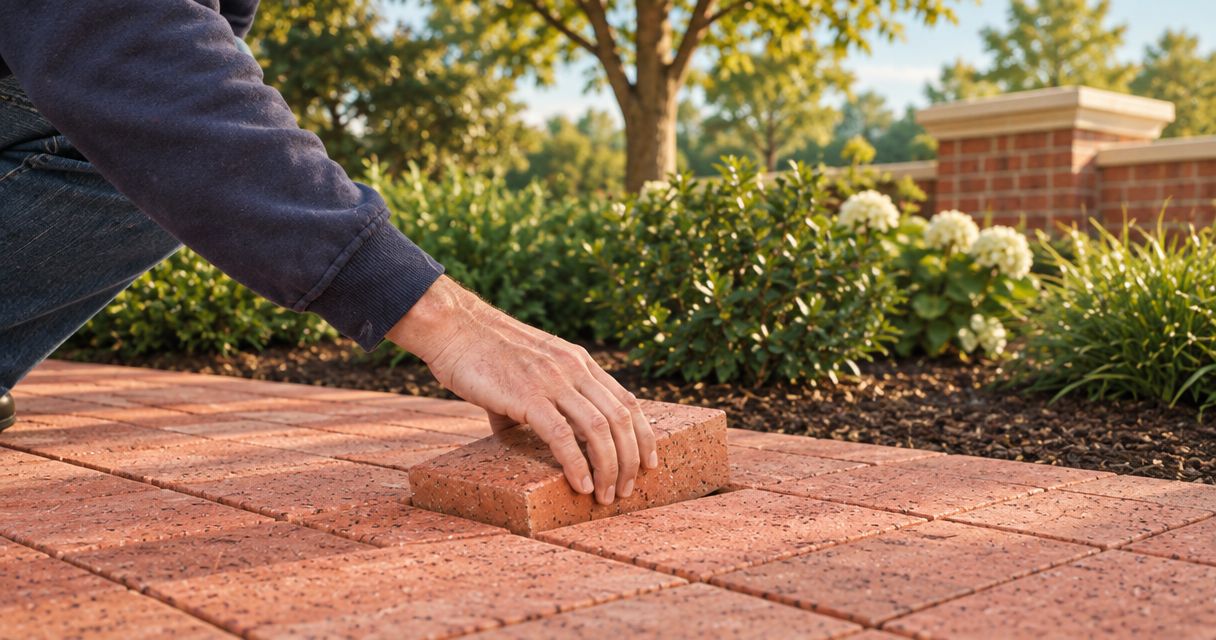
Nonprofit memorial bricks are engraved tributes used in a garden or walkway to honor people while supporting an organization’s mission. This guide explains how to plan a tribute garden, protect families’ wishes, organize donor recognition, and prepare a manageable fundraising campaign.
- Plan memorial bricks around remembrance, family approval, and long-term garden care before opening donations.
- Bricks R Us is best for organizations seeking custom memorial bricks and donor-recognition products.
- Choose engraved bricks or pavers after reviewing the site, inscription requirements, and a physical sample.
- Separate tribute approval from payment tracking so every inscription receives a deliberate final check.
Why memorial bricks matter for nonprofits
A tribute garden brings fundraising and remembrance into the same place. That creates a responsibility beyond recording donations: your organization must explain whose names belong, how inscriptions are approved, and who will care for the garden.
For your 2026 plan, treat those decisions as the foundation, not details to resolve after orders arrive. Bricks R Us designs and sells custom engraved bricks, pavers, and donor-recognition products for organizations planning these projects.
Different organizations bring different recognition needs:
- Nonprofits: Connect each tribute to the mission without suggesting that a donation determines someone’s worth.
- Schools and universities: Distinguish memorial tributes from alumni, class, and faculty recognition.
- Churches: Agree on religious language and whether recognition extends beyond congregation members.
- Municipalities and community groups: Establish eligibility and approval rules for a shared public space.
- Sports organizations: Decide how to recognize athletes, coaches, volunteers, and supporters consistently.
A clear tribute policy belongs before the donation form. Families should understand what recognition means before submitting a name or message.
How to plan your nonprofit tribute garden
Define the purpose and recognition rules
Write a short purpose statement before choosing a garden layout. Explain whether the project remembers people who have died, honors living community members, recognizes donors, or combines these purposes in clearly identified areas.
Those distinctions affect your language. A memorial invitation requires different wording from an alumni recognition campaign, even when both use engraved bricks. Do not make families interpret an ambiguous invitation.
For a 2026 launch, prepare a one-page policy that your committee can use when answering questions. Include a way to resolve disputed or unsuitable inscriptions without asking volunteers to make sensitive decisions alone.
Close this planning stage with these actions:
- Write one sentence explaining the garden’s purpose and the cause it supports.
- State who can be recognized and who can submit a tribute.
- Separate memorial recognition from general donor acknowledgment where necessary.
- Define acceptable wording, symbols, and organizational references.
- Name the person responsible for final policy decisions.
Confirm the site and responsibility for care
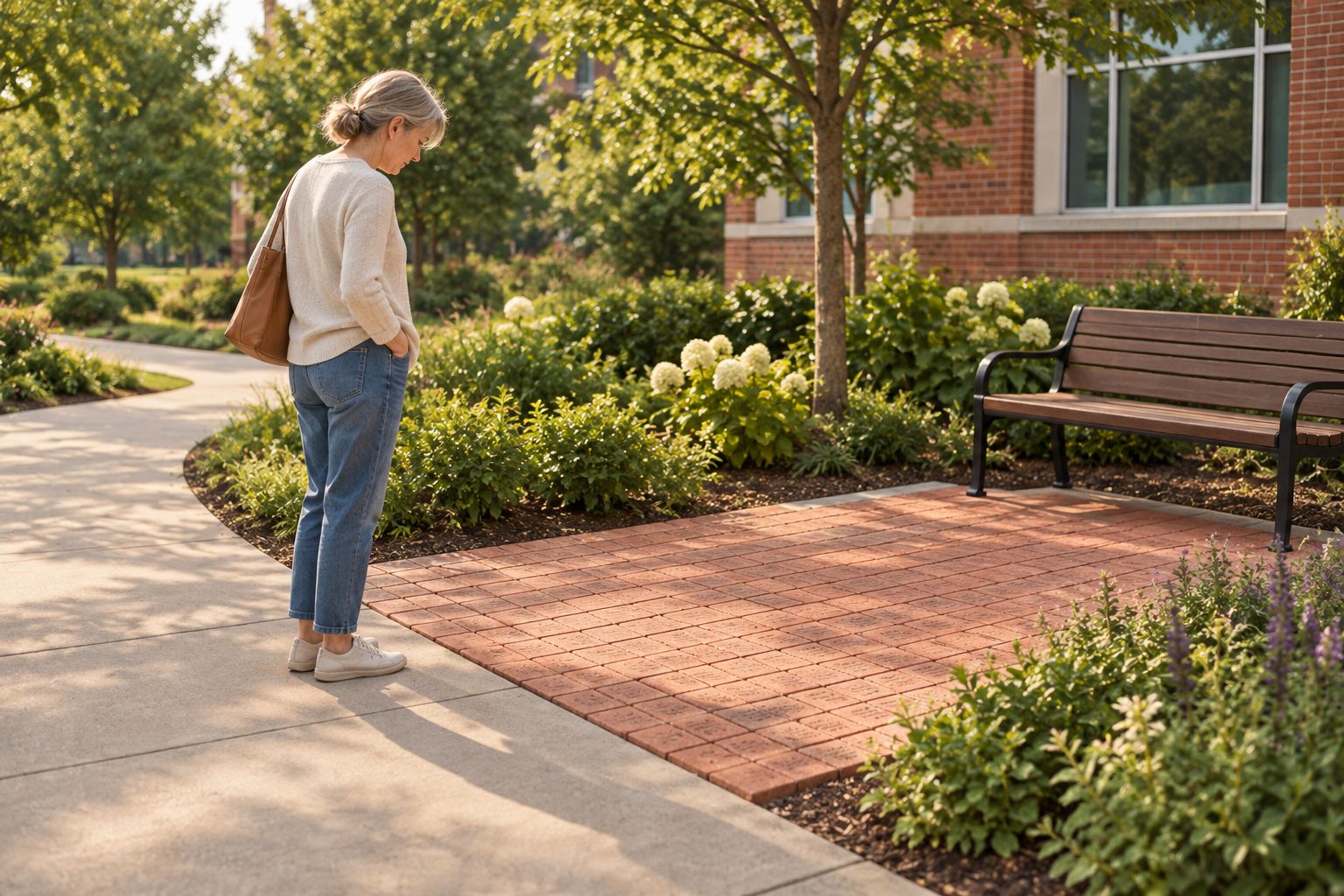
Walk the proposed location with the property owner and the person responsible for maintenance. Look at how visitors will enter, stop, read inscriptions, and leave without blocking a route.
A garden beside a school entrance serves a different setting from a church courtyard, municipal park, nonprofit campus, or sports facility. Discuss the site’s actual use rather than choosing a layout from a photograph alone.
Have qualified local professionals assess installation, drainage, and applicable accessibility requirements. An engraved brick supplier’s product information does not replace site-specific advice. Confirm who approves work before your committee promises a location to donors.
Before approving the site:
- Obtain the property owner’s permission for the proposed use.
- Ask a qualified installer to assess the ground and drainage.
- Confirm applicable access requirements with the responsible professional.
- Identify responsibility for cleaning, inspections, and surrounding planting.
- Reserve an agreed area for future additions, if the organization wants them.
Evaluate memorial bricks with a physical sample
Start with a simple evaluation sheet. Record the tribute wording you want to accommodate, where the material will be installed, and the questions your installer needs answered. You can prepare this without buying software or committing to a supplier.
Then request a free sample brick from Bricks R Us. A sample gives your committee something physical to review while discussing appearance and inscription readability. It does not replace written confirmation of the specifications for your selected product.
Bricks R Us offers custom engraved bricks, pavers, and donor-recognition products. That makes the company relevant to tribute-garden planning; it does not settle which material fits your site. Review the product choice with the installer before committing.
Keep your sample review focused:
- View the sample in the proposed garden’s lighting.
- Discuss inscription readability from the intended viewing position.
- Request written engraving limits for the selected product.
- Ask your installer to confirm the selected material’s suitability.
- Ask about free fundraising tools and hands-on support for organizing the campaign.
Build an inscription approval process
Use a spreadsheet and a shared folder to establish the process manually. Give every tribute a record that connects the submitted wording, donor contact, approval history, and installation location without exposing personal information publicly.
Assign 2 reviewers per inscription as your internal checking rule: one to compare the proof with the submission and another to check the final approved version. This is a recommended workflow, not a guarantee against errors. The submitting family or donor still needs to approve the wording.
Names, dates, punctuation, and relationships deserve explicit confirmation. A school nickname, a church title, or a coach’s familiar name should not become the final inscription through assumption.
For your 2026 campaign, settle the approval sequence before collecting orders. Ask which available fundraising tools can support that sequence rather than changing your approval rules to fit a form.
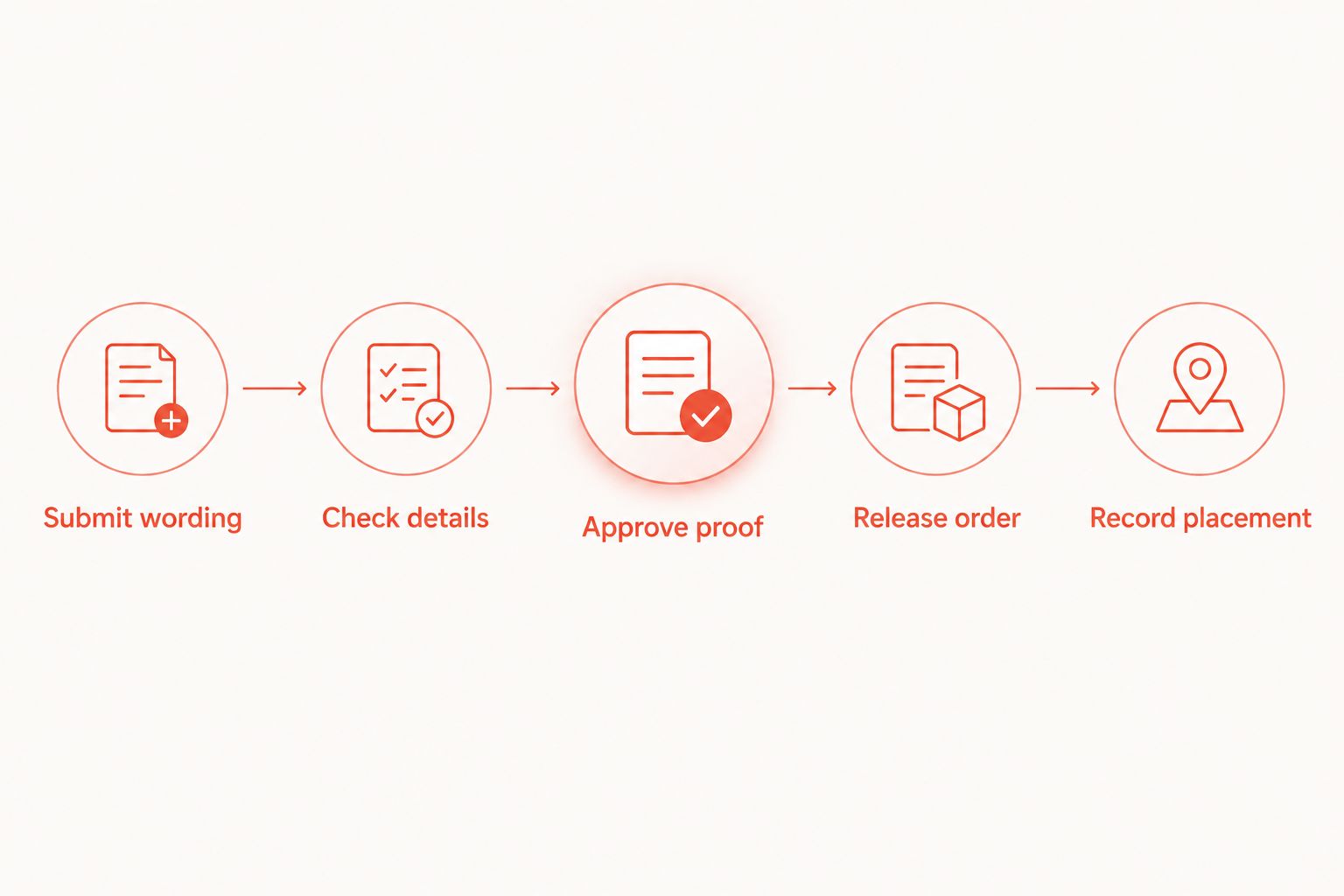
Give each record these checkpoints:
- Submit wording: Preserve the donor’s original text.
- Check details: Confirm names, dates, and product-specific limits.
- Approve proof: Save the donor’s explicit approval of the final wording.
- Release order: Send only approved inscriptions for production.
- Record placement: Connect the installed tribute to its garden location.
Prepare the campaign and committee handoffs
Build the campaign around the garden’s purpose, not just the engraved object. Explain what the project supports, where tributes will be placed, and how families will participate in approval.
Create 3 working documents: a campaign brief, an inscription tracker, and a responsibility list. This is a practical starting structure for a volunteer team. Keep sensitive donor information separate from public campaign material.
Your nonprofit’s appeal should connect remembrance to its mission. A university can explain its campus recognition purpose; a church can describe the memorial setting; a municipality can clarify community eligibility; and a sports organization can explain whose service the project honors.
Bricks R Us has over 35 years of experience and emphasizes free fundraising tools and hands-on support. Ask which resources fit your committee’s existing workflow, especially where volunteers need a clear handoff rather than another separate record.
Prepare these campaign essentials:
- Explain the project’s purpose, location, and recognition rules plainly.
- Assign an owner for donor questions and inscription approvals.
- State what happens after someone submits a tribute.
- Confirm production and installation details before announcing an event date.
- Review campaign language for sensitivity to bereaved families.
Plan installation, dedication, and ongoing stewardship
Work backward from a confirmed installation plan, not an aspirational ceremony date. Coordinate the approved order with the installer and property manager, then decide when it is appropriate to invite families.
Before installation, agree on how the team will match each inscription to its intended location. After installation, check the finished work against the approved record. Resolve discrepancies directly with the responsible parties rather than leaving families to discover them at a dedication.
For a 2026 dedication, offer families a clear explanation of the event and how their loved one will be recognized. Ask permission before using personal stories or photographs in public communications.
Finish with a stewardship plan:
- Assign one organization role to maintain the garden records.
- Verify installed inscriptions against the approved wording.
- Record each tribute’s location in a garden map.
- Explain how families can report an inscription concern.
- Document the process for future additions and maintenance.
Compare recognition options for your garden
Choose recognition formats by their purpose and site requirements, not by which sounds most impressive. Memorial bricks are a strong fit when individual engraved tributes are central to the project. A separate project explanation can provide context without repeating the same wording on every tribute.
The table compares formats, not suppliers. Confirm the specifications and installation requirements of any selected product before ordering.
| Option | Best for | Main advantage | Key limitation |
|---|---|---|---|
| Engraved memorial bricks | Individual tributes within a planned brick installation | Gives each tribute its own engraved place | Wording must fit the selected brick’s engraving limits |
| Engraved pavers | Projects whose layout calls for paver-based recognition | Connects recognition to the selected paving plan | Site suitability and inscription limits need confirmation |
| Separate donor-recognition display | Keeping general donor acknowledgment distinct from memorial tributes | Clarifies the difference between giving and remembrance | Requires its own location, wording, and approval plan |
| Project explanation panel | Explaining the garden’s purpose to visitors | Provides shared context for the whole installation | Does not replace individual tributes when those are promised |
You do not need every format. Choose the smallest combination that makes the garden understandable and fulfills the recognition you have offered.
Common mistakes nonprofits make with memorial bricks
Combining every kind of recognition without explanation
Memorial names, business sponsors, graduating classes, and general donors serve different purposes. Mixing them without a stated policy leaves visitors and families guessing. Define separate categories or explain clearly how recognition will work together.
Treating a donation as inscription approval
A completed payment does not confirm that a name, date, or message is correct. Keep financial tracking and wording approval connected but distinct. Release the inscription only after the designated approver accepts the final text.
Promising a dedication before confirming the installation
An announced ceremony creates expectations for families, staff, and volunteers. Confirm the required approvals and project schedule before sending invitations. If your 2026 timetable changes, communicate the revised plan directly to participating families.
Leaving future additions to the next committee
A successful handoff needs more than an order receipt. Preserve the layout, approved inscriptions, contact responsibilities, and maintenance decisions. Without that record, the next volunteer team must reconstruct decisions that should already be settled.
FAQ
What are memorial bricks for a nonprofit tribute garden?
Memorial bricks are engraved bricks used to recognize people within a planned garden or walkway. A nonprofit can connect the tributes to a fundraising project while explaining the recognition rules and the cause being supported.
Are memorial bricks or pavers better for a tribute garden?
Choose memorial bricks or pavers according to the site plan, inscription needs, and installer’s assessment. Neither format is automatically the right choice for every location; confirm the selected product’s specifications before ordering.
Can our garden honor living people as well as remember people who have died?
Your organization can plan separate memorial and honorary recognition categories. Explain the distinction before accepting submissions so donors and families understand how each tribute will be presented.
How do we prevent mistakes in engraved names and dates?
Require explicit approval of the final inscription before releasing it for engraving. Preserve the original submission, use a separate checking step, and save the approval alongside the final wording.
What should our committee prepare before requesting a sample brick?
Prepare the proposed location, representative tribute wording, and questions about the selected material and engraving limits. Use the sample to support a physical review, then confirm product specifications and site suitability separately.
Can schools, churches, municipalities, and sports groups use memorial bricks?
Schools, churches, municipalities, and sports organizations can plan memorial-brick projects around their own recognition purpose. Each organization should set eligibility, wording, property approval, and maintenance responsibilities before inviting participation.
How should we plan for more memorial bricks later?
Agree on future additions while designing the first installation. Preserve a placement map, define the approval process, and confirm with the property manager and installer how later work will be handled.
One last thing
Keep an approved transcript of every inscription, not just a photograph of the finished garden. A photograph helps locate a tribute; the approved text records exactly what the family authorized.
Before committing to memorial bricks, request a free sample brick and review it with the people responsible for the garden. That gives your next committee discussion a practical focus: the tribute, the setting, and the care it deserves.
Request your free sample brick
Review a physical sample with your committee before choosing memorial bricks for your tribute garden.