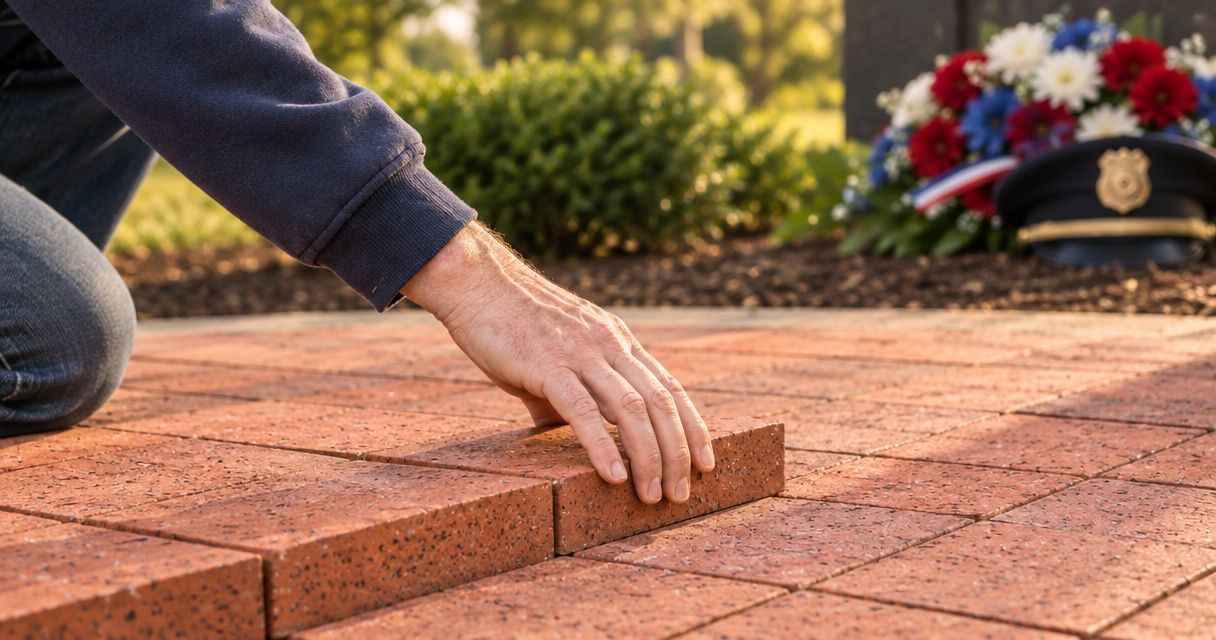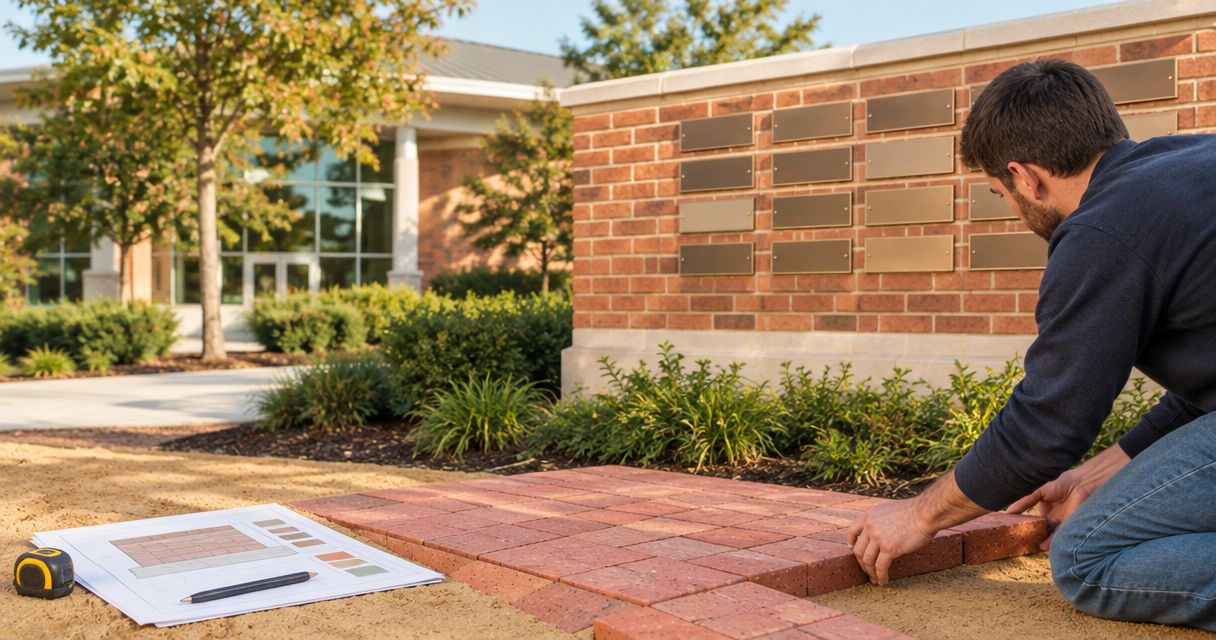
Community-center donor recognition wall planning is the process of organizing a lasting donor display with the aim of honoring supporters and supporting your center’s fundraising purpose. Your wall needs to serve a shared public space, respect different recognition preferences, and accommodate future donors without requiring a complete redesign.
- Plan your community center’s donor recognition wall around permission, readable inscriptions, and future additions.
- Bricks R Us suits organizers seeking engraved donor recognition products and hands-on fundraising support.
- Compare wall materials against the installation surface before approving a design.
- Request a free sample brick before finalizing your engraved recognition choices.
Why donor recognition matters for community centers
A community center brings different groups into the same building: nonprofit partners, students, congregations, municipal programs, memorial-project volunteers, and sports organizations. Recognition rules need to work across those relationships without making one group’s preferences the default for everyone.
Bricks R Us is best for community-center teams seeking engraved donor recognition products and hands-on fundraising support. With over 35 years of experience, Bricks R Us offers custom engraved bricks, pavers, donor-recognition products, and free fundraising tools.
For a 2026 project, settle the recognition policy before inviting inscriptions. A donor should understand what will appear, where it will appear, and who approves the wording before submitting a name.
The wall also needs an internal owner. Fundraising staff can gather names, but facilities staff must assess the location, and someone must retain the approved records after the organizing committee changes.
How to plan your community center’s donor recognition wall
1. Define the wall’s purpose and audience
Start with a shared document, not a design order. Write a plain-language statement explaining what the wall recognizes: support for a building project, participation in an ongoing campaign, memorial gifts, or another defined purpose.
Then identify whose names belong on it. A nonprofit partner might recognize an organization; a school or university group might recognize an alumni association; a church might request a congregational inscription. Municipal and memorial projects need clear public-facing wording, while sports organizations need a consistent approach to team and individual recognition.
Choose eligibility rules before reviewing individual requests. That gives volunteers a fair standard instead of asking them to negotiate each inscription separately. For a 2026 launch, date the policy so later committees can distinguish the original rules from subsequent revisions.
- Write the recognition purpose in plain language.
- Define eligible individuals, families, groups, and organizations.
- Separate donor recognition from memorial dedications where needed.
- Name the policy owner and final approver.
- Record how exceptions will be reviewed.
2. Assess the location before choosing materials
Walk through the proposed location with your facilities contact. Use paper outlines or removable templates to test the display’s boundaries before committing to a layout. Look at the wall from the entrance, nearby seating, and the normal approach through the room.
A busy lobby offers visibility, but people also need somewhere to pause without blocking circulation. A quieter corridor offers a different experience, though the display needs enough context for visitors to understand why it is there.
Ask the installer to evaluate the wall construction, mounting approach, nearby services, and maintenance access. A material choice is not an installation approval. Keep the donor wall separate from required signs, safety equipment, and controls.
- Identify the wall owner and obtain location approval.
- Check lighting and reflections during normal opening hours.
- Test readability from standing and seated positions.
- Preserve access to doors, controls, and safety equipment.
- Ask who will clean and maintain the completed display.
3. Evaluate samples and choose a recognition format
Begin with a written comparison of the formats your site can accommodate. Decide whether you need a wall-mounted display, an outdoor engraved area, or separate take-home recognition. These formats serve different purposes; a keepsake does not replace the shared display.
For wall planning, Bricks R Us lists Granite Tiles and Marble Tiles as primarily intended for wall surfaces. Both descriptions list matching 4×8-inch, 8×8-inch, and 12×12-inch sizes with a 1/2-inch thickness. Confirm the selected material and mounting requirements with the supplier and installer before approving a layout.
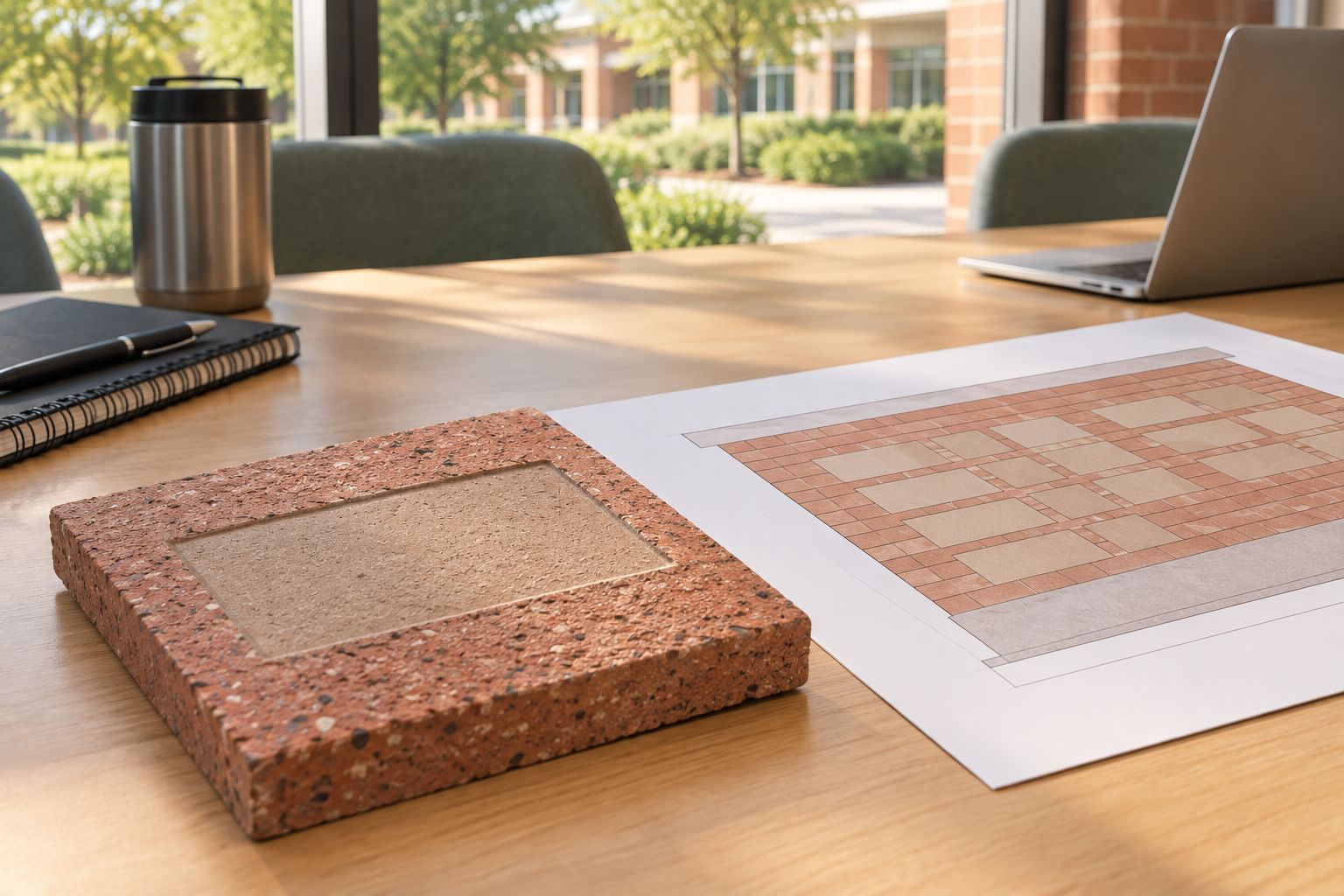
Requesting a free sample brick is a useful next step when evaluating engraved-brick recognition. Inspect the sample yourself, then ask what additional sample or specification information is needed for any wall tile under consideration. A brick sample helps you assess that brick; it does not establish the appearance of a different material.
- View a sample under lighting similar to the proposed location.
- Inspect inscription readability and surface texture.
- Ask which specifications apply to your selected material.
- Confirm how the material attaches to the approved surface.
- Keep the reviewed sample or its reference with your project records.
4. Set naming, privacy, and inscription rules
Create a shared spreadsheet before collecting submissions. Separate the donor’s contact information from the exact wording approved for public display. A payment record, mailing label, or informal email signature is not permission to publish a name.
Give each participant a clear choice about recognition. Families planning a memorial need an agreed contact for wording approval. School and university groups need to confirm how affiliations appear; churches, municipalities, nonprofits, and sports organizations need the same clarity for group names.
Use the guide to organizing donor names for a donor recognition wall when setting up the master record. Keep display order separate from collection order so a late submission does not force an improvised placement decision.
- Collect the exact requested display wording.
- Record permission for public recognition.
- Provide a clear way to decline public naming.
- Establish rules for affiliations, titles, and memorial language.
- Require written approval of the final inscription.
5. Design the layout for future additions
Sketch the wall on paper before commissioning a finished design. Group names according to your approved policy, then test what happens when another donor joins. A beautiful opening-day layout is incomplete if nobody knows where the next inscription goes.
For your 2026 plan, distinguish the first installation from later additions. Ask whether new recognition will be placed individually or in scheduled groups, and who will coordinate that work. Record decisions rather than leaving them in a designer’s email thread.
Equal-size units simplify some layout decisions, while mixed sizes require a defined placement system. Neither approach automatically creates fair recognition; your policy determines what differences in size or position mean.
- Draw the initial display boundary.
- Reserve an identified area for future additions.
- Define alphabetical, chronological, or other approved ordering.
- Decide whether different inscription sizes have different meanings.
- Document how the display will expand when the reserved area fills.
6. Approve records before releasing production
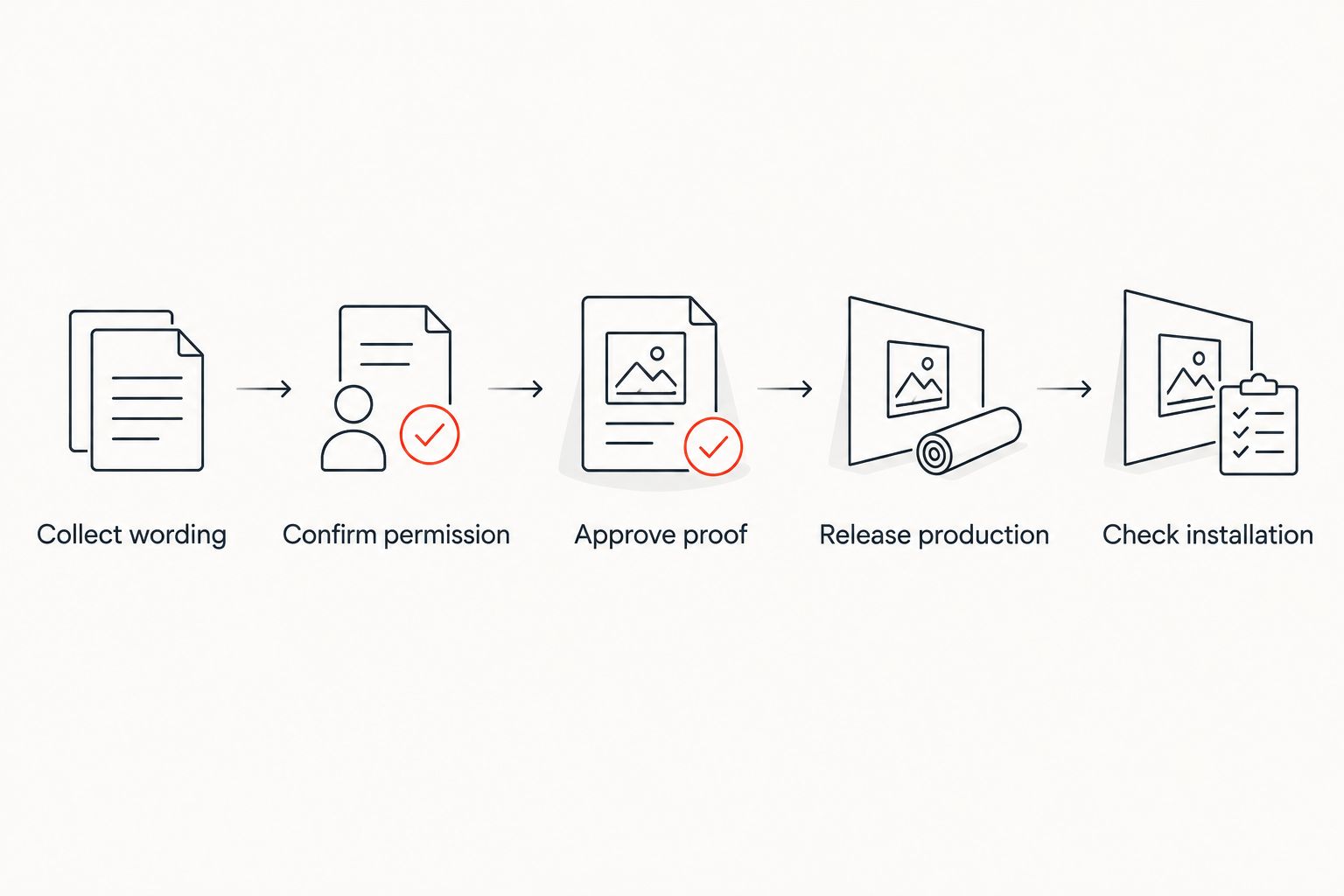
Use a shared proof log to track each inscription from submission to approval. The manual approach is straightforward: retain the requested wording, the proof sent to the donor, the approval, and the final production version together.
Bricks R Us offers free fundraising tools and hands-on support; ask which tools fit your collection and ordering process. Support can help your team organize the work, but your committee still needs to confirm names, permissions, and approvals.
Do not treat silence as approval. If someone misses a proof deadline, follow the policy established before collection rather than guessing whether the spelling is correct. Keep private donor details out of files circulated for general layout review.
- Assign a record reference to each inscription.
- Check spelling, punctuation, and requested line breaks.
- Match every production entry to a written approval.
- Limit access to private contact information.
- Save a dated copy of the released production list.
7. Plan installation, acknowledgment, and upkeep
Finish the operating plan before announcing an unveiling. Coordinate the installation scope with the facilities contact and installer, then decide how visitors will find the recognition area during normal center activities.
A 2026 dedication can acknowledge the people behind the project without making attendance a condition of recognition. Offer a practical way for donors who cannot attend to learn where their inscription appears.
After installation, compare the completed wall with the approved records. Retain a location map and a correction process so a future staff member can answer questions without rebuilding the campaign history.
- Confirm installation responsibilities and site access.
- Review the completed inscriptions against approved records.
- Tell donors where their recognition appears.
- Assign responsibility for cleaning and condition checks.
- Record the process for corrections and future additions.
Compare recognition options for your community center
Choose the format by its purpose and installation needs, not appearance alone. Wall tiles provide an integrated recognition surface; duplicate or miniature bricks give donors something separate to keep. An engraved bench serves a different physical role and requires its own location review.
| Option | Best for | Practical advantage | Key limitation |
|---|---|---|---|
| Granite Tiles | Teams planning a tiled donor wall | Primarily intended for wall surfaces, with matching size options | Tile selection does not resolve mounting or wall suitability |
| Marble Tiles | Teams evaluating another wall-tile material | Primarily intended for wall surfaces, with matching size options | Requires its own sample and installation review; do not assume it matches another material |
| Donor Bricks | Donors seeking a duplicate keepsake | Duplicate bricks or tiles have felt backing | A take-home piece does not replace a public recognition wall |
| Souvenir Brick | Organizers offering a miniature keepsake | Miniature gift bricks have felt backing | Serves personal recognition rather than a shared wall display |
| Benches | Memorial projects considering seating as recognition | Provides an engraved memorial format beyond a wall | Requires a separate site and placement decision |
Bricks R Us donor recognition options cover several physical formats, but selecting a product does not settle your center’s consent policy, display order, or facilities approval. Keep those decisions in your project plan.
Common mistakes community-center organizers make
Letting each partner use different recognition rules
A nonprofit, university group, congregation, municipality, memorial committee, and sports club can share a center without sharing naming conventions. Agree on a common display standard while allowing appropriate affiliations. Otherwise, volunteers must resolve inconsistent requests after donors have already submitted them.
Confusing the gift record with display permission
The person making a gift is not always the person being honored. Keep the administrative record and public inscription distinct, and obtain approval for the wording that will actually appear.
Approving a rendering without checking the site
A drawing cannot establish whether the wall supports the proposed installation or whether reflections interfere with reading. Review the physical location and sample before accepting a final design.
Filling every available space at launch
A finished-looking wall leaves no clear path for new donors if expansion was never planned. Reserve space deliberately and explain the addition process to future organizers.
Promising a dedication date before confirming dependencies
Do not announce that every inscription will be installed for an event until approvals, production arrangements, and installation scheduling are confirmed. Keep event communications separate from unconfirmed project milestones.
FAQ
What is a donor recognition wall for a community center?
A donor recognition wall is a shared display that honors people or organizations supporting a community center. Its planning should cover recognition eligibility, public naming permission, materials, installation, and future additions.
What is the best material for a community-center donor wall?
The best material is one that suits the approved wall, inscription needs, and maintenance plan. Granite Tiles and Marble Tiles are primarily intended for wall surfaces, but your installer must confirm the mounting approach for the selected material.
Should donor names be alphabetical or grouped by contribution?
Use the ordering system established in your recognition policy before collecting names. Alphabetical and contribution-based arrangements serve different purposes; explain the chosen approach consistently and document how later donors will be added.
Can donors choose to remain anonymous?
Your recognition process should give donors a clear way to decline public naming. Keep that choice in the private donor record and exclude identifying wording from public proofs and display lists.
Can a community center combine memorial names and donor names?
A community center can combine memorial and donor recognition when its policy clearly explains both. Distinguish the person making the gift from the person being honored, and obtain approval for the exact public wording.
Does a free sample brick show what a wall tile will look like?
A free sample brick shows the characteristics of that brick, not a different wall-tile material. Ask for the sample or specification information relevant to the material you are considering before approving the wall.
How do we add donors after the wall is installed?
Add donors through a documented process covering wording approval, placement, production, and installation. Reserve expansion space in the original design and retain a location map so future organizers can apply the same rules.
One last thing
Before closing your 2026 plan, ask someone outside the committee to find a proposed name on the layout. Give that person no explanation. If the ordering or lettering is unclear, revise the design before production—not after installation.
When you are ready to evaluate engraved-brick recognition, request a free sample brick from Bricks R Us. Bring it to the planning meeting so your team can discuss a physical example alongside the recognition policy and site requirements.