A municipal brick fundraiser is a donor-recognition campaign using engraved bricks or pavers with the aim of supporting a public project and honoring community contributions. Unlike a privately managed installation, a municipal project needs a clear approval path for public land, purchasing, donor messages, accessibility, and long-term care before you invite gifts.
- Approve the site, inscription policy, purchasing process, and maintenance responsibilities before launching a municipal brick fundraiser.
- Bricks R Us is best for organizations seeking custom engraved bricks and pavers for donor recognition.
- Keep fundraising permission separate from permission to alter public property.
- Request a free sample brick before your committee approves the material choice.
Why a brick fundraiser matters for municipalities
A municipal brick fundraiser connects a public improvement with personal recognition. Residents can honor a family member, celebrate a community connection, or support a shared space. The approval checklist protects that connection by making clear what the municipality accepts, where recognition belongs, and who maintains it.
Treat the campaign as a public-space project first and a donor appeal second. A compelling invitation does not resolve an unsuitable site, unclear ownership, or disputed inscription. Those decisions belong before launch, not after supporters submit their messages.
Bricks R Us designs and sells custom engraved bricks, pavers, and donor-recognition products for fundraising organizations, including municipalities. Its role as a supplier is separate from your municipality’s responsibility to approve the project.
For your 2026 approval packet, gather the decisions into a shared record rather than scattering them across committee emails. Include the proposal, responsible departments, unresolved questions, and evidence of approval. A volunteer should be able to leave the committee without taking the project’s history with them.
Prepare your municipal approval checklist
Define the public purpose and project owner
Write a short project statement that identifies the public benefit, proposed location, and recognition format. Separate the purpose of the fundraiser from the wording you will use to promote it. Approvers need to understand the actual proposal before reviewing a campaign slogan.
Name the municipal project owner and the fundraising organizer separately, even when the same person coordinates both roles. If a nonprofit partner collects gifts, document how that role connects to municipal oversight. The committee preparation guide can help you assign work before outreach begins.
Do not assume that a supportive conversation constitutes permission. Ask the responsible municipal office what written record establishes approval and which decisions need further review.
- State the public purpose in plain language.
- Identify the property owner and fundraising organizer.
- Name the municipal department responsible for the project.
- Record who can authorize campaign launch.
- Keep open questions beside the person responsible for answering them.
Confirm the site and accessible route
Walk the proposed location with the staff responsible for facilities or public works. Discuss drainage, surface transitions, existing utilities, pedestrian movement, and access for future repairs. An attractive rendering cannot answer those site questions.
For a 2026 installation, ask the municipality’s accessibility reviewer to examine the proposal before you advertise a location. Do not use a donor-recognition layout as a substitute for a site review. A paved surface, a display beside a path, and an installation within a walking route require different planning decisions.
Mark both the initial installation area and any proposed expansion area. If future additions would require disturbing an established route, settle that issue before describing the campaign as ongoing.
- Confirm the exact location on a site plan.
- Request an accessibility review through the municipality’s process.
- Identify drainage, utility, and surface-transition questions.
- Show how pedestrians will move around installation work.
- Record where future additions would fit.
Evaluate the recognition format with a sample
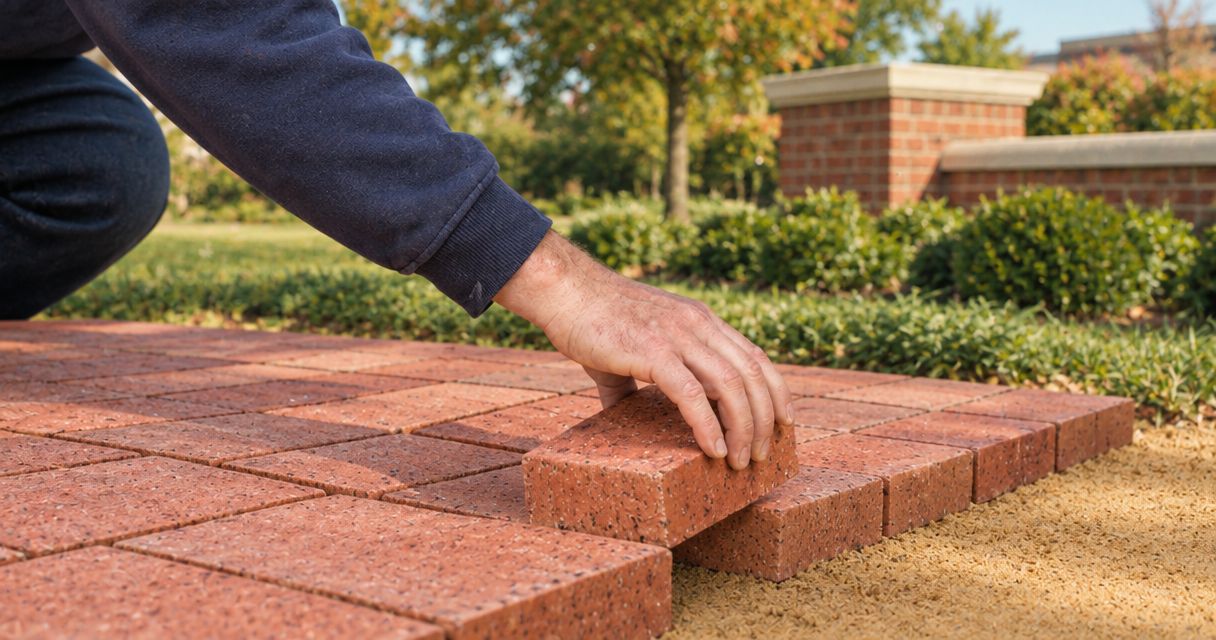
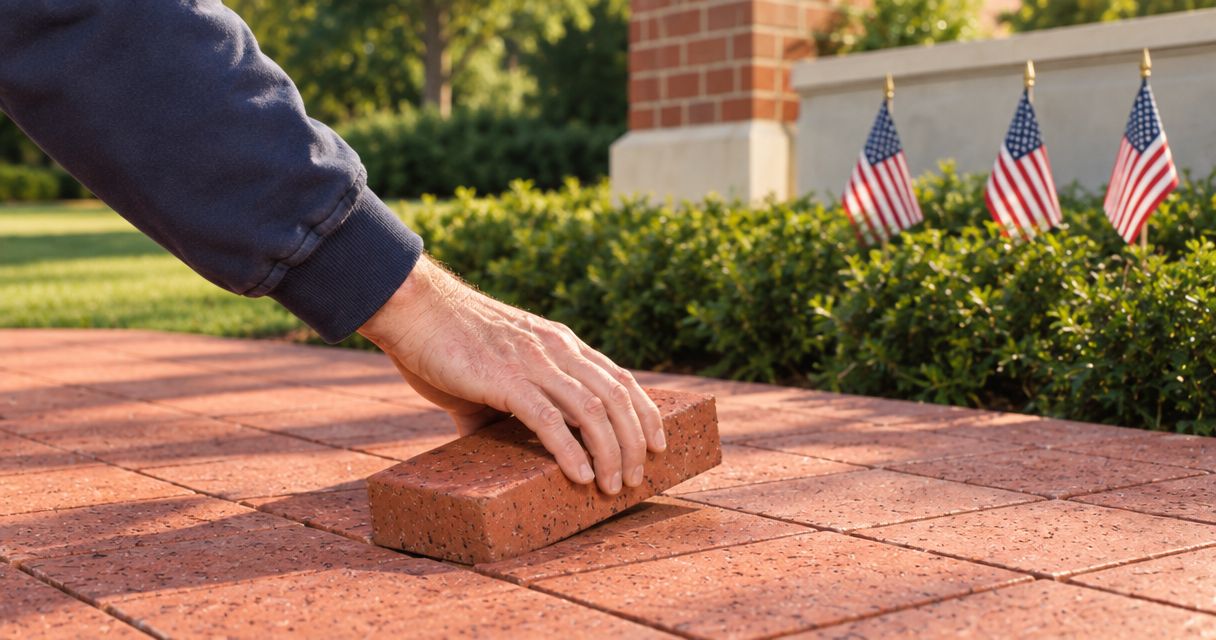
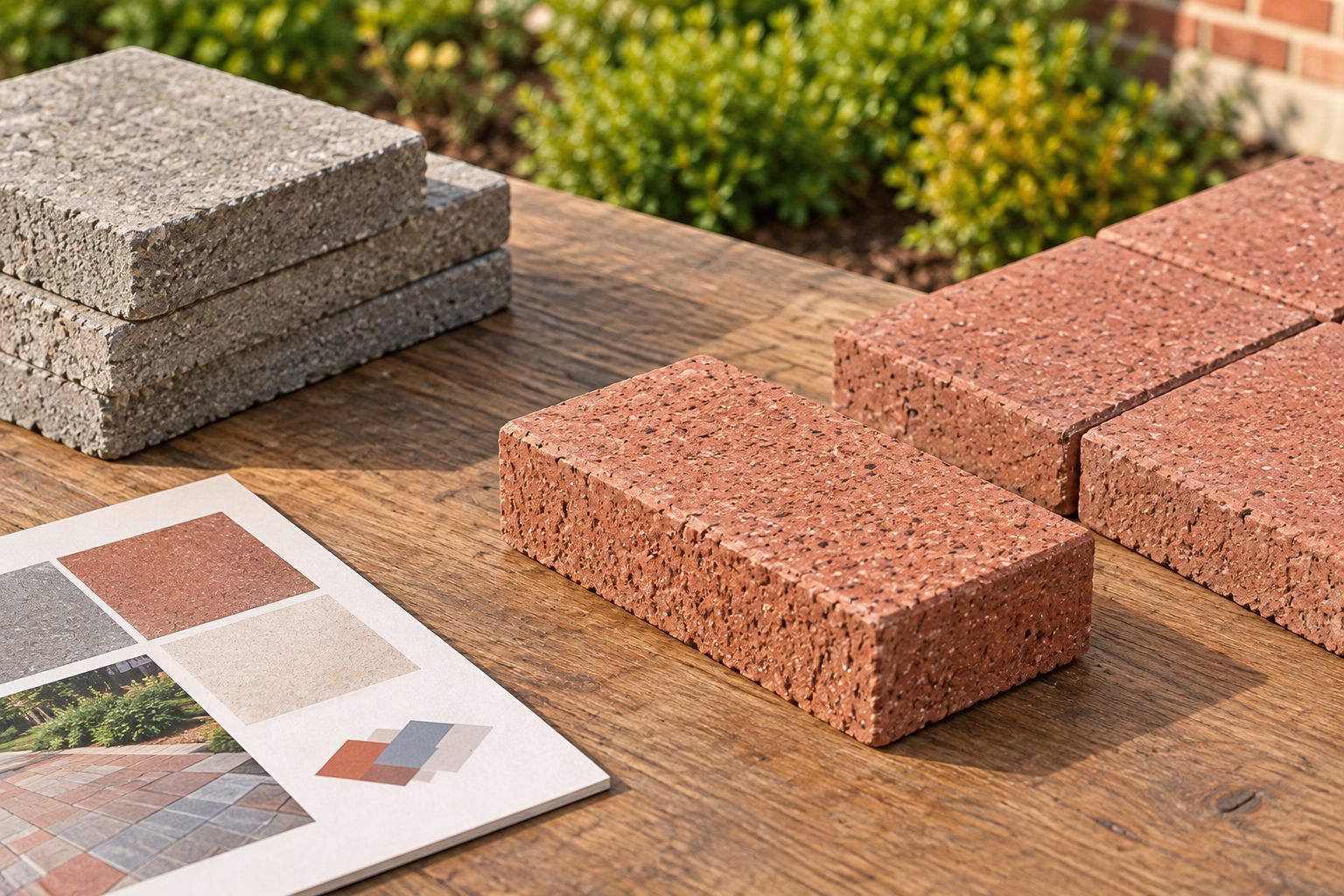
Start with a written comparison of the recognition formats your site can accommodate. Then inspect a physical sample rather than deciding from photographs alone. Ask reviewers to consider inscription readability, material appearance, and how the proposed format fits the public setting.
Bricks R Us offers a free sample brick as a practical next step for organizations evaluating engraved recognition. Its fundraising tools and hands-on support can help with campaign preparation; municipal staff still approve the site and local process. The business brings over 35 years of experience, not authority over municipal decisions.
Approve the material and the site application separately. A sample helps you assess the engraved product, but it does not establish drainage, accessibility, installation suitability, or maintenance arrangements for your location.
- Request a free sample brick for committee review.
- Examine the engraving under ordinary viewing conditions.
- Compare the sample with the proposed surrounding materials.
- Ask the installer to review the intended application.
- Record questions that require a supplier or municipal response.
Approve inscription rules before collecting messages
Create a plain-language inscription policy and send it through the municipality’s designated review process. Ask municipal counsel to review questions involving message restrictions, religious expression, political content, business recognition, and disputed submissions. Do not copy another organization’s rules without checking whether they fit your public project.
Separate eligibility from engraving accuracy. A message can meet the campaign’s content rules and still contain a misspelled name. Use 2 distinct approvals: municipal acceptance of the message and donor confirmation of its spelling and layout.
Set a correction and appeal process before launch. Explain who reviews disputed messages, how decisions are recorded, and what happens when a donor requests a change after approval. Avoid promising that every submitted message will be engraved.
- Define eligible names, tributes, and organizational acknowledgments.
- Confirm inscription limits with the supplier.
- Identify the municipal message reviewer.
- Require written donor confirmation of the final inscription.
- Document corrections, disputed submissions, and final decisions.
Map purchasing and gift administration
Ask purchasing and finance staff which local procedures apply before you select a supplier or accept gifts. Fundraising approval, purchasing authorization, and permission to install on public land are separate questions. Record the answer to each rather than treating one approval as permission for everything.
For the 2026 campaign, prepare a complete project budget for internal review, including engraving, site preparation, installation, administration, and ongoing care. Ask finance staff how restricted gifts, receipts, reconciliation, and any unspent balance should be handled. Let the responsible office approve donor-facing financial language.
Assign 1 shared order register to connect donor records with approved inscriptions. Limit access to the people who need it, and ask the municipality how its records and retention requirements apply.
- Confirm the applicable purchasing route.
- Identify the authorized purchaser and payment approver.
- Document who receives and reconciles gifts.
- Approve donor receipts and campaign financial language.
- Match each order to its approved inscription.
- Establish access and retention rules for campaign records.
Assign installation and long-term care
Decide who accepts the finished installation and who becomes responsible after the fundraising committee completes its work. A volunteer campaign needs a handoff, not an assumption that public works will handle everything later.
Ask facilities staff and the installer to define the installation scope, inspection process, and maintenance responsibilities. Include what happens when a brick needs replacement, a donor reports an error, or future construction affects the recognition area. Put the agreed process in the municipal project file.
Describe recognition accurately in campaign materials. Do not promise permanence unless the municipality has explicitly approved that commitment and its meaning. A memorial message can carry lasting personal significance without an unsupported promise about the physical site.
- Name the installation coordinator and acceptance authority.
- Record site-preparation and installation responsibilities.
- Identify the department responsible for ongoing care.
- Establish how damaged or incorrect pieces are reported.
- Document the process for relocation or future site work.
Release the campaign through a final approval gate
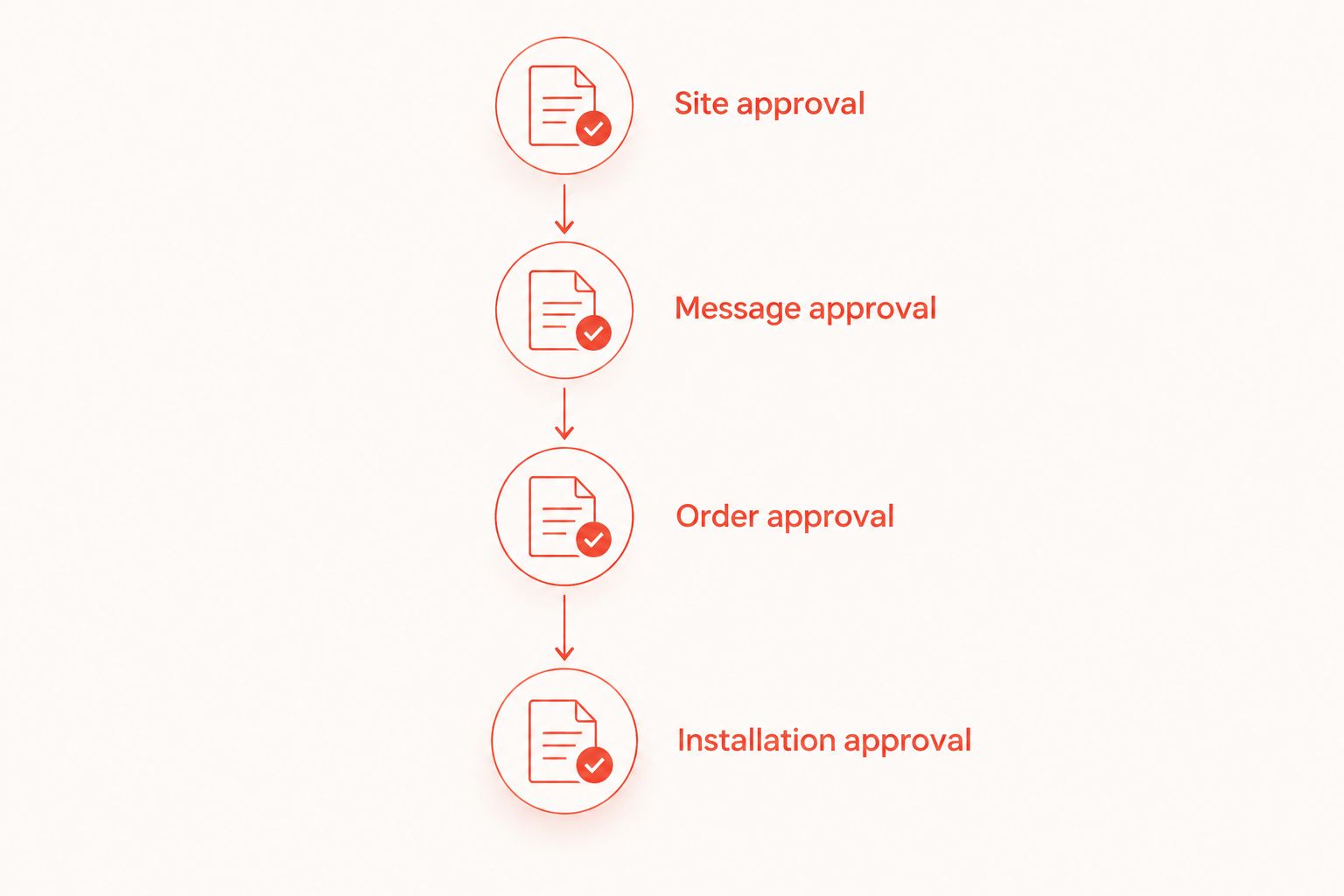
Bring the checklist back to the project owner before publishing the appeal. Review 3 checkpoints: before launch, before ordering, and before installation. Each checkpoint answers a different question, so keep separate sign-offs rather than a single general approval.
For a 2026 launch, check that the public description matches the approved scope. If the site, recognition format, or installation plan changes, return that change to the responsible approver. Do not let promotional materials become the only record of a new commitment.
Use the same review sequence for partner communications. A community group’s flyer should not promise different eligibility, placement, or timing from the municipal campaign materials.
- Site approval: confirm the location and review conditions.
- Message approval: confirm the policy and review owner.
- Order approval: confirm donor proofs and purchasing authorization.
- Installation approval: confirm readiness and acceptance responsibilities.
- Archive the final campaign materials beside the approvals.
A sample review belongs before the final material decision. Bring questions from the committee, installer, and facilities staff together so the next conversation addresses the actual project.
Request a free sample brick
Give your committee a physical sample to review before approving the recognition material.
Compare recognition options for a municipal site
Choose the format around the approved location, not the other way around. These options describe recognition approaches, not competing suppliers. Each still needs local review, a maintenance owner, and clear donor expectations.
| Option | Best for | Practical advantage | Key limitation |
|---|---|---|---|
| Engraved bricks in a defined recognition area | Projects with an approved paved setting | Connects individual tributes with a shared community place | Additions and repairs must fit the installation plan |
| Engraved pavers within a larger landscape plan | Projects coordinating recognition with site improvements | Lets recognition be considered alongside the surrounding layout | Requires coordination with the broader design and installation work |
| A donor-recognition wall | Sites where a wall display suits the approved space | Separates recognition from the walking surface | Still needs placement, attachment, accessibility, and expansion review |
Bricks R Us is best for organizations seeking custom engraved bricks and pavers for donor recognition. Supplier support helps with product and campaign questions; it does not replace municipal purchasing, legal, or site approval.
Common mistakes municipal organizers make
Treating partner permission as municipal permission
A nonprofit, school or university, church, community memorial committee, or sports organization can help organize a campaign. That partner’s approval does not establish permission to change municipal property. Record both the partner’s responsibilities and the municipality’s authorization.
Advertising an installation date before site review
An announced dedication creates expectations before the scope is settled. Keep proposed timing distinct from approved commitments, and make the public schedule consistent with the installation plan. Do not ask volunteers to resolve planning gaps through donor conversations.
Copying a private organization’s inscription policy
A church garden, campus walkway, nonprofit courtyard, and municipal park have different decision-makers. Use other projects to identify questions, not to supply automatic answers. Send the municipal policy through the municipality’s own review process.
Leaving recognition care to an unnamed future team
A committee can finish while its donor-recognition responsibilities continue. Name the receiving department and store the order map, approved proofs, supplier correspondence, and care instructions where that department can retrieve them. A handoff is complete when the receiving owner accepts it.
FAQ
What approvals do we need for a municipal brick fundraiser?
Confirm the municipality’s requirements for site use, fundraising, purchasing, inscriptions, accessibility, installation, and maintenance. Assign each decision to a named approver and keep the written approvals together.
Can a nonprofit run a brick fundraiser on municipal property?
A nonprofit organizer needs the municipality’s authorization for the proposed use of municipal property. Document who collects gifts, approves messages, purchases materials, and maintains the installation before launching the campaign.
Should we collect donor inscriptions before the policy is approved?
Approve the inscription policy before collecting messages for engraving. Donors need clear eligibility rules, a review process, and an opportunity to confirm their final wording.
How do we check names before engraved bricks are ordered?
Require written donor confirmation of the final inscription and a separate check against the approved order register. Confirm spelling, punctuation, line breaks, and message acceptance before releasing the order.
Is an engraved brick sample enough to approve the installation?
A sample supports the material review, not approval of the installation. Municipal reviewers and the installer still need to address the location, access, drainage, construction details, and ongoing care.
What happens if a municipal recognition area needs repairs later?
Follow the maintenance and replacement process approved for the project. Before launch, name the responsible department and document how damage, donor-reported errors, and future site changes will be handled.
Where should our committee start when evaluating engraved bricks?
Request a free sample brick from Bricks R Us and review it alongside your proposed site plan. Use the sample discussion to gather product questions while municipal staff address the project’s approval requirements.
One last thing
For your 2026 project file, add a blank handoff form before the fundraiser launches. Ask who would answer a resident’s question after the current committee has disbanded, then put that office’s role in writing. The most useful approval checklist works for the next caretaker, not just the launch team.