University donor recognition wall planning is the process of organizing a department’s donor names, campus approvals, display format, and upkeep to honor support accurately and connect it to a shared purpose. Unlike a stand-alone community display, a departmental project needs to fit university recognition policies, building requirements, and advancement records.
- Plan your university donor recognition wall around approved naming rules, campus permissions, and future additions—not appearance alone.
- Bricks R Us is best for university organizers evaluating engraved bricks, pavers, and donor-recognition products.
- Keep donor recognition records separate from approved engraving text, and obtain written permission before publishing names.
- Request a free sample brick before choosing an engraved-brick format for your department’s recognition project.
Why a donor recognition wall matters for a university department
A department’s recognition display should explain what donor support makes possible while respecting how each supporter wants to be acknowledged. Faculty, alumni, families, foundations, and business donors need consistent treatment even when their names require different formatting.
Set the recognition rules before collecting inscriptions. Otherwise, your committee must resolve exceptions after donors have formed expectations about placement, wording, or prominence.
For a donor recognition wall, Bricks R Us offers engraved bricks, pavers, and donor-recognition products, supported by over 35 years of experience. Start with your department’s requirements, then use hands-on support and free fundraising tools to help organize the project.
Your 2026 planning brief should identify the purpose, location, decision-makers, and process for adding names later. A display that opens successfully but has no update process leaves the next department administrator with unfinished work.
How to plan your department’s donor recognition wall
Define the purpose
Write a short project brief before asking for design ideas. Explain whether the display recognizes support for the department generally, a particular campaign, a scholarship initiative, or another approved purpose. Keep that purpose specific enough to determine who belongs on the display.
A recognition wall and a memorial project need different rules. A donor’s contribution does not automatically authorize a tribute inscription, and a memorial inscription does not necessarily indicate financial support. If your project includes both, explain the distinction before accepting submissions.
For your 2026 launch, identify the audience that should understand the display without an organizer standing nearby. Students, visiting alumni, and families should be able to connect the recognition to the department’s work.
Finish the brief with these decisions:
- Purpose: State what the recognition acknowledges.
- Eligibility: Define which gifts or forms of support qualify.
- Audience: Identify who will encounter the display.
- Scope: Decide whether recognition is department-specific or shared.
- Ownership: Name the role responsible for final decisions.
Confirm campus approvals
Begin with the university offices responsible for advancement records and the proposed installation site. Ask which policies apply rather than assuming a department can approve donor recognition independently. Your campus’s written requirements should determine the approval route.
Separate content approval from physical approval. Advancement staff can confirm recognition rules, while facilities staff can assess the proposed location, installation requirements, and access. Neither approval substitutes for the other.
Create a simple approval sheet in a shared document. For each decision, record the responsible office, approval status, and supporting document. Do not announce a location or unveiling date while the permissions supporting that promise remain unresolved.
Use this campus approval checklist:
- Confirm who approves donor eligibility and recognition language.
- Obtain permission to use the proposed wall or outdoor area.
- Ask facilities staff to review installation and access requirements.
- Confirm institutional naming, branding, and memorial policies.
- Record who can authorize the final order and installation.
Organize donor names
Use 1 master register as the controlled source for approved inscriptions. A spreadsheet is a practical starting point: assign an internal record identifier, record the donor’s preferred display name, and track permission and proof approval separately.
Do not copy a payment record directly into engraving instructions. A legal entity name, household name, public acknowledgment, and preferred tribute wording can differ. Let donors confirm their public wording through the university’s approved process, and keep confidential information out of production files.
The guide to organizing donor names for a donor recognition wall can help structure this part of the project. Once your fields and permissions are settled, ask Bricks R Us which free fundraising tools and support fit your ordering workflow; keep the university’s approved record as the authority.
Close this step with a clear data structure:
- Separate internal donor details from public inscription text.
- Record display consent and requests for anonymity.
- Set rules for titles, credentials, punctuation, and shared names.
- Track the exact approved wording and its approval date.
- Restrict editing access to designated record owners.
Choose the format
Choose the recognition format after confirming the site and approval requirements. An interior wall, an engraved-brick area, and a combined display solve different problems. None should be selected simply because a committee likes its appearance.
For a donor recognition wall, Bricks R Us is best for university organizers evaluating engraved bricks, pavers, and donor-recognition products. The limitation is site-specific: product selection alone does not resolve university permissions, structural questions, or installation planning.
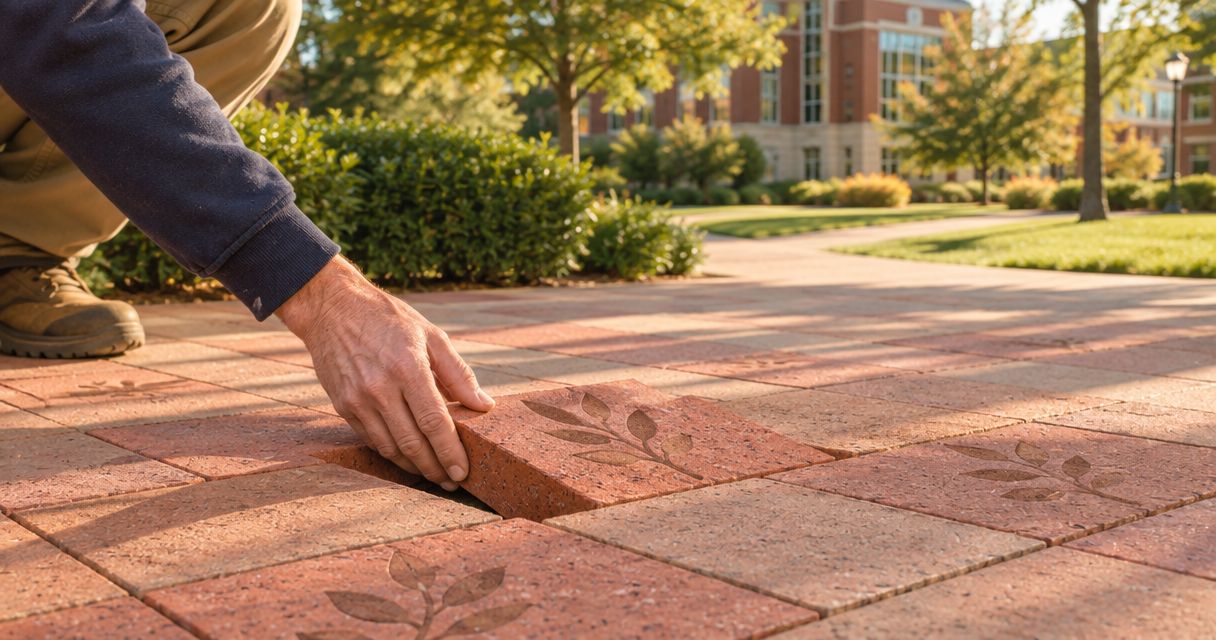
If you are considering engraved bricks, request a free sample brick before approving the format. Examine the material and inscription in person, then ask what the sample represents and which details require confirmation for your project. A sample helps you assess a physical item; it does not approve the campus site.
Compare the formats against these practical needs:
- Check visibility from the places visitors actually approach.
- Confirm how people will read the names without blocking circulation.
- Identify where future names would be added.
- Ask who will handle installation and site preparation.
- Review cleaning and maintenance responsibilities with facilities staff.

Approve the proof
Treat the production proof as a separate approval, not a repeat of the donor form. Check the actual wording, line breaks, punctuation, and placement shown for the intended item. Confirm the applicable inscription limits with the supplier instead of assuming every format accepts the same text.
Assign 2 reviewers: someone who understands the donor records and someone who can check the proof carefully against the approved wording. Give each reviewer a defined task. Unstructured group review creates competing edits without establishing which version is final.
For a 2026 campaign, label the approved production file clearly and retire superseded versions. If a donor changes wording after approval, reopen that record and confirm the revised proof before including it in the order.
Use a final proof checklist:
- Match every inscription to its approved donor record.
- Check spelling, punctuation, credentials, and line breaks.
- Confirm anonymous donors are excluded from public recognition.
- Resolve every flagged question before release.
- Save the approved proof and written authorization together.
Assign ongoing care
Decide who owns the display after installation. A department administrator, advancement contact, and facilities representative can have different responsibilities; document the division rather than relying on a committee member’s memory.
Reserve 1 expansion area in the planning layout if future additions are part of the project. Have the relevant campus and installation professionals confirm whether that approach suits the site. An expansion plan should explain both where names go and how new inscriptions receive approval.
Keep your 2026 project records accessible to the role that will inherit the display. Include the final name register, approved proofs, supplier correspondence, installation documents, and care instructions provided for the selected materials.
Complete the handoff with these assignments:
- Name the owner of donor-record updates.
- Define who reviews later additions and corrections.
- Record the approved method for adding recognition.
- Assign cleaning and inspection responsibilities.
- Store project files in an institution-controlled location.
Compare recognition formats for your department
Choose the format your university can approve, maintain, and update. The options below describe planning approaches, not interchangeable products. Confirm the actual materials and installation requirements before committing to any design.
| Option | Best for | Main advantage | Key limitation |
|---|---|---|---|
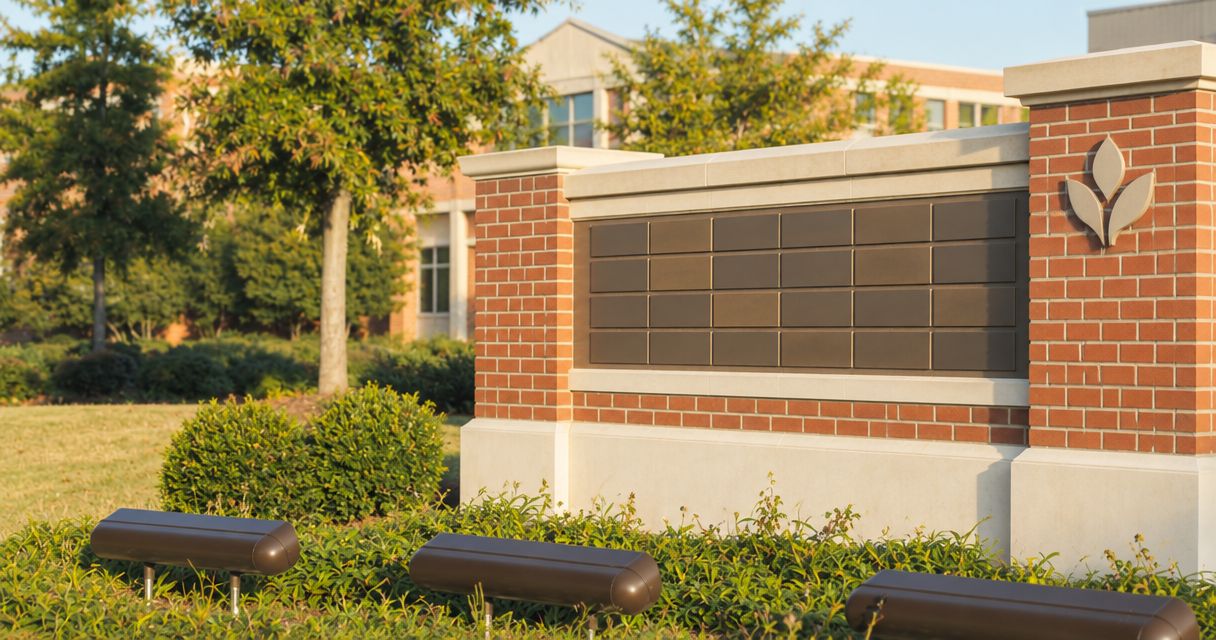
| Interior donor recognition wall | Departments with an approved indoor gathering space | Keeps recognition near departmental activity | Needs wall permission, suitable placement, and a defined update method |
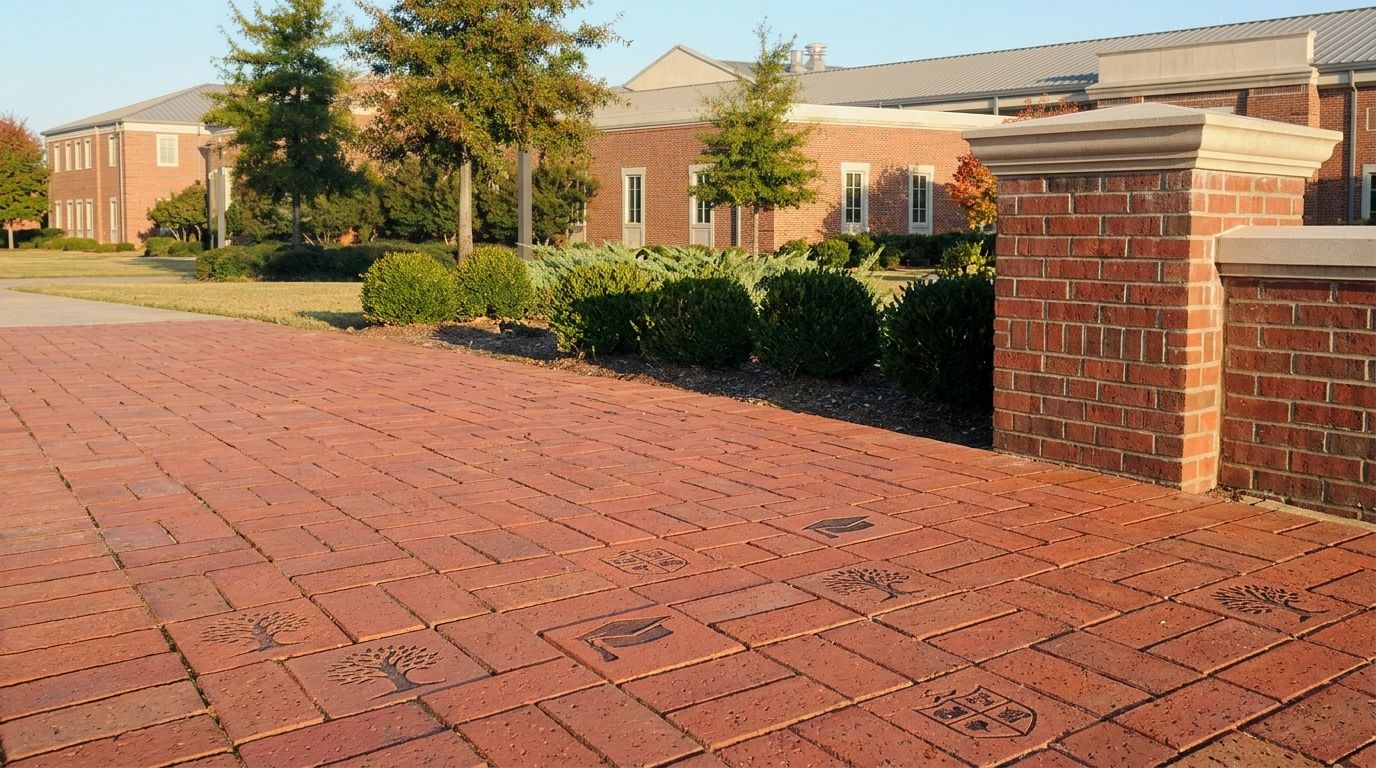
| Engraved-brick or paver area | Departments with an approved courtyard or outdoor recognition site | Connects donor acknowledgment to a physical campus place | Requires outdoor site planning, access review, and maintenance assignments |
| Combined wall and engraved-brick area | Departments with distinct recognition purposes and permission for both sites | Allows separate formats for clearly defined purposes | Adds records, approval, and upkeep responsibilities across locations |
An interior wall does not eliminate planning work, and an outdoor brick area is not a shortcut around campus approval. A combined approach deserves consideration only when each part has a clear purpose and a responsible owner.
Before comparing finishes, request a free sample brick and discuss your department’s recognition needs with Bricks R Us. Bring your proposed inscription rules and site questions so the conversation addresses your actual project.
Request a free sample brick
Discuss your department’s donor-recognition plans and examine a sample before choosing an engraved-brick format.
Common mistakes university departments make
Treating departmental approval as university approval
A chair’s support does not establish permission to change a campus space. Confirm the university’s approval process before publishing renderings, naming promises, or installation dates. Keep the written approvals with the project record.
Making exceptions before writing recognition rules
A special title or placement promised to an early donor can conflict with the policy adopted later. Approve the recognition rules first, including how you handle organizations, households, anonymous donors, and memorial requests. Apply the same review process to exceptions.
Using gift records as engraving files
Advancement data supports administration; inscription text supports public recognition. Copying between them without donor confirmation risks publishing unwanted names or incorrect formatting. Keep approved public wording in a distinct field and review it before production.
Filling the entire display at launch
If the campaign accepts future supporters, a layout without an addition plan creates an immediate constraint. Decide how expansion works before finalizing the first installation. Do not promise identical later placement until the relevant details are confirmed.
Letting project knowledge leave with the committee
Staff changes and volunteer turnover should not erase the display’s history. Store approvals, proofs, care instructions, and correction procedures in a university-controlled location. Assign responsibility to a role rather than only to a person.
FAQ
What should a university department decide before designing a donor recognition wall?
Decide the purpose, eligibility rules, approval route, location, and update process before designing a donor recognition wall. These decisions determine which names belong on the display and what the university must authorize.
Who should approve a university department’s donor recognition wall?
The offices responsible for donor recognition and the proposed campus space should confirm the required approvals. Ask your university to identify the responsible decision-makers, including advancement and facilities contacts where applicable.
Should we list donors alphabetically or by recognition category?
Use the ordering method allowed by your university’s approved recognition policy. Define alphabetical treatment, categories, household names, and organizational names before collecting final inscriptions.
Can our department include memorial inscriptions with donor names?
Include memorial inscriptions only under an approved policy that explains their relationship to donor recognition. Keep consent, wording approval, and eligibility clear so a tribute does not imply an unverified gift or endorsement.
Is an engraved-brick area better than an indoor recognition wall?
An engraved-brick area suits an approved outdoor recognition site, while an indoor wall suits an approved interior gathering space. Choose based on site permission, access, future additions, and maintenance responsibilities rather than assuming either format is universally better.
How do we prevent mistakes in engraved donor names?
Use a controlled name register, obtain approval for public wording, and check the production proof against that record. Assign separate record and proofreading responsibilities, then save written authorization with the final file.
What should we ask when requesting a free sample brick?
Ask what the sample demonstrates and which material, inscription, and care details need confirmation for your project. Examine it in person before approving an engraved-brick format, and obtain separate approval for the campus installation.
One last thing
Test the handoff before placing the order. Ask a colleague who has not attended committee meetings to find the approved inscription, its authorization, and the person responsible for corrections. If that task requires an explanation from the project chair, simplify your records before your 2026 launch.