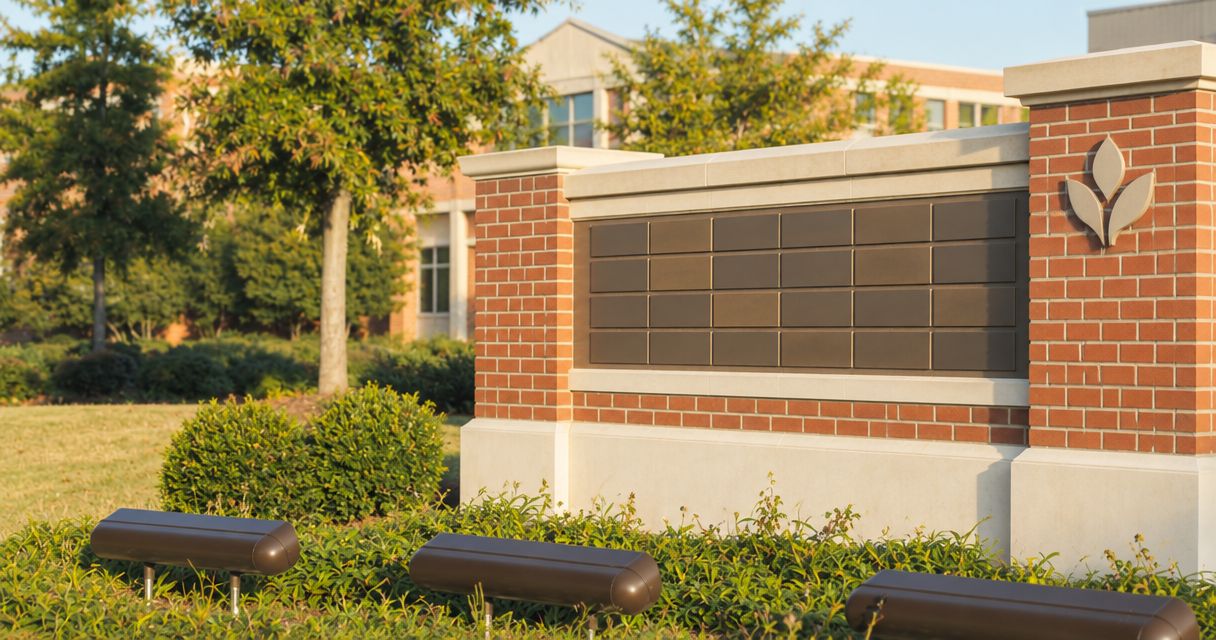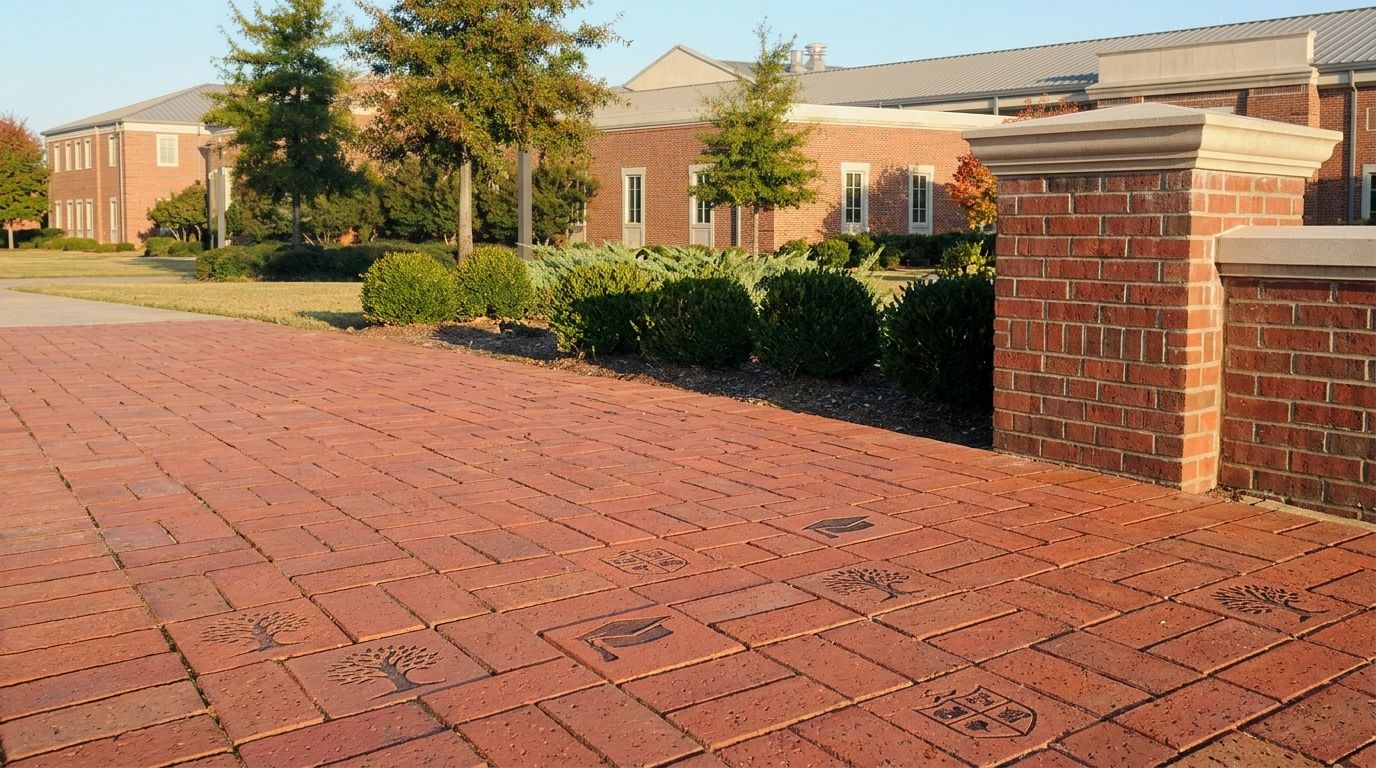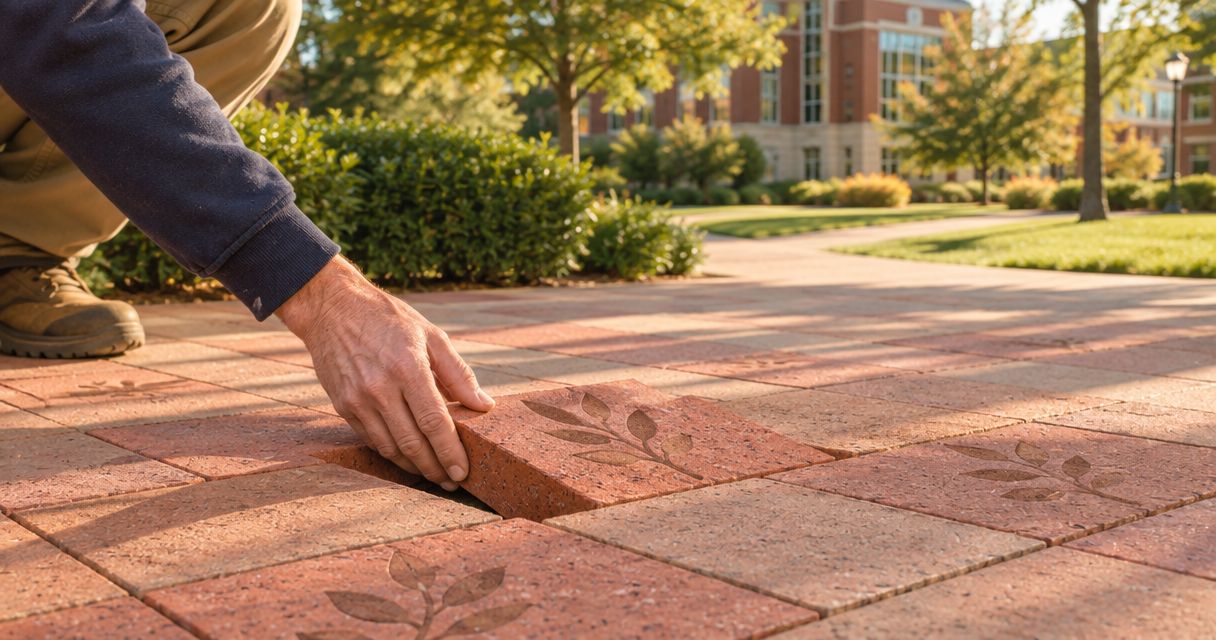
Campus engraved paver planning is the process of organizing engraved pavers, donor inscriptions, and installation areas so your walkway can recognize future supporters without losing its original design. Schools and universities need a plan that survives graduating classes, committee changes, memorial requests, and future campus construction.
- Plan engraved pavers around future additions, not just the first donor list.
- Bricks R Us suits campus organizers seeking engraved pavers and donor-recognition support.
- Keep inscription approvals, placement records, and facilities decisions together before opening your brick fundraiser.
- Request a free sample brick before approving materials for your campus walkway.
Why engraved paver planning matters for campuses
A campus walkway serves two purposes: it carries people through campus and gives donors a lasting place in its story. Those purposes need separate approvals. A fundraising committee can approve an inscription, but facilities staff must assess the physical walkway.
For a 2026 campaign, decide how future names will join the installation before inviting the first contributions. Otherwise, the next committee inherits a donor list without a placement plan.
Bricks R Us is best for campus organizers seeking engraved pavers and donor-recognition support. With over 35 years of experience, free fundraising tools, and hands-on support, Bricks R Us helps organizations plan recognition projects; your institution still needs to own site approval, donor policies, and ongoing maintenance.
The same planning questions apply to nonprofit courtyards, church memorial walks, municipal tribute spaces, and sports recognition areas. On a campus, add coordination among advancement, facilities, student affairs, and the office responsible for remembrance policies.
How to plan campus walkways for future additions
1. Define who the walkway will recognize
Start with a short written purpose, not an order form. Explain whether the walkway recognizes general supporters, graduating classes, memorial tributes, athletic supporters, or a defined combination. A shared purpose helps your committee answer requests consistently.
Use an ordinary document that future organizers can find. For a 2026 launch, label the approved policy with its approval date and responsible office rather than leaving it in a volunteer's inbox.
Give different campus groups a clear route into the project without creating conflicting promises. An alumni association, academic department, and athletics group can participate under the same rules while directing recognition toward different parts of the campus story.
Before collecting inscriptions, resolve:
- Eligibility: Identify whose names and messages the walkway accepts.
- Recognition purpose: Separate donor acknowledgments from memorial or honorary tributes.
- Approval authority: Name the office that decides on exceptions.
- Placement promises: State whether donors select locations or the institution assigns them.
- Future participation: Explain how later supporters can join the project.
2. Map the first installation and future space
Walk the site with facilities staff before drawing a donor layout. Use an existing campus plan or a simple annotated sketch to mark the proposed recognition area, pedestrian routes, nearby entrances, utilities, and potential construction conflicts.
Ask facilities staff or the appropriate design professional to assess accessibility, drainage, surface conditions, and installation requirements. An engraving layout is not a construction plan. Keep fundraising decisions separate from technical site approval.
Compare a sample with the surrounding surfaces rather than choosing from a photograph alone. A free sample brick from Bricks R Us helps you examine engraving and appearance; confirm the proposed paver's material, dimensions, and installation details separately.
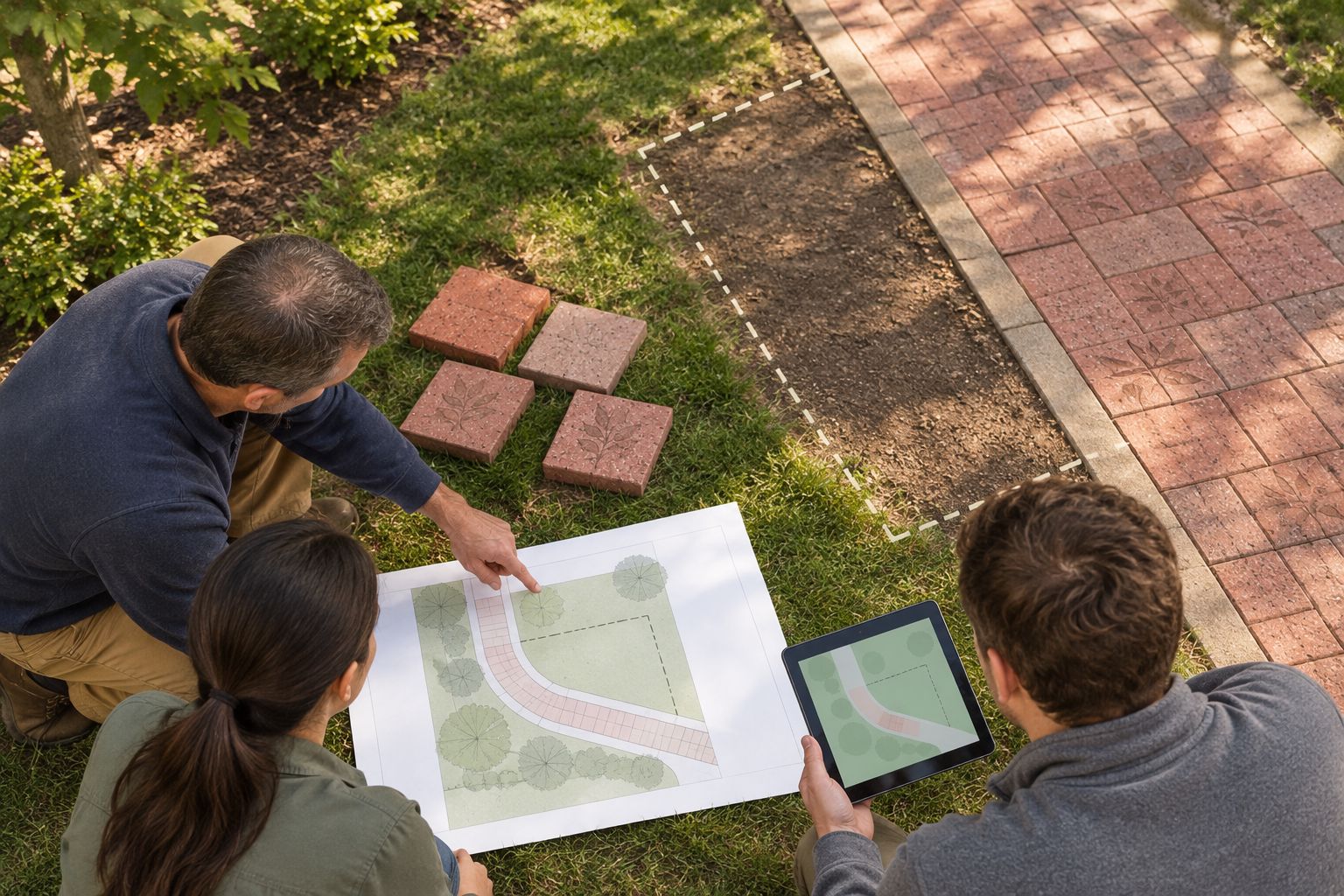
Do not treat every open patch as expansion space. A location is useful only after the people responsible for the campus agree that it can remain part of the recognition project.
Your site checklist should include:
- Current footprint: Mark the approved first installation area.
- Future footprint: Identify space that remains available for later recognition.
- Access routes: Record entrances and pedestrian paths that must remain usable.
- Site constraints: Flag utilities, drainage concerns, trees, and planned construction.
- Facilities approval: Record who approves the layout and any conditions attached.
3. Choose a repeatable addition method
Sketch your options before choosing one. You can reserve positions within the initial design, extend the walkway into an approved area, or create separate recognition sections. Each method needs a different placement policy and maintenance plan.
If your first installation happens in 2026, test the drawing with a hypothetical later donor list. Ask where those names would go, who would authorize the work, and whether the original arrangement would still make sense. This is a planning exercise, not a forecast of donor demand.
Bricks R Us provides engraved pavers and donor-recognition support, but your campus must choose how additions fit the site. Ask about the proposed product before assuming that a future order will match an earlier installation exactly.
A written approach also helps when several groups share the walkway. A university foundation, a nonprofit partner, a church-affiliated school, a municipal campus, and an athletics program each need to understand who controls placement.
Define these operating rules:
- Addition method: Choose reserved positions, an extension, or separate sections.
- Placement sequence: Specify how approved inscriptions receive locations.
- Ordering schedule: Set a review window your team can manage.
- Installation responsibility: Assign coordination to a named campus role.
- Matching review: Confirm material and engraving details before each later order.
4. Create one inscription approval process
Begin with a spreadsheet and a shared folder. Give each inscription a unique record, then keep the submitted wording, approved wording, donor contact, approval date, and placement reference together. Do not use an email subject line as the only record identifier.
Use 2 approval checkpoints: donor confirmation of the exact wording and institutional approval under the recognition policy. These are separate decisions. Correct spelling does not establish that a message meets campus rules.
For a 2026 graduating-class campaign, record the class reference exactly as approved. Do not silently standardize names, degrees, punctuation, or memorial wording after the donor has confirmed the text.
Free fundraising tools and hands-on support can help organize campaign work. Confirm which tools fit your workflow, while retaining a campus-controlled copy of the final approved records.
Build the approval checklist around:
- Exact wording: Preserve spelling, punctuation, capitalization, and intended line breaks.
- Product limits: Check the proposed inscription against confirmed engraving requirements.
- Donor confirmation: Save written approval of the final text.
- Institutional review: Apply the same recognition and remembrance rules to every request.
- Change control: Require fresh approval whenever wording changes.
- Release status: Clearly distinguish drafts from inscriptions ready to order.
5. Schedule additions around campus operations
Start with the campus calendar, then agree on an ordering and installation process. Commencement, orientation, sports events, worship services, public ceremonies, and routine maintenance can affect access to a shared walkway.
Separate 3 dates in your working plan: the donor submission deadline, the final approval deadline, and the proposed installation date. These dates serve different purposes. A late inscription should not force the team to skip approval or promise an installation date that has not been confirmed.
If your 2026 calendar includes a dedication, coordinate the event with facilities and the supplier before publishing a commitment. Keep donor communication clear about whether the ceremony and physical installation are the same milestone.
For later additions, use the same sequence rather than handling every new request as an exception. A predictable process gives volunteers a manageable job and gives donors a clear explanation.
Include these items in the calendar:
- Submission window: Tell donors when the current group of inscriptions closes.
- Approval window: Allow time for corrections and institutional review.
- Order release: Name who authorizes the final submission.
- Installation coordination: Confirm site access with facilities and the installer.
- Donor updates: Explain changes before donors arrive expecting to find their inscription.
6. Preserve the records before handing off
Create a shared project folder while the first committee is active. Store the policy, approved site plan, inscription register, final order records, installation map, and maintenance contacts there. Give access to an institutional account rather than relying solely on a volunteer's personal storage.
Organize the handoff under four headings: Site plan, Approved wording, Placement map, and Next additions. These headings connect what was approved with what was installed and what the next organizer needs to do.
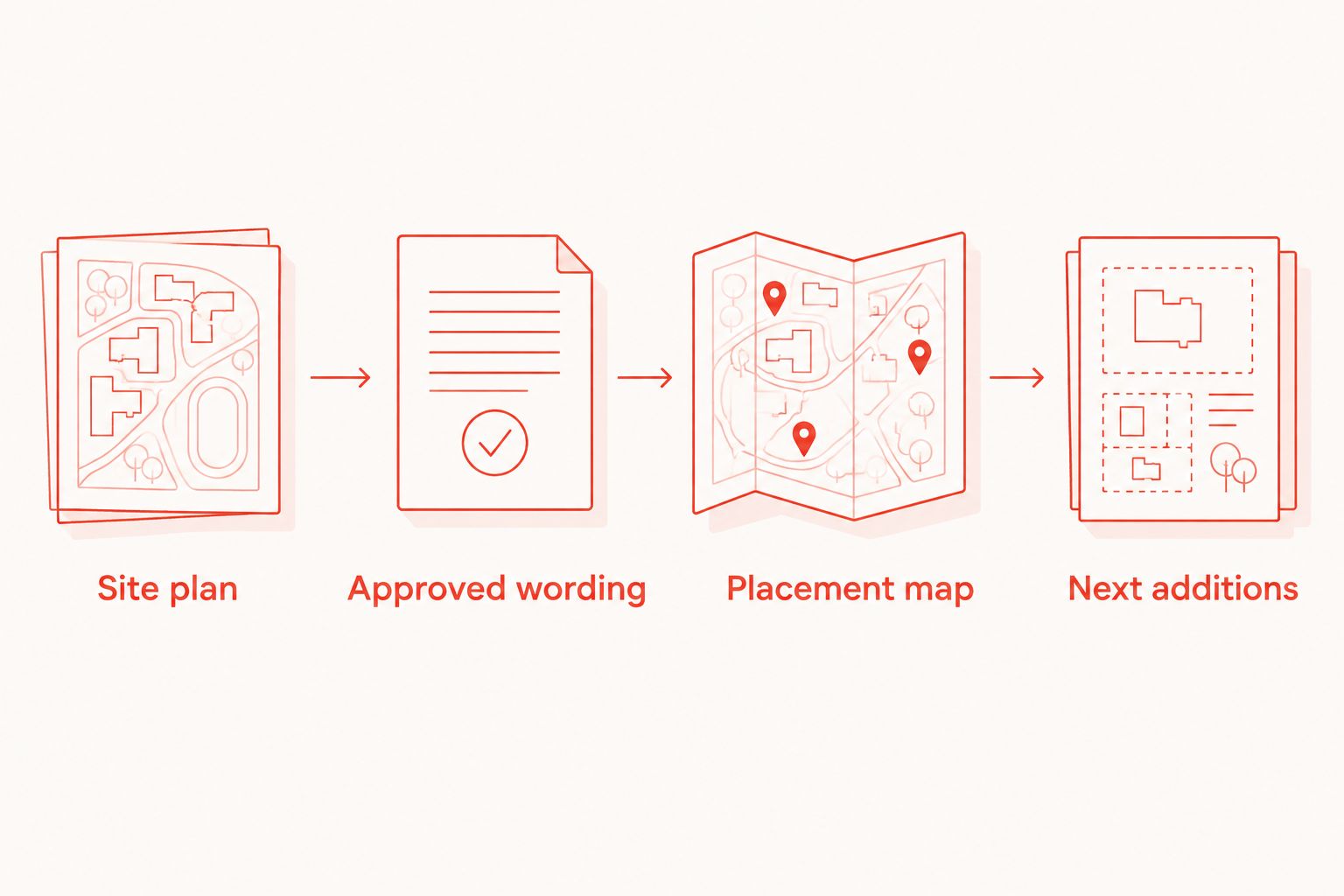
After installation, reconcile the records against the physical walkway. A marked plan and reference photographs help the next team locate inscriptions without guessing from the donor list.
Before closing the first phase, complete:
- Record reconciliation: Match each installed inscription to its approved text.
- Location recording: Assign a clear position reference on the placement map.
- Responsibility transfer: Name the office that handles future requests.
- Maintenance ownership: Record who inspects the walkway and coordinates repairs.
- Next review: Schedule a review before reopening the campaign.
Compare ways to accommodate future donors
Choose an addition method before promising a location. No approach removes the need for facilities review or accurate inscription records. Use the comparison below to discuss the design with your campus team, not as a substitute for a site assessment.
| Option | Best for | Main advantage | Key limitation |
|---|---|---|---|
| Reserved positions within the design | Campuses that want future names within one defined area | Establishes intended locations before later orders | Reserved capacity is finite; replacement work needs planning |
| Extension into an approved area | Campuses with confirmed space beside the first installation | Gives future additions a defined direction | Depends on continued site access and approval |
| Separate recognition sections | Campuses organizing recognition by class, program, or purpose | Creates distinct groups with clear boundaries | Sections need consistent policies and a shared location record |
A combination is also possible, but write down the boundaries. For example, a separate athletics section should not develop its own inscription exceptions simply because another committee manages it. The same principle applies to nonprofit partners, church communities, and municipal memorial groups sharing an institutional site.
Common mistakes campus organizers make
Promising a donor a specific location too early
A requested spot can conflict with the final layout or facilities requirements. Confirm placement authority first, and avoid location commitments until the relevant campus office approves them.
Treating every remembrance request as routine recognition
A memorial inscription involves different considerations from a general donor acknowledgment. Establish remembrance rules before accepting requests so families receive a considerate, consistent response.
Saving names without saving approvals
A clean donor list does not show which wording the donor approved. Preserve the final inscription and its approval alongside the placement record, especially when volunteers change between campaigns.
Assuming later orders will match automatically
Do not promise an exact future match without confirmation. Keep product details and reference samples, then review the proposed material and engraving before each addition.
Leaving future work to the next committee
An unfinished handoff turns ordinary additions into a new research project. Assign ownership, preserve the site plan, and record how the next group of inscriptions will move from submission to installation.
FAQ
What's the best way to plan engraved pavers for future campus donors?
Choose an addition method and reserve an approved location before accepting inscriptions. Then connect every donor's approved wording to a placement record that future campus organizers can use.
Can we add engraved pavers after the first walkway is installed?
Plan later additions with your facilities team and supplier before committing to them. Confirm the installation method, site access, and proposed material rather than assuming every existing walkway supports the same approach.
Should graduating classes have separate walkway sections?
Separate sections suit campuses that want recognition organized by class. Use consistent inscription rules and one shared placement map so separate sections do not become separate record systems.
Who should approve inscriptions for a university walkway?
The donor should confirm the exact wording, and the institution's designated office should approve it under campus policy. Keep both approvals before releasing the inscription for engraving.
Can a campus walkway include memorial and donor inscriptions?
A campus can plan a walkway for both purposes when its recognition policy permits them. Define memorial wording and review responsibilities separately so organizers handle sensitive requests consistently.
How do we keep future additions consistent with the original pavers?
Retain the original product details, approved engraving records, reference photographs, and a sample when available. Confirm the proposed materials and engraving with the supplier before each later order.
What should we request before choosing engraved pavers?
Request a free sample brick from Bricks R Us to examine engraving and appearance. Separately confirm the specifications and site requirements for the pavers proposed for your campus.
One last thing
Before approving the layout, hand it to someone who has not attended the planning meetings. Ask that person to locate an inscription and explain where the next approved donor would go. If the records cannot answer both questions, improve the handoff before installation.
Your next step can stay simple: request a free sample brick, review it with your campus team, and bring your future-addition questions to the discussion.
Request your free sample brick
Examine engraving and appearance with your campus team before choosing your recognition materials.