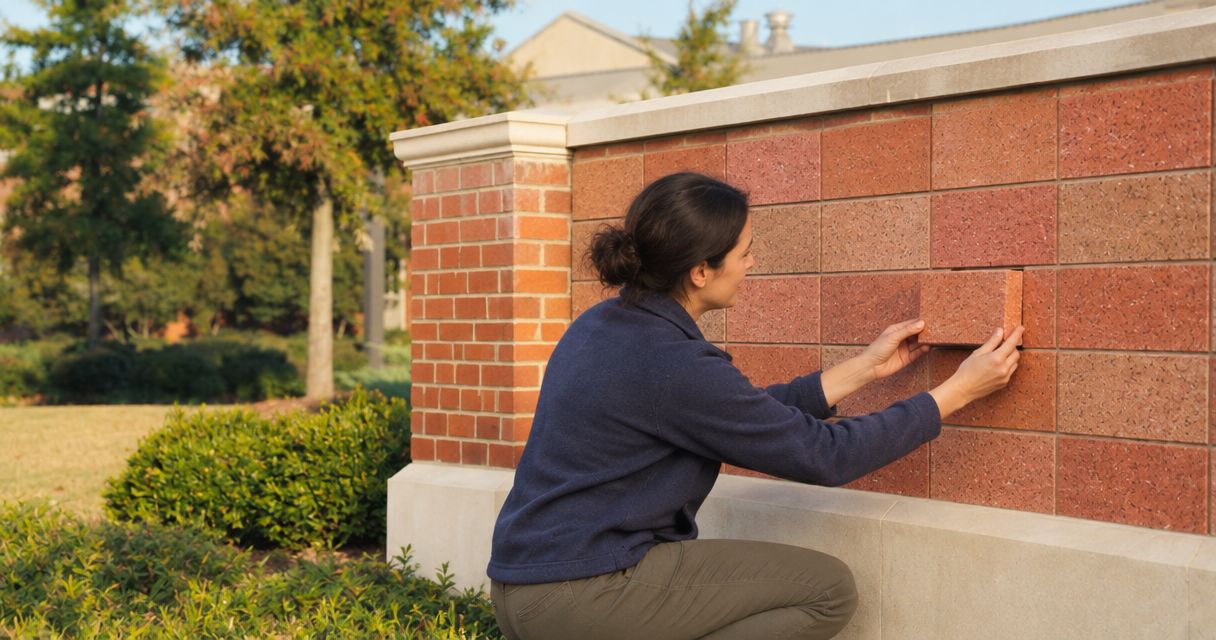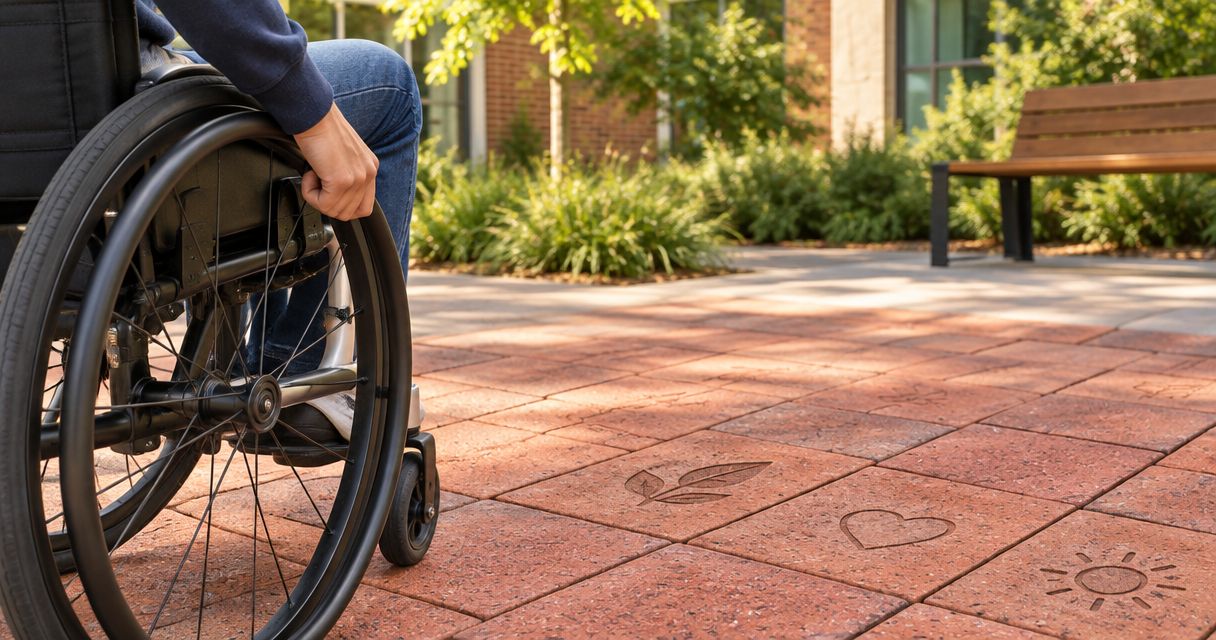
Nonprofit courtyard planning with engraved pavers is the process of arranging donor recognition, walking routes, and installation with the aim of creating a welcoming space that supports fundraising. For your 2026 project, settle access requirements before offering inscription locations: visitors need usable routes, and donors need clear expectations about where their recognition belongs.
- Plan engraved pavers around accessible courtyard routes before assigning donor recognition locations.
- Bricks R Us suits organizations seeking custom engraved bricks, pavers, and donor-recognition products.
- Approve the layout, inscription rules, installation responsibilities, and maintenance plan before accepting orders.
- Request a free sample brick before finalizing your fundraising materials.
Why engraved pavers matter for nonprofit courtyards
Engraved pavers give your organization a physical place to recognize supporters, remember loved ones, or celebrate shared milestones. A courtyard also serves people who are passing through, attending events, resting, or finding an entrance. Recognition should fit the courtyard’s everyday use, not compete with it.
Bricks R Us is best for organizations seeking custom engraved bricks, pavers, and donor-recognition products. The fundraising business brings over 35 years of experience, free fundraising tools, and hands-on support; your committee still needs to establish site permissions, construction responsibilities, and access requirements.
The planning questions apply across organizations, even when the purpose differs:
- Nonprofits: Connect recognition to the mission while keeping service entrances and visitor routes usable.
- Schools and universities: Account for class changes, campus events, and recognition of alumni or educators.
- Churches: Coordinate worship access, gatherings, and quiet remembrance without treating every open area as available space.
- Municipalities and community memorials: Resolve public access, permissions, and responsibility for long-term care.
- Sports organizations: Keep spectator movement, team recognition, and access to facilities in the same site plan.
For a 2026 campaign, approve the physical plan before publishing donor choices. Changing the layout after taking orders creates avoidable conversations about promised locations and dedication timing.
How to plan an accessible recognition courtyard
Start with a site walk, a printed plan, and a shared worksheet. Those simple tools help your committee record decisions before choosing ordering tools or asking suppliers for help. Use the following sequence to keep fundraising decisions connected to the actual courtyard.
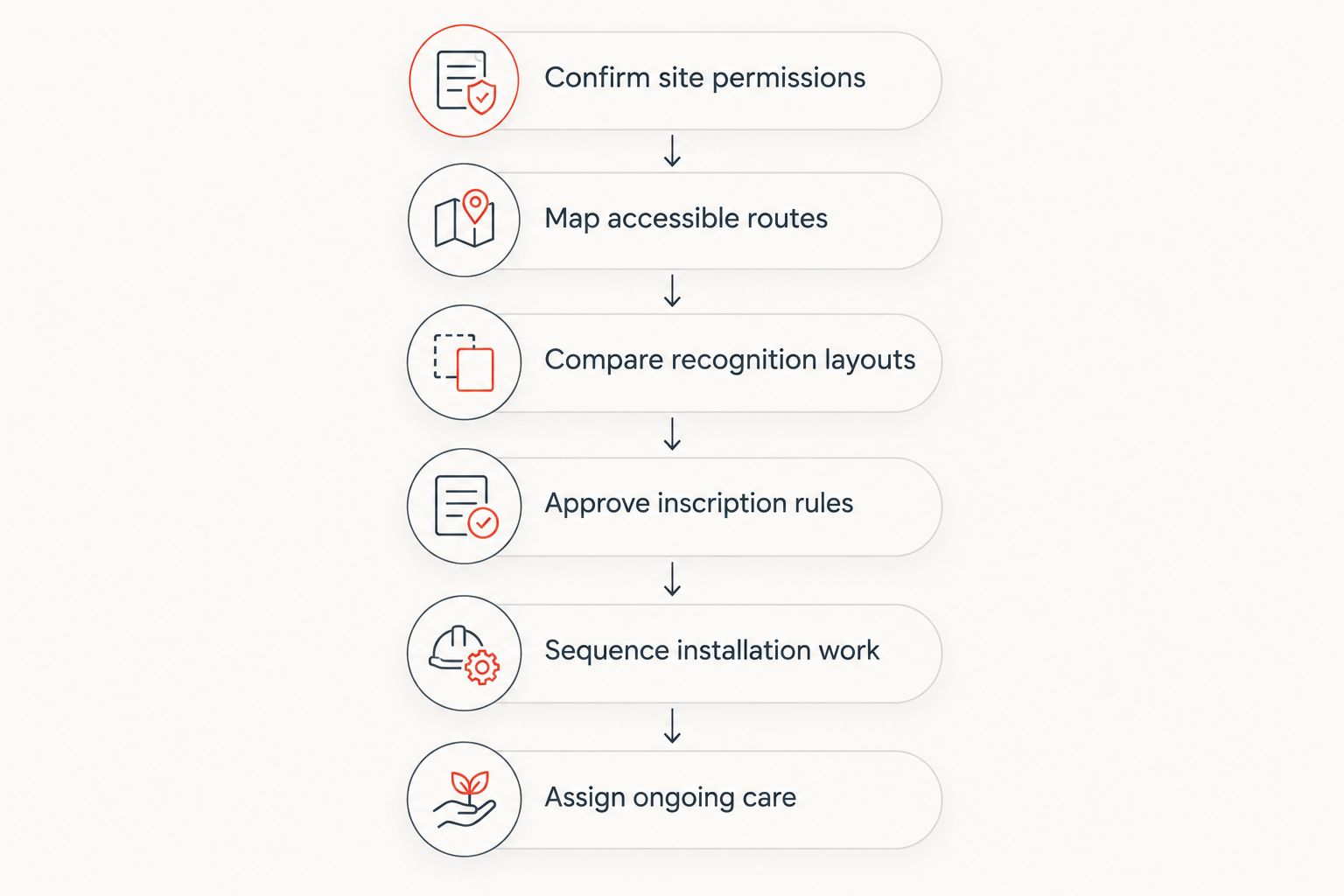
Confirm site permissions
Begin by identifying who controls the courtyard and who can approve changes. A fundraising committee’s approval is not a substitute for the property owner’s permission. Bring facilities staff or the site manager into the conversation before presenting a finished design.
Create a short project brief covering the purpose, proposed area, and decision-makers. For a campus, that means coordinating with the people responsible for grounds and buildings; for a church or community memorial, establish who can authorize work and accept responsibility afterward.
Do not promise a dedication date while permission remains unresolved. Treat approval as a documented decision, not an informal understanding passed between volunteers.
- Record the property owner and project approver.
- Mark the proposed recognition area on a site plan.
- Ask about underground services, drainage, and planned construction.
- Identify required permits and professional reviews with the responsible local authority.
- Assign someone to retain approvals and approved drawings.
Map accessible routes
Walk the courtyard from the arrival point to each destination: entrances, seating, gathering areas, and any memorial feature. Identify routes people already use rather than drawing a recognition area across them. Record thresholds, changes in level, drainage paths, and obstructions for professional review.
For U.S. projects subject to the ADA Standards, the U.S. Access Board’s guidance for accessible walking surfaces generally specifies a 36-inch minimum clear width, a running slope no steeper than 1:20, and a cross slope no steeper than 1:48. These are baseline checks, not a complete design specification; exceptions and additional requirements apply at turns, passing spaces, doors, and other features.
Ask a qualified design professional to assess the applicable requirements for your 2026 project. Selecting an engraved unit alone does not establish that the finished route is accessible: layout, joints, surface condition, slopes, and installation all matter.
- Trace the accessible route separately from the donor-recognition area.
- Mark doors, benches, planters, and other potential obstructions.
- Have the proposed surface and joints reviewed for accessible use.
- Check drainage and changes in level with the design professional.
- Preserve required access during construction as well as after completion.
Compare recognition layouts
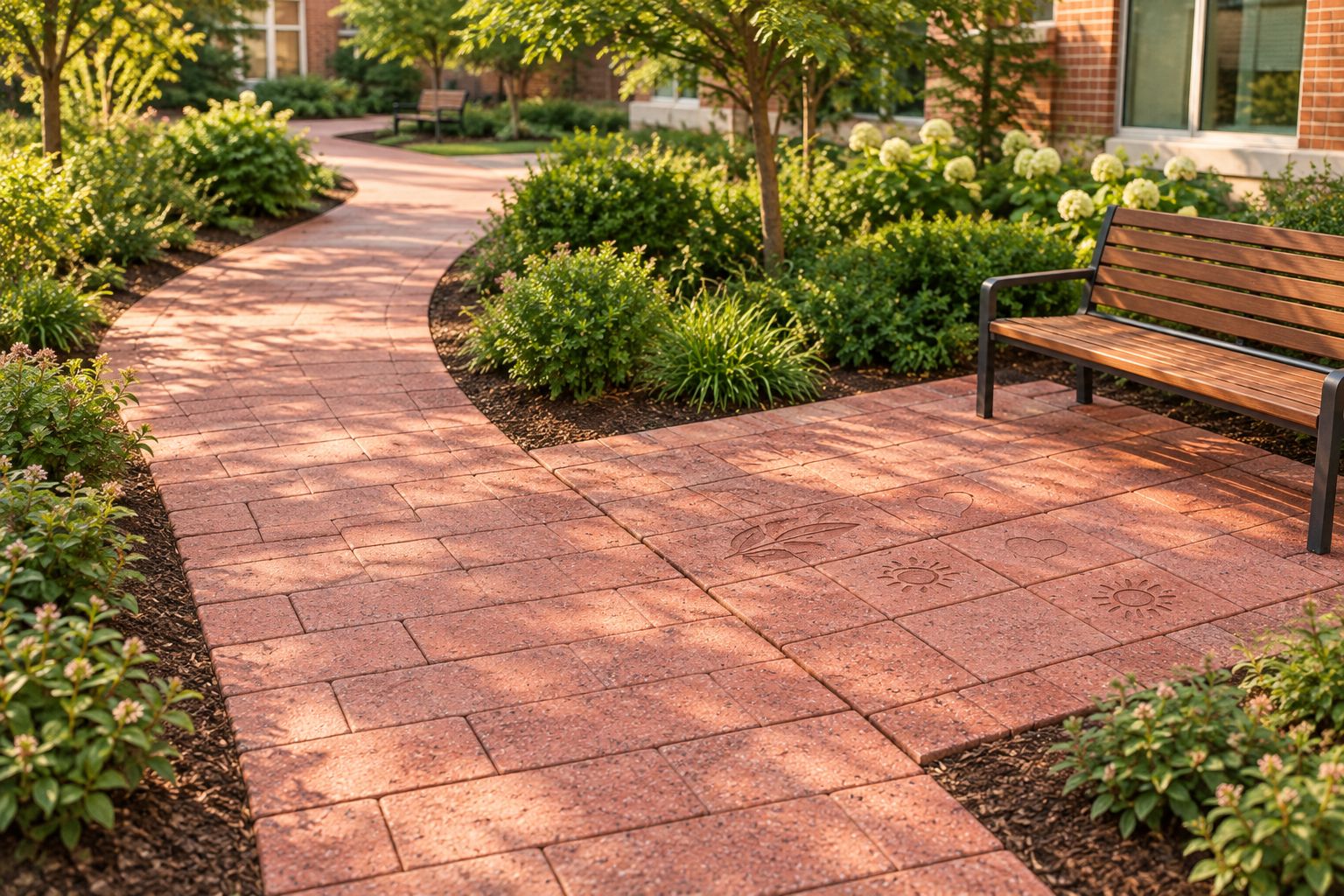
Sketch the options on paper before requesting a detailed layout. A central recognition field places inscriptions within the courtyard’s main space; a border or separate gathering area changes where visitors stop to read. Choose based on use, not simply the amount of paving available.
Ask how someone will find a particular inscription without blocking circulation. A donor looking for a family name needs a different experience from a visitor crossing the courtyard to reach an appointment. Reserve space for future additions if continued participation belongs in your campaign plan.
Bricks R Us offers engraved bricks, pavers, and donor-recognition products. Use a free sample brick to examine the engraving and discuss your intended application; do not treat a brick sample as proof that every proposed paver or installed surface has identical characteristics.
- Compare a central field, a border, and a separate recognition area.
- Mark places where visitors can pause without obstructing a route.
- Separate essential circulation from optional viewing areas.
- Decide whether future recognition will extend or complete the layout.
- Confirm the proposed product and installation approach before approving campaign materials.
Approve inscription rules
Write the inscription policy in a shared document before opening orders. Decide who can be recognized, what wording is acceptable, and how donors approve spelling. A tribute campaign needs a clear process for sensitive wording, not decisions made differently for each request.
Your 2026 order form should distinguish the donor’s contact information from the inscription itself. Keep the approved wording attached to the order record, and name the person authorized to submit it for production. Confirm the actual engraving limits with your supplier rather than copying another campaign’s form.
Once the committee has settled those rules, ask about free fundraising tools and support. Bricks R Us provides these resources; use them to support your approved process rather than letting an ordering form make policy decisions for you.
- Confirm inscription limits for the specific product.
- Publish rules for names, dates, punctuation, and requested messages.
- Require written approval of the exact inscription.
- Separate private donor details from publicly displayed wording.
- Assign final submission and correction responsibilities.
Sequence installation work
Prepare a schedule that separates order approval, site preparation, installation, inspection, and dedication. Ask the supplier and installer to confirm their own responsibilities and timing. Do not turn an internal target into a public promise before those conversations are complete.
Choose construction access with the site manager. A nonprofit serving visitors during the day, a school changing classes, a church holding services, a municipal public space, and a sports venue hosting fixtures each need a plan tied to actual activity.
Keep delivery and storage arrangements in the same plan as installation. Recognition units still need to reach the site, remain identifiable, and match the approved layout. A documented handoff helps prevent an inscription from being placed in the wrong position.
- Confirm who prepares the base and manages drainage.
- Document delivery access and on-site storage responsibilities.
- Agree on temporary routes and work-area controls.
- Match approved inscriptions to the installation plan.
- Arrange the required review before reopening the affected area.
Assign ongoing care
Choose a long-term owner before the campaign closes. The person organizing donations is not automatically the person responsible for the courtyard after volunteers move on. Put maintenance records where the organization’s facilities team or future committee can find them.
Build a recognition register containing approved wording, location, and relevant order details. Avoid relying on one volunteer’s email inbox. When a donor asks where a dedication sits, the organization should have an answer that does not depend on who remembers installation day.
Include future additions in the care plan. Decide who can approve another campaign, how new inscriptions will be located, and whether work will affect existing routes or recognition.
- Name the role responsible for routine courtyard checks.
- Retain supplier and installer care instructions.
- Keep a location map linked to the recognition register.
- Establish a process for reporting movement, damage, or drainage problems.
- Record who authorizes repairs and later additions.
Compare courtyard recognition options
Choose the layout that protects access and suits how people use the space. None of these options replaces a site-specific review. The table compares planning approaches, not competing suppliers or guaranteed installation outcomes.
| Option | Best for | Main advantage | Key limitation |
|---|---|---|---|
| Central engraved paver field | Courtyards with a defined recognition space | Brings dedications together in a visible area | Readers and through-traffic need room to coexist |
| Engraved paver border | Courtyards with suitable edges outside essential circulation | Separates recognition from the center of the space | Planting, furniture, and sightlines can make inscriptions harder to view |
| Separate memorial gathering area | Tribute projects where visitors need space to pause | Gives remembrance a distinct setting | Needs a suitable connection to the accessible route |
| Phased recognition sections | Organizations planning continued donor participation | Gives future additions an agreed location | Requires records and coordination across later installations |
A phased approach needs more than empty space on a drawing. Confirm that future work can reach the reserved area without disrupting existing recognition or required access. If that cannot be resolved, revise the plan before offering ongoing participation.
Request a free sample brick
Examine a sample brick before finalizing your courtyard recognition and donor materials.
Common mistakes nonprofit courtyard organizers make
Assigning locations before approving access
Selling a particular position before the site plan is settled makes later changes harder to explain. Approve the recognition area first, then offer only the location choices your organization can honor. Keep the approved plan with the campaign documents.
Treating every sample as an installation test
A sample helps you inspect engraving and discuss recognition choices. It does not demonstrate how a finished courtyard will drain or whether the installed route meets applicable requirements. Evaluate the product and the site design as separate decisions.
Forgetting visitors who are not donors
Courtyards also serve families, students, worshippers, residents, and spectators. A layout built only around inscription visibility can overlook ordinary movement and quiet seating. Ask site users to review how the proposed space will function.
Closing the fundraiser without a handoff
A completed order does not finish the organization’s responsibility for the space. Transfer the recognition register, approved plan, care instructions, and contact details to the long-term site owner. Include unresolved items rather than leaving them in committee messages.
FAQ
What are engraved pavers used for in nonprofit courtyards?
Engraved pavers provide permanent, location-based recognition for supporters, tributes, and shared milestones. Plan them alongside walking routes, seating, and the courtyard’s everyday uses.
Should engraved pavers go directly in the main walking route?
Place engraved pavers in the main walking route only when the proposed design satisfies the applicable access requirements and allows the space to function. A separate viewing area or border is another option when people need room to stop and read.
Does choosing engraved pavers make a courtyard ADA compliant?
Choosing engraved pavers does not establish ADA compliance. The finished design and installation must address applicable requirements for routes, surfaces, slopes, clearances, and other features.
How do we choose between a memorial area and a donor recognition field?
Choose a memorial area when the project needs a distinct place for remembrance, and a donor recognition field when bringing dedications together suits the courtyard. Both approaches need appropriate access and a plan for visitors who pause to read.
Can schools, churches, and sports organizations use the same planning process?
Schools, churches, and sports organizations can use the same permission, access, inscription, installation, and care sequence. Adapt construction access and viewing areas to class schedules, services, events, and other site activities.
What should we check before approving an inscription order?
Check the exact wording, spelling, punctuation, product limits, and donor approval before submitting an inscription order. Retain the approved version with its intended location in the recognition register.
How can we evaluate Bricks R Us before choosing recognition products?
Request a free sample brick from Bricks R Us and discuss your courtyard project and intended recognition products. Use the sample to examine engraving, then confirm product-specific details separately from site design and installation requirements.
One last thing
Before approving your 2026 courtyard plan, ask someone unfamiliar with the campaign to locate a proposed dedication on the drawing. Then ask them to trace the route to the entrance. If either task needs a lengthy explanation, simplify the layout or the location system before committing it to paving.