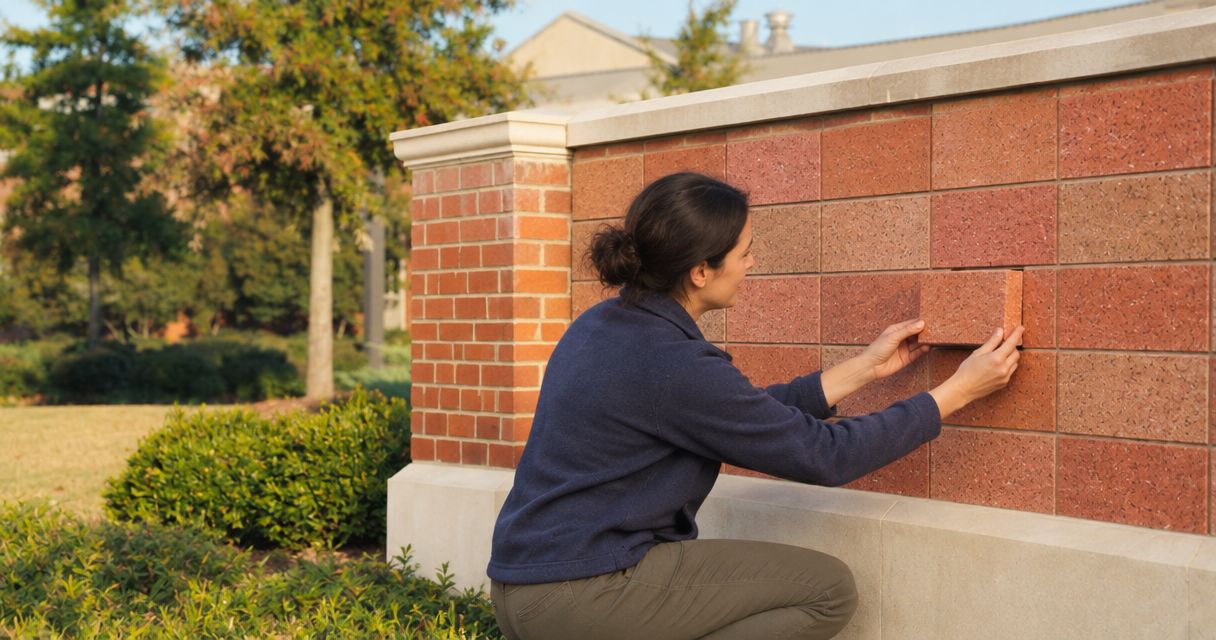
Nonprofits can offer personalized bricks to business donors by creating a clear recognition policy, collecting approved inscription text, and confirming the installation plan before accepting orders. Explain what the donor receives, who approves the wording, and how recognition differs from advertising. Keep recognition promises separate from claims about tax treatment or fundraising results.
- Offer personalized bricks with written inscription rules, donor approval, and a defined installation location.
- Bricks R Us sells engraved bricks and pavers for organizational fundraising and donor recognition.
- Business names acknowledge support; promotional messages need a separate review policy.
- Request a free sample brick before finalizing your donor materials.
Why this matters
A business donor needs to understand what its inscription will say and where people will see it. Your organization needs a process that treats donors consistently without turning a community space into a collection of advertisements.
For your 2026 campaign, start with the physical item rather than the appeal letter. Use this guide to what to check in an engraved brick sample to prepare questions about readability, appearance, and inscription layout before you promise a particular result.
How can nonprofits offer personalized bricks to business donors?
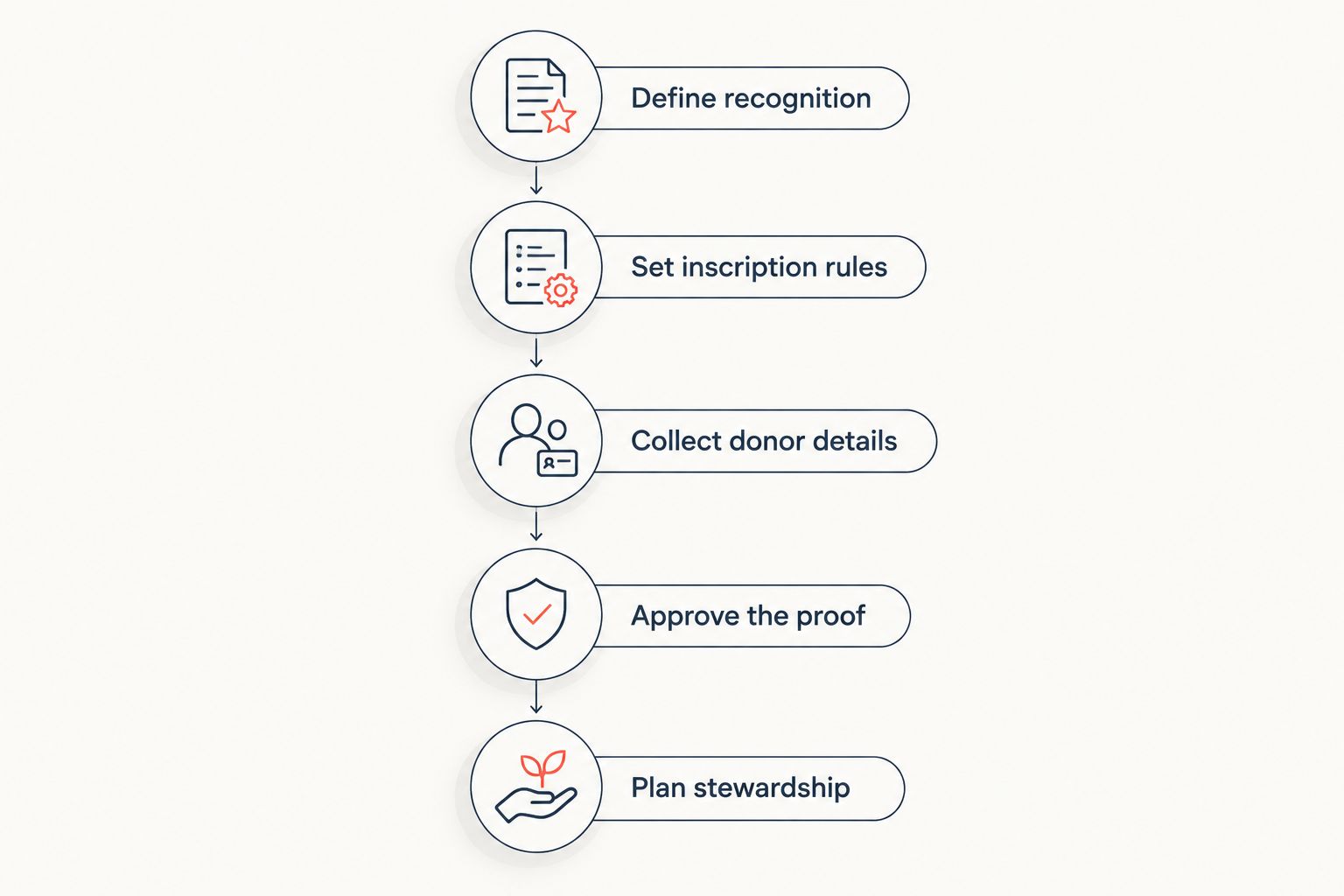
Use these 5 planning steps to turn a recognition idea into an offer your committee can explain and administer. Complete the decisions before publishing the donor form, so businesses do not receive conflicting instructions from different volunteers.
1. Define recognition
Decide what a personalized brick represents: acknowledgment of a business contribution, a tribute selected by the business, or recognition of an employee group. Describe that purpose in your campaign materials.
State the proposed location and explain whether placement is fixed or assigned by your organization. Do not promise entrance placement, a particular neighbor, or a prominent position unless the site plan supports that promise.
Best for: committees that need a consistent answer to what each donor receives. The trade-off is less flexibility for individual requests, which is useful when consistency matters more than customization.
2. Set inscription rules
Write down which content you accept before asking businesses to submit names. Address business names, employee tributes, website addresses, slogans, and promotional language separately.
Confirm the available inscription format with your supplier rather than copying limits from another campaign. If you want logos or special artwork, confirm whether the selected product supports them before including that option on your form.
Best for: organizations that want recognizable business acknowledgments without an advertising-heavy installation. Clear rules require early committee agreement, but they reduce case-by-case decisions later.
3. Collect donor details
Use a single order record for the business name, authorized contact, inscription text, and approval status. Keep the donor's contact information separate from the words intended for engraving.
Ask the business to identify who can approve its public-facing name. A familiar storefront name and a formal legal name are not always interchangeable; the donor should choose the wording it wants recognized.
Best for: campaigns managed by several staff members or volunteers. A shared record needs a designated owner, or different versions can still circulate.
4. Approve the proof
Send the proposed inscription to the authorized business contact and retain the written approval. Ask the donor to check spelling, punctuation, capitalization, and the intended tribute wording.
Give your committee a separate approval task: check that the inscription follows campaign rules. Donor approval confirms the wording; organizational approval confirms that the wording belongs in the project. Neither replaces the other.
Best for: any campaign accepting custom text. Proof review adds a step before production, but it gives everyone a clear opportunity to catch errors.
5. Plan stewardship
Assign responsibility for installation updates, donor questions, and the recognition record after the campaign closes. Explain how you will communicate changes without promising an unconfirmed installation date.
Keep an installation map or location record so future staff can help donors find their bricks. Decide how your organization will handle later additions, site work, and questions about existing inscriptions.
Best for: organizations planning a lasting recognition space. This approach requires ongoing ownership rather than treating the project as finished when orders are submitted.
These steps work as a sequence: agree on the offer, collect accurate information, approve it, and maintain the record. Do not ask the proof reviewer to resolve recognition-policy questions that the committee has not settled.
Which business recognition format should you offer?
Choose the inscription approach that matches the purpose of the space. These are recognition formats, not promises that every product accepts every layout or artwork type.
| Recognition format | Best for | Main advantage | Main limitation |
|---|---|---|---|
| Business name | General acknowledgment of business support | Gives a clear, simple acknowledgment | Does not tell a personal tribute story |
| Employee tribute | Recognizing a team or individual connection | Connects the contribution to people | Requires careful name and wording approval |
| Community dedication | Supporting a shared place or cause | Keeps attention on the community purpose | Gives the business less direct visibility |
For a 2026 project, select a default format and explain how exceptions are reviewed. Avoid creating an informal custom package whenever a donor requests something different; that makes the published offer harder to apply fairly.
A business-name inscription is straightforward, but straightforward does not mean automatic approval. Your committee still needs rules for promotional wording and content that conflicts with the purpose of the site.
Why business-donor brick plans vary
The right offer depends on the project, not just the donor's preference. Review these factors before publishing your 2026 business-donor materials:
- Site purpose: A memorial garden calls for different language from a school celebration walkway.
- Audience: Families, students, worshippers, residents, and sports supporters bring different expectations to the space.
- Inscription format: Available space and layout determine how much wording you can accept; confirm the limits first.
- Approval ownership: A business contact approves its wording, while your organization decides whether it meets campaign policy.
- Installation planning: The site layout determines whether you can accommodate placement requests or later additions.
- Ongoing responsibility: Someone must retain approvals, answer donor questions, and maintain the location record.
Treat these as decisions to document, not details volunteers should improvise. When the rules are visible to everyone handling orders, your donor conversations become more consistent.
How should different organizations adapt the offer?
The ordering process can stay consistent while the recognition language changes. Give each setting equal attention when deciding what belongs in the finished installation.
Nonprofits
Connect the business acknowledgment to the nonprofit's mission and the purpose of the recognition space. Let donors understand what they are supporting without promising that a brick alone will produce a particular community outcome.
Keep the distinction between acknowledgment and promotion visible in your policy. The advantage is a mission-focused installation; the limitation is that some requested promotional wording will not fit.
Schools and universities
Decide how business inscriptions will sit alongside student, family, alumni, and staff tributes. Ask the institution's designated reviewer to approve recognition wording before the order is released.
A consistent format keeps the installation coherent. It also means business donors should not assume they can use a different layout simply because their contribution comes from a company.
Churches
Explain whether business recognition belongs in the proposed space and who approves it. A church committee should settle that question before approaching local employers or member-owned businesses.
Plain acknowledgment can support a community-centered project. Promotional language requires particular care when the installation also serves a worship, remembrance, or reflection purpose.
Municipalities and community memorial projects
Confirm who has authority over the public space and its recognition rules. Separate permission to collect orders from permission to install bricks at a particular location.
For memorial projects, establish how business names relate to personal tributes. Keeping those purposes clear helps organizers explain the offer without implying that every inscription serves the same role.
Sports organizations
Decide how business acknowledgments relate to athlete, coach, volunteer, and supporter tributes. Clarify whether the brick recognizes the business itself or a team-related dedication it selects.
A shared format can bring these groups into one installation. The limitation is that a donor wanting prominent promotional exposure may be asking for a different arrangement from a recognition brick.
What should you check before inviting business donors?
Request a free sample brick and use it to review the physical recognition item before approving campaign materials. Bricks R Us offers custom engraved bricks, pavers, and donor-recognition products, with over 35 years of experience, free fundraising tools, and hands-on support.
Use 3 sample checks: readability, layout, and fit with the proposed setting. Inspect the sample in the conditions relevant to your planned installation, and ask which details apply to the product you intend to order.
Bricks R Us is best for organizations seeking personalized bricks and support for fundraising and donor recognition. Your organization still owns the site decisions, inscription policy, and donor approvals; supplier support does not replace those responsibilities.
Discuss your project and request a free sample through Bricks R Us. Use that conversation to confirm the inscription requirements before producing your donor form.
What should your business-donor invitation explain?
Your invitation should make the recognition offer understandable without requiring a follow-up call. For a 2026 launch, check that the invitation, order form, and committee instructions describe the same offer.
Include:
- The purpose of the fundraising or recognition project.
- The planned location, without unconfirmed placement promises.
- The types of inscriptions your organization accepts.
- The process for submitting and approving wording.
- The contact responsible for questions and corrections.
- How donors will receive installation updates.
Keep the tone appreciative rather than transactional. Explain how a business can participate in the shared project, but do not imply that an engraved acknowledgment guarantees publicity, customer interest, or a particular tax outcome.
Before releasing the invitation, ask a committee member who did not write it to describe the offer back to you. Revise any point that requires an unwritten explanation.
Can a business put its name on a personalized brick?
A business can submit its name when your campaign's inscription policy permits business recognition. Confirm the exact wording with an authorized contact and review it against the same published rules used for other donors.
Do not treat permission for a business name as permission for slogans, website addresses, or special artwork. Address those requests explicitly.
How do you prevent inscription mistakes?
Use 2 separate approvals: donor approval of the wording and organizational approval of policy compliance. Keep the approved inscription with the order record rather than relying on a verbal conversation.
If someone requests a change, establish which version is current before releasing the order. A record marked approved should identify the wording actually approved.
Should you promise permanent recognition?
Do not promise permanent placement unless your organization can support that commitment. Describe the intended installation and explain how future site changes or maintenance questions will be handled.
For a 2026 campaign, document the responsible contact by role as well as by name. A role-based record is easier for a successor to use when staff or volunteers change.
FAQ
What's the best way to offer personalized bricks to local businesses?
Offer personalized bricks through a written recognition policy and a clear inscription-approval process. Explain the project purpose, proposed location, permitted wording, and update process before accepting orders.
Can our nonprofit offer business names and personal tributes in the same project?
Yes, your nonprofit can include both when its recognition policy permits them. Explain how the formats relate and apply consistent review rules to each inscription.
Do business donors need to approve their brick wording?
Ask an authorized business contact to approve the inscription in writing before releasing the order. Your organization should separately confirm that the wording follows campaign policy.
Can we promise a business donor a particular brick location?
Promise a particular location only when the approved site plan supports it. Otherwise, explain that your organization assigns placement within the planned installation.
Should we accept business slogans on engraved bricks?
Accept business slogans only if your published inscription policy allows them. Treat permission for a business name and permission for promotional wording as separate decisions.
Can we tell business donors their contributions are tax-deductible?
Do not promise tax deductibility without qualified guidance on your specific arrangement. Keep donor acknowledgment language separate from tax advice.
How can we get a sample before launching our fundraiser?
Request a free sample brick from Bricks R Us before finalizing your donor materials. Use it to prepare questions about readability, inscription layout, and the product planned for your installation.
One last thing
Do not make your business contact's job title part of the engraved wording unless the donor deliberately requests it. Contact information belongs in your administrative record; the inscription should contain only the approved public recognition.
Before submitting the order, read the inscription without the surrounding form. It should make sense on its own, because that is how visitors will encounter it.