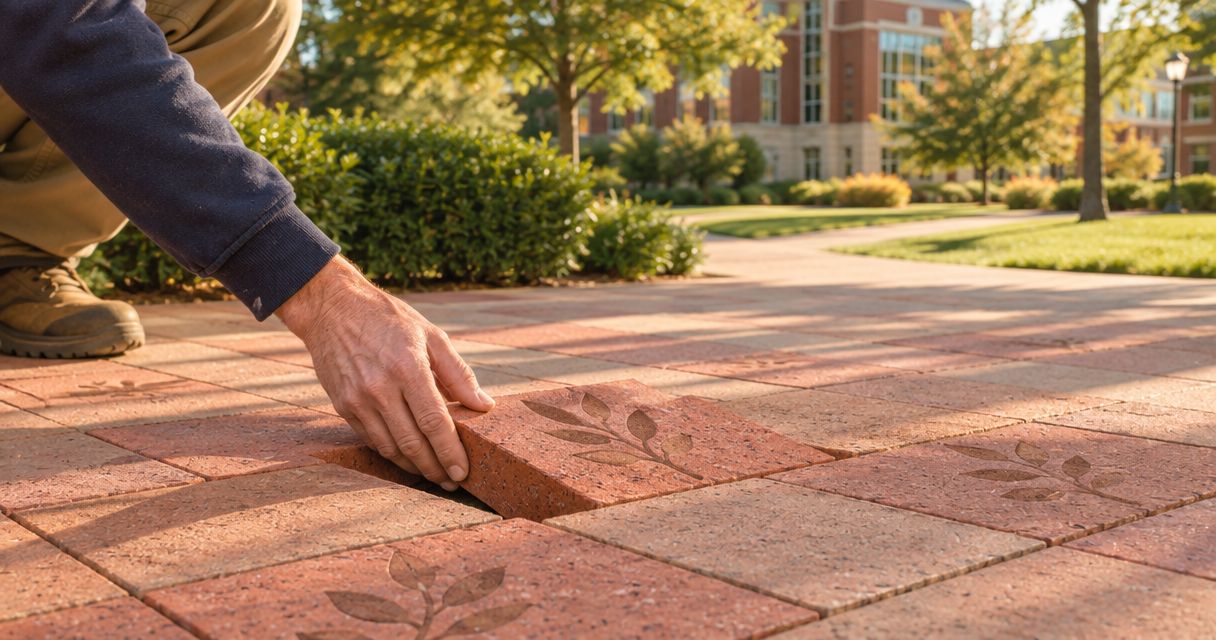
A church brick fundraiser is a donor-recognition campaign that uses personalized engraved bricks to support a church project and create a lasting place of remembrance. Coordinating ministry volunteers means giving each team a clear assignment while keeping donor records, inscription approvals, and project decisions in one place.
- A church brick fundraiser needs one coordinator, clear ministry assignments, and a shared donor record.
- Bricks R Us fits organizations seeking custom engraved bricks and donor-recognition products.
- Approve memorial inscriptions before submitting orders, and keep pastoral concerns separate from routine volunteer tasks.
- Request a free sample brick before finalizing your donor-recognition plan.
Why a brick fundraiser matters for churches
A church recognition project brings fundraising, remembrance, facilities planning, and congregational communication together. Those responsibilities belong to different people. Without a shared process, a ministry volunteer can promise an inscription or placement that the project team has not approved.
For your 2026 campaign, separate the invitation to participate from the decisions that require church authorization. Volunteers can explain the project and collect requests; designated leaders should approve the site, recognition policy, and final order.
Bricks R Us is best for organizations seeking custom engraved bricks and donor-recognition products. Start with the Bricks R Us website to explore the organization’s offering, then request a free sample brick before settling your campaign details.
The practical goal is simple: let volunteers serve without making them responsible for decisions outside their role. Families should receive the same explanation whether they speak with the church office, a ministry leader, or a volunteer after a service.
How to coordinate your church volunteer team
1. Define the project before recruiting volunteers
Write a short project brief in a shared document before asking ministries to help. State what the campaign supports, where recognition is proposed, who authorizes decisions, and what remains undecided. A courtyard improvement and a memorial garden need different explanations, even when both use engraved bricks.
Distinguish a proposed location from an approved installation site. Your facilities lead should review the physical plan before volunteers describe access, placement, or future additions as settled facts.
Give your 2026 brief a revision date so volunteers can identify the current version. Keep internal planning notes separate from the explanation you share with donors.
- Name the church project and its intended purpose.
- Identify the person authorized to approve campaign changes.
- Mark the installation location as proposed or approved.
- List questions volunteers must refer to the coordinator.
2. Assign ownership across ministries
Use a simple role sheet rather than asking every ministry to handle the whole campaign. Assign responsibility for donor communication, recordkeeping, inscription review, and facilities coordination. One person can hold more than one role, but every responsibility needs a named owner.
For a small team, begin with 3 roles: campaign coordinator, donor-record keeper, and facilities liaison. Add pastoral review when an inscription or memorial request needs sensitive judgment. Ministry representatives can then work within this structure instead of creating separate ordering processes.
Offer bounded assignments to church groups: a welcome-table shift, a bulletin submission, or a donor follow-up list. Let volunteers decline an assignment without becoming responsible for finding their own replacement.
- Name an owner and backup for each recurring task.
- Give ministry representatives the same written instructions.
- Route sensitive memorial questions to a designated church leader.
- Keep final submission authority with one coordinator.
3. Review a sample before building the donor form
Start manually: write down the decisions your donor form must support, then inspect a physical sample. Consider how an inscription reads at the intended location and how the recognition fits the church’s purpose. Do not ask volunteers to explain engraving details that have not been confirmed.
Bricks R Us offers a free sample brick, free fundraising tools, and hands-on support backed by over 35 years of experience. Use that support to resolve product and campaign questions before distributing instructions. Confirm which tools fit your process rather than assuming every task belongs in a particular system.
A sample helps you discuss the physical object; it does not establish the finished installation plan. Keep site preparation, layout, and maintenance questions with the appropriate project lead.
- Request a free sample brick for your planning team.
- Check inscription readability and the appearance of the engraving.
- Confirm current inscription requirements before drafting the form.
- Record questions about installation for your facilities lead.
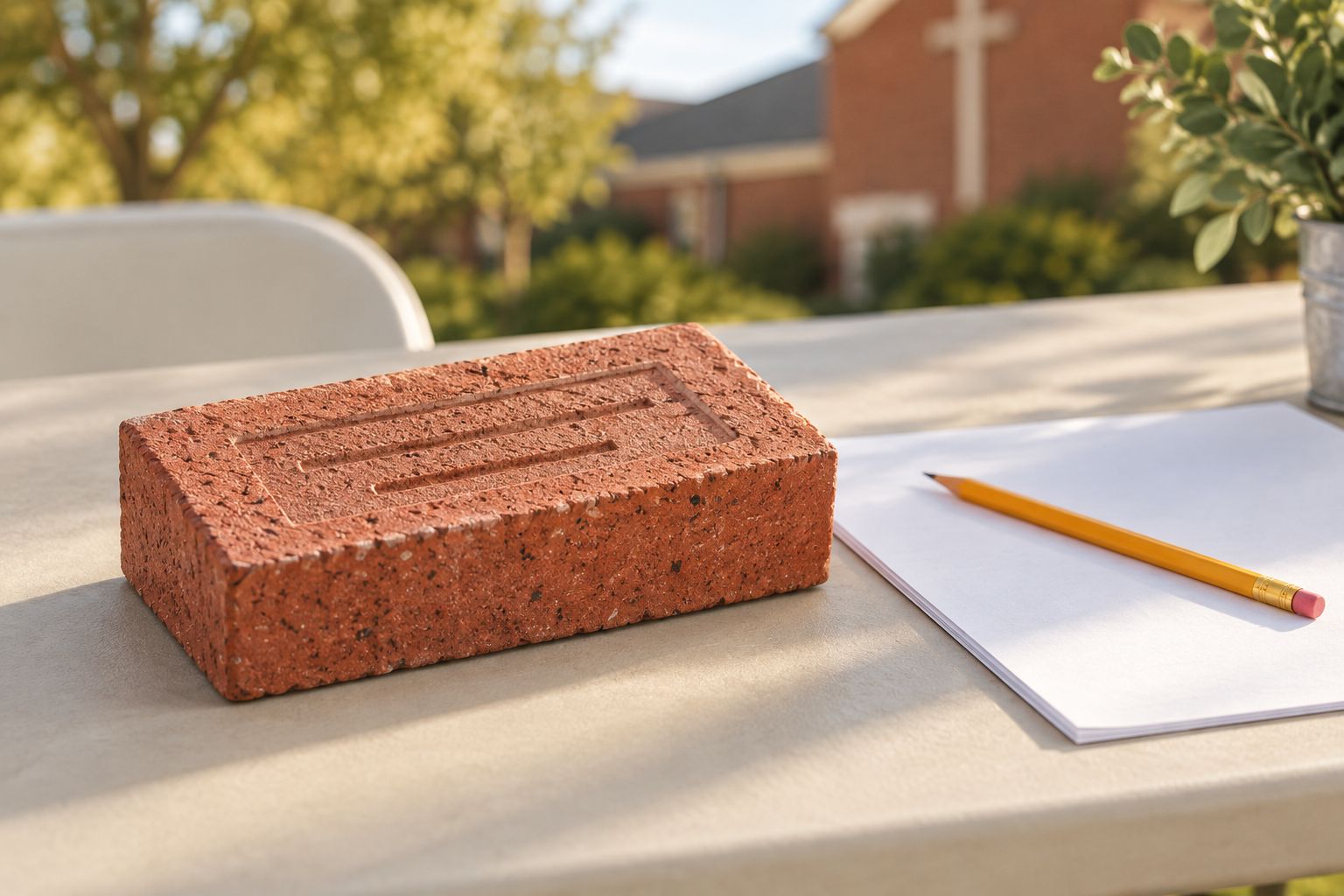
Use the sample discussion to settle questions while the committee is together. Record the answers in the volunteer instructions so donors do not receive different explanations from different ministries.
Request your free sample brick
Examine a sample before finalizing your church’s donor form and volunteer instructions.
4. Create one donor record and approval path
A shared spreadsheet and a controlled folder provide a manual starting point. Keep the donor’s contact details, requested inscription, review status, and final approved text connected through a unique record identifier. Follow your church’s rules for handling personal information and financial records.
For 2026 records, choose one authoritative location for approved inscriptions. A message in a volunteer’s inbox is not a reliable substitute for an updated campaign record. Preserve the original request alongside any later correction so the reviewer can see what changed.
Use 2 reviewers before submission: one checks the approved wording against the donor request, and another checks the final order against that approved wording. This is a recommended control, not a substitute for the supplier’s order instructions.
- Record donor contact details and the requested inscription together.
- Track approval status separately from payment status.
- Save written confirmation of spelling and wording changes.
- Restrict editing access to volunteers who need it.
5. Set a respectful inscription policy
Draft your policy before collecting memorial requests. Explain which types of recognition the church accepts, who resolves questions, and how donors approve the final wording. Give volunteers a clear boundary: they can explain the policy, but they cannot make exceptions.
Church memorial projects need particular care when a tribute touches bereavement, family disagreement, or religious language. Keep those conversations private and refer them to the designated leader. A public volunteer chat is not the place to discuss a family’s circumstances.
Separate editorial consistency from personal preference. Agree on the handling of names, dates, abbreviations, and punctuation without implying that one family’s tribute matters more than another’s.
- Define acceptable recognition and memorial wording.
- Confirm inscription limits with the supplier before publication.
- Explain how donors review and approve their text.
- Name the person who decides exceptions or sensitive requests.
6. Give volunteers a repeatable weekly routine
Set a recommended 15-minute check-in during active collection. Ask what arrived, what needs approval, and what is blocking the next handoff. Handle individual donor details privately rather than reading the full record aloud to everyone.
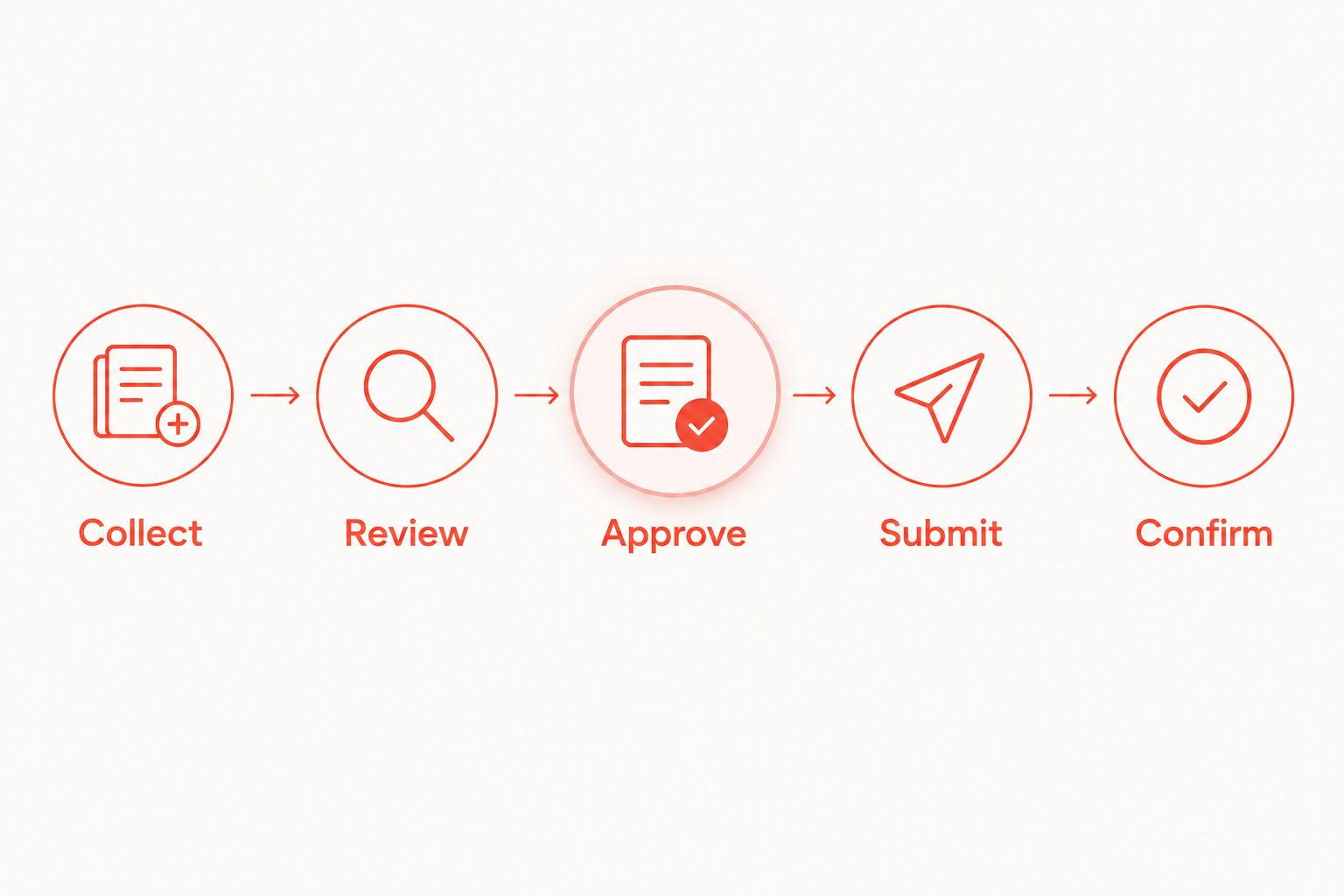
Use the same sequence each time: Collect, Review, Approve, Submit, Confirm. Each stage needs an owner and a visible status. A request should not move forward simply because a volunteer remembers discussing it after a service.
For your 2026 calendar, distinguish the church’s donor-response deadline from any supplier deadline you confirm directly. Plan backward from confirmed requirements; do not announce production or installation dates before the responsible parties agree.
- Collect requests through the agreed intake route.
- Review incomplete records before seeking final approval.
- Approve inscriptions through the designated reviewer.
- Submit only the authorized order version.
- Confirm receipt and record the next agreed action.
7. Plan the handover after collection closes
Closing donor intake does not end the church’s responsibility. Assign ownership for order questions, installation coordination, donor updates, and the permanent recognition record. Tell volunteers which tasks have finished and which still need attention.
Agree on the correction process before submitting the order. Identify who receives concerns and who checks them against the approved record. Keep a documented path for questions rather than promising an outcome that has not been confirmed.
Archive your 2026 campaign materials for the next committee. Save approved wording, permission records, the final layout, and supplier correspondence in the church’s designated storage location—not only in a volunteer’s personal account.
- Name the person responsible for post-submission questions.
- Store the final approved inscription record centrally.
- Assign responsibility for recognition-area maintenance.
- Record how future additions will be reviewed.
Choose a coordination approach that fits your church
Use the simplest process that preserves one approved donor record. Your church does not need separate systems for every ministry. It needs clear access, visible status, and a reliable way to approve inscriptions.
The options below describe coordination methods, not competing suppliers. Choose according to who handles requests and where decisions need to be recorded.
| Option | Best for | Main advantage | Key limitation |
|---|---|---|---|
| Paper intake with a central register | Churches collecting requests in person | Gives volunteers a straightforward collection method | Someone must transfer and check every request |
| Shared spreadsheet and controlled folder | Teams with a designated record keeper | Keeps status and approved documents together | Editing permissions and version control need attention |
| Ministry representatives with central approval | Churches involving several ministry groups | Lets familiar leaders answer routine questions | Separate ministry records create conflicting versions unless centralized |
| Supplier-supported planning | Committees needing product guidance and fundraising resources | Adds help with product questions and campaign preparation | Church leaders still own policies, donor approvals, and site decisions |
Bricks R Us provides fundraising products and support; your church remains responsible for its internal approvals. Ask about available free fundraising tools, then decide how those tools fit your existing donor-record process. Do not create duplicate records merely to use another resource.
Common mistakes church volunteer teams make
Letting every ministry collect information differently
A handwritten list, an email thread, and a separate spreadsheet create competing records. Give each ministry the same intake instructions and transfer requests into the central register. A ministry representative owns the relationship, not a separate version of the order.
Treating a memorial request as a routine transaction
A family can need a private conversation about wording or recognition. Volunteers should acknowledge the request warmly, record only what is necessary, and refer sensitive decisions to the designated church leader. Do not promise an exception at the welcome table.
Approving names without checking the final version
A donor’s correct original submission does not prove the final order is correct. Check the exact wording that will be submitted, including punctuation and line arrangement where applicable. Obtain approval again when an edit changes the text.
Announcing a dedication before confirming the work
A church calendar invitation is not an installation agreement. Confirm the project’s requirements with the supplier, facilities lead, and installer before publishing a dedication date. Tell donors which dates are confirmed and which remain planning targets.
FAQ
How do I organize volunteers for a church brick fundraiser?
Assign one coordinator, one donor-record owner, and a facilities liaison, then give ministry volunteers bounded tasks. Use a shared approval process so every team follows the same inscription and recordkeeping rules.
What should we decide before inviting donors to participate?
Decide the project purpose, approval authority, proposed recognition location, and inscription policy before collecting requests. Confirm product requirements before volunteers explain the available personalization.
Should each ministry keep its own donor list?
Keep one authoritative donor record rather than separate ministry lists. Ministry representatives can collect requests, but approvals and final wording belong in the central campaign record.
How do we handle sensitive memorial inscriptions?
Refer sensitive memorial inscriptions to a designated church leader using a private process. Volunteers should explain the policy without promising exceptions or discussing a family’s circumstances publicly.
Can we run a brick fundraiser with paper forms?
Yes, paper forms can support a church brick fundraiser when one person maintains the central register. Transfer each request carefully, retain the original, and obtain approval of the final inscription before submission.
What help does Bricks R Us offer church fundraising organizers?
Bricks R Us offers custom engraved bricks, pavers, donor-recognition products, free fundraising tools, hands-on support, and a free sample brick. Ask which resources fit your campaign while keeping church approvals and donor records under your team’s control.
What should happen when a volunteer leaves the campaign?
Transfer the volunteer’s open tasks and campaign records to a named replacement. Update access permissions and confirm that approved donor information remains in the church’s designated storage location.
One last thing
Before collecting the first request, rehearse a correction. Give your team a fictional inscription with a misspelled name and walk through who receives it, who contacts the donor, and who updates the approved record. Keep the exercise separate from real donor information.
If the team cannot identify the current approved wording, fix the handoff before inviting participation. Then request your free sample brick and give volunteers something tangible to discuss alongside the campaign’s purpose.