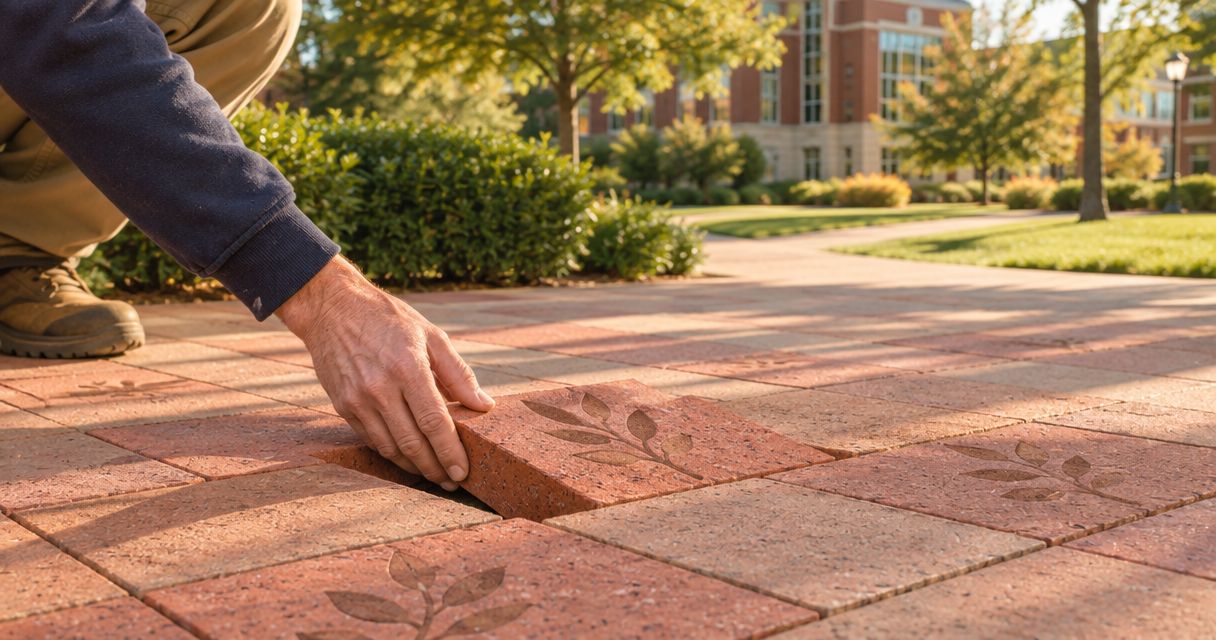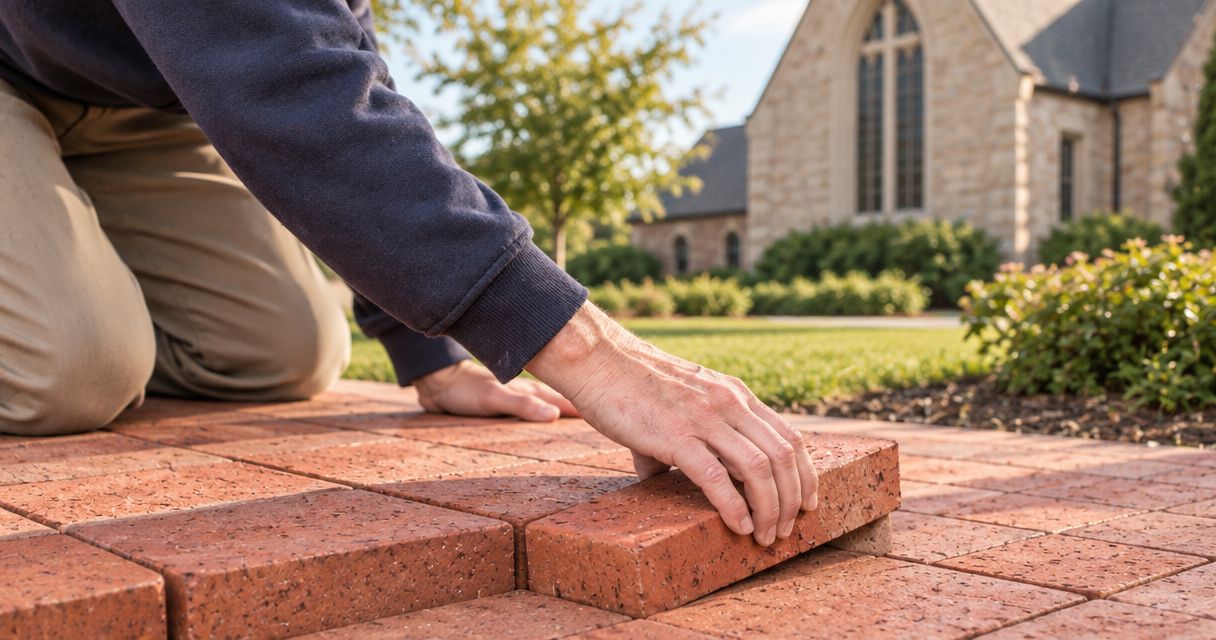
Church memorial bricks are engraved tributes installed in a church setting to remember someone who has died and support a shared community project. Working with bereaved families calls for a different approach from an ordinary fundraiser: permission, private communication, and careful inscription approval come before promotion.
- Bricks R Us is best for church organizers seeking custom engraved memorial bricks and hands-on fundraising support.
- Separate pastoral care from fundraising requests so families can decline without explaining their decision.
- Approve each engraved tribute with a designated family contact before submitting it for production.
- Plan donor recognition, future additions, and maintenance before inviting families to participate.
Why memorial bricks matter for churches
A church memorial project connects a personal tribute with a place the congregation shares. The brick remains part of a garden, courtyard, or walkway, while the family retains a connection to the person named on it. Participation should be an invitation, never an expectation attached to grief.
Church organizers carry overlapping responsibilities: caring for bereaved people, managing contributions, maintaining grounds, and applying church policy consistently. A tribute that looks straightforward on an order form can involve several relatives, different preferences about religious language, and questions about who has authority to approve the wording.
Bricks R Us supplies custom engraved bricks, pavers, and donor-recognition products, with free fundraising tools, hands-on support, and over 35 years of experience. Those services support project administration; the church still owns its pastoral decisions, permissions, and remembrance policy.
For a project beginning in 2026, settle those responsibilities before opening orders. A written process gives volunteers something dependable to follow when a sensitive question arrives, rather than leaving each family to receive a different answer.
Plan a church memorial project around family choice
The following steps separate the church's internal decisions from the family's decisions. Start with a shared document, a paper form, and a named coordinator; choose additional support only after you know what the project requires.
Define the purpose before inviting participation
Write a short project statement explaining what the memorial area honors, where contributions go, and who can participate. Distinguish remembrance from general donor recognition. Families should understand whether they are arranging a tribute, supporting a building project, or doing both.
Choose eligibility rules before receiving requests. Your church needs a consistent answer for former members, relatives of members, children, and people without a congregational connection. Do not leave volunteers to make those decisions during a conversation about someone's death.
For your 2026 project brief, record the agreed purpose and approval authority together. Keep internal planning notes separate from the family-facing explanation.
- State the memorial area's purpose in plain language.
- Define who is eligible to be remembered.
- Explain how project contributions will be used.
- Name the person authorized to resolve policy questions.
- Record how families can decline or postpone participation.
Establish a permission-led family contact process
Begin with a private, optional invitation through an appropriate church contact. Ask whether the family wants information before sending forms or campaign reminders. Attendance at a funeral or inclusion in a church directory is not permission to use someone's story in fundraising materials.
Designate 1 family contact for each proposed tribute. That person should coordinate relatives' comments and return the final approval, rather than asking the church to reconcile separate instructions. If relatives disagree, pause the order and explain the church's approval process without taking sides.
Ask separately about engraving, public announcements, photography, and dedication attendance. Agreement to one does not establish agreement to the others.
- Ask permission before discussing participation in detail.
- Record the family's preferred communication method.
- Identify a designated inscription approver.
- Keep personal circumstances out of shared volunteer files.
- Offer a clear way to stop campaign messages.
Review a sample and choose the setting
Start by inspecting the proposed location with your grounds team. Consider how people reach it, where visitors can pause, and whether services or other activities will interrupt a quiet visit. Ask the responsible facilities professional to assess installation, drainage, maintenance, and applicable access requirements.
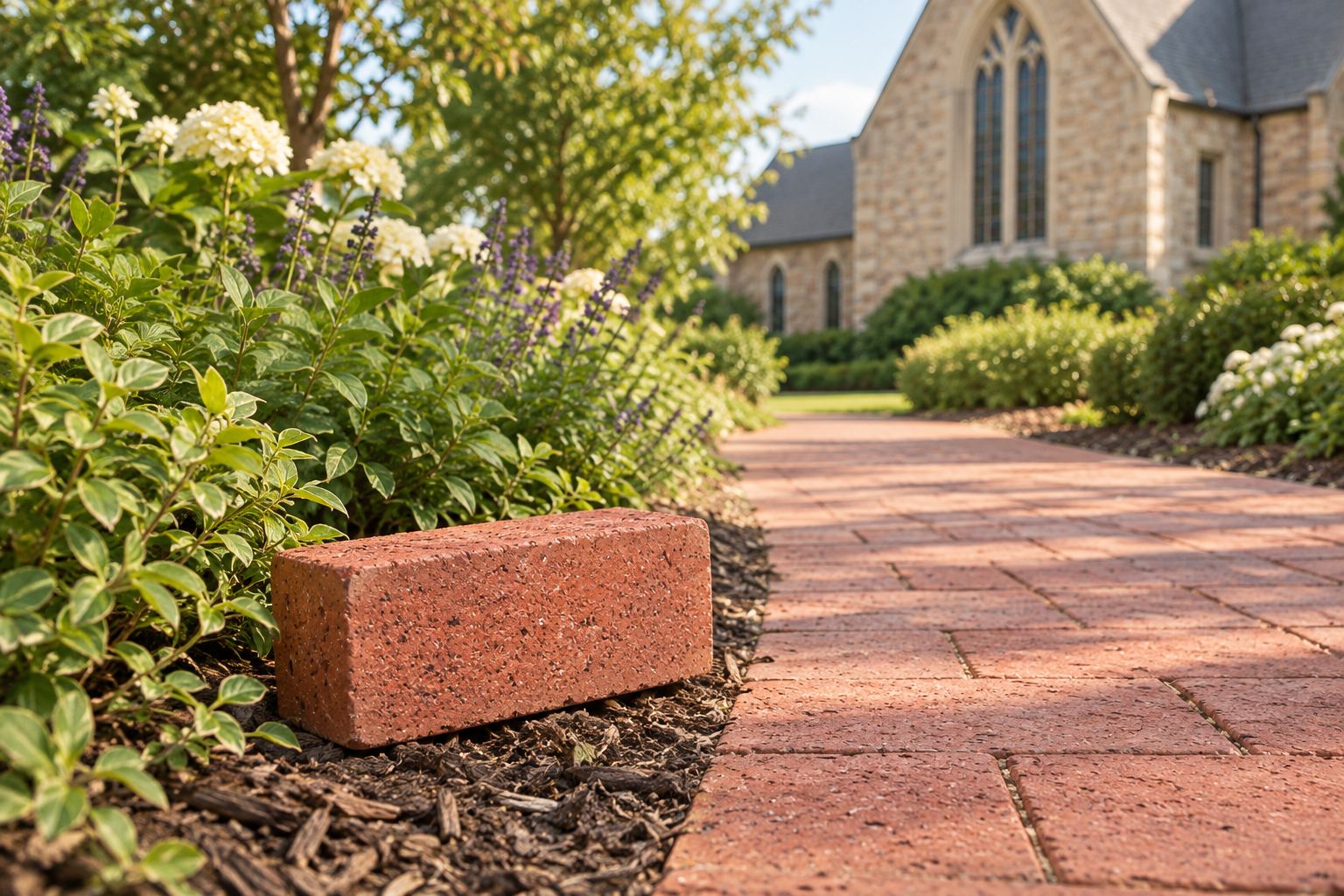
Then request a free sample brick from Bricks R Us. Use the sample to discuss the physical tribute with your committee before asking families to select wording. A sample helps you assess the material and engraving; it does not answer site-specific installation questions.
Compare the sample in the intended setting, not only on an office desk. Viewing conditions and the visitor's approach belong in the discussion.
- Inspect the sample in outdoor light.
- Discuss engraving readability and contrast.
- Confirm the available inscription format before drafting forms.
- Identify who will assess the installation site.
- Record the maintenance responsibilities in writing.
Approve each inscription before submitting it
Collect wording through a standard form rather than a chain of informal messages. Include the person's name, requested wording, proposed line breaks, and the family contact's approval. Ask the supplier to confirm the actual engraving limits before publishing any character guidance.
Set 2 approval stages: a family review for names and meaning, followed by a church review for policy and submission accuracy. Neither stage replaces the other. Compare the approved text against the final order rather than relying on memory or an earlier draft.
For orders collected in 2026, keep the approved version and its approval date together. If wording changes, obtain fresh approval instead of editing a signed-off record silently.
- Check spelling, punctuation, and requested capitalization.
- Verify any dates directly with the family contact.
- Confirm permission for religious wording or personal messages.
- Show the intended line breaks in the approval copy.
- Save the final approved text with the order record.
Separate remembrance decisions from campaign administration
Use a simple spreadsheet or paper register first. Track the tribute reference, family contact, permission status, approved inscription, submission status, and location. Store financial records through the church's normal process rather than adding sensitive details to a broadly shared volunteer sheet.
Create 3 distinct checkpoints: permission received, inscription approved, and order submitted. This makes an unfinished tribute visible without treating a family's silence as consent. Give each record an owner so volunteers know whom to ask before taking action.
Churches planning a 2026 dedication should distinguish a requested ceremony date from a confirmed installation date. Do not publish a commitment until the supplier, installer, and church have agreed on the necessary arrangements.
- Use a tribute reference to connect separate records.
- Limit access to family contact information.
- Mark pending approvals clearly.
- Record every submitted inscription version.
- Name a backup coordinator for volunteer absences.
Prepare the invitation and dedication together
Draft the invitation manually, then ask Bricks R Us about its free fundraising tools and hands-on support. Use that help for campaign administration while keeping sensitive family conversations with the church's designated contact. The supplier supports the project; it does not replace pastoral care.
Write the invitation so it answers practical questions without asking families to explain their grief. Describe the memorial location, approval process, contact person, and participation choices. Avoid suggesting that a public tribute measures someone's love or connection to the church.
Make dedication attendance optional. Ask permission before reading a name aloud, sharing a photograph, or including a personal story in the service material.
- Explain participation without emotional pressure.
- Offer a private route for questions.
- Confirm consent for public recognition separately.
- Describe how absent families will receive project updates.
- Check every public inscription against its approved record.
Request a free sample brick
Review a physical sample with your church committee before inviting families to choose their inscriptions.
Document future additions and long-term care
Decide how later tributes will join the memorial before installing the first group. Ask your installer to identify an expansion approach and document where each tribute sits. A location register helps the next coordinator find a brick without relying on a former volunteer's memory.
Set a maintenance owner and a process for reporting damage or inscription concerns. Explain how the church will review correction requests; do not promise replacement terms that have not been confirmed. Include a relocation decision process if future grounds work affects the memorial.
Close the 2026 planning file with a handover record, not just an order confirmation. Families should have a dependable church contact after the launch committee finishes its work.
- Map each installed tribute to its record.
- Identify space or arrangements for future additions.
- Assign responsibility for routine inspections.
- Document the route for reporting corrections or damage.
- Keep permissions and approvals accessible to authorized successors.
Compare church memorial recognition options
Choose the setting around how families will use it, not how impressive it sounds in a campaign announcement. Each option below needs permission, an approval process, and a long-term owner. The limitations are planning responsibilities, not reasons to dismiss an otherwise suitable tribute.
| Option | Best for | Practical benefit | Key limitation |
|---|---|---|---|
| Memorial brick walkway | Churches connecting remembrance with an existing walking route | Places individual tributes within a shared space | Requires suitable installation and consideration of pedestrian access |
| Memorial garden pavers | Churches offering a place for quiet visits | Connects engraved recognition with a defined garden setting | Needs grounds care and a plan for later additions |
| Indoor donor-recognition display | Churches preferring recognition inside a building | Keeps the display within the church's indoor spaces | Viewing depends on building access and available display space |
| Memorial register | Churches offering remembrance without an installed tribute | Provides a non-installed way to record a name | Requires a custodian, viewing arrangements, and preservation planning |
Offer an alternative when a family does not want an engraved tribute. A memorial register, private acknowledgment, or no public recognition can sit alongside the brick project without becoming a lesser expression of remembrance.
Common mistakes churches make with memorial bricks
Treating bereavement as a campaign deadline
A church's order schedule is not a family's readiness schedule. State administrative deadlines plainly, but explain whether a later opportunity exists only after that arrangement is confirmed. Keep pastoral contact separate from order reminders.
Publishing a tribute before permission is clear
A relative's participation does not automatically authorize a church newsletter story, social post, or public dedication announcement. Ask about each use separately. Keep the permission record specific enough for another coordinator to follow.
Allowing informal inscription changes
A well-meant correction from a volunteer can alter a name, relationship, or message the family deliberately chose. Route changes through the designated family contact and church reviewer. No unapproved wording should enter the submitted order.
Planning the launch but not the memorial's care
A dedication service marks a beginning, not the end of responsibility. Assign maintenance, recordkeeping, and family enquiries before the committee disbands. Without a handover, even a carefully approved project leaves future volunteers guessing.
FAQ
How do we offer memorial bricks to a bereaved church family?
Offer information privately and ask whether the family wants to receive it. Make participation optional, identify a church contact, and keep fundraising reminders separate from pastoral care.
Who should approve the wording on a church memorial brick?
A designated family contact should approve the personal wording, and an authorized church reviewer should check policy and submission accuracy. Save the final approved version before sending the order.
What should we put on a memorial brick?
Use wording chosen by the family and accepted under the church's inscription policy. Confirm engraving limits with the supplier before offering formats, and verify every name and date with the family contact.
Can we include Bible verses on memorial bricks?
Include a Bible verse only when it fits the confirmed engraving format and church policy, and the family approves the wording. Check the exact text and any applicable permission requirements rather than shortening it without approval.
What should we do if relatives disagree about an inscription?
Pause the order until the designated family contact provides wording accepted through the church's approval process. Do not ask volunteers or the supplier to choose between conflicting family instructions.
Can families participate without attending a dedication?
Make dedication attendance optional in your church's project plan. Ask separately whether the family permits a name to be read aloud or included in public materials.
How can our church assess a brick before opening the fundraiser?
Request a free sample brick from Bricks R Us and review it with your committee in the intended setting. Confirm inscription requirements separately and ask your facilities professional about site preparation and installation.
One last thing
Before launching, give the invitation to someone outside the committee and ask one question: can a grieving family decline without feeling that it has declined the church's care? Revise anything that makes the answer unclear.
A free sample brick from Bricks R Us is a useful next step for evaluating the physical tribute. Pair that review with a permission-led process so the memorial serves the family as well as the fundraising project.