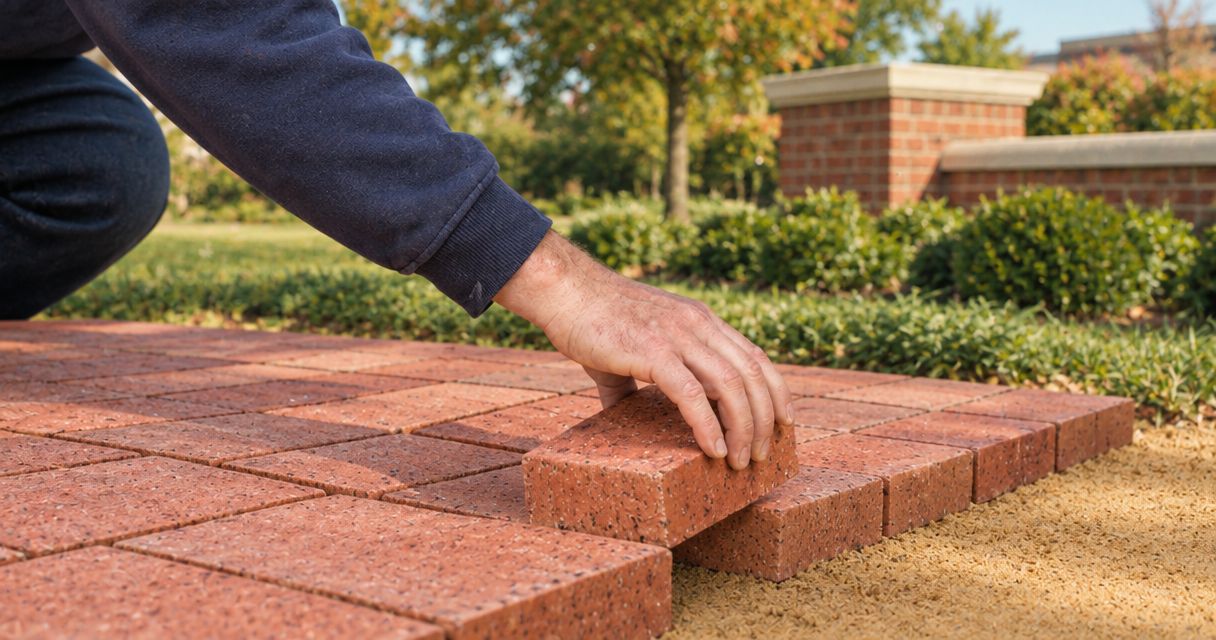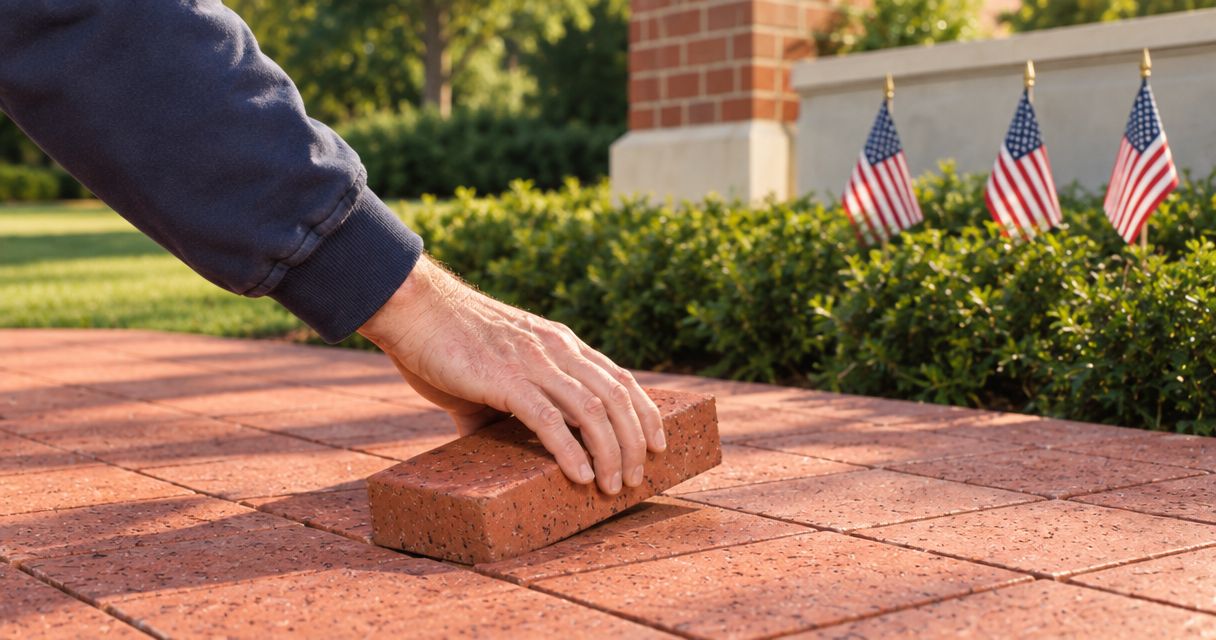
Veterans’ memorial bricks are engraved tributes that recognize military service with the aim of preserving a person’s name and service details accurately. For a 2026 project, separate family preferences from verifiable service facts, then secure approval of the exact inscription before ordering.
- Memorial bricks for veterans need verified names, supported service details, and approval of the exact inscription.
- Bricks R Us serves organizations seeking custom engraved bricks, pavers, and donor recognition.
- Use military records to check service facts; ask families to approve names and tribute wording.
- Leave disputed details off the inscription until the designated approver resolves them.
Why memorial bricks matter for veterans’ projects
A veterans’ tribute combines a personal remembrance with a public statement about military service. A misspelled surname hurts a family; an unsupported rank or decoration misrepresents the person being honored. Verify facts and approve wording as separate tasks.
Your committee also needs a workable process. A nonprofit might collect submissions from several families, while a municipality needs permission to use public space. Schools and universities must distinguish graduation years from service dates; churches need sensitive family communication; sports organizations must separate team affiliations from military credentials.
Start with a shared register rather than scattered emails. The guide to organizing donor names for a donor recognition wall provides a related starting point for organizing recognition information.
For a 2026 dedication, build verification into the schedule before announcing an inscription deadline. Give unresolved submissions a clear next step instead of allowing event preparations to become permission to guess.
How to verify veterans’ memorial brick inscriptions
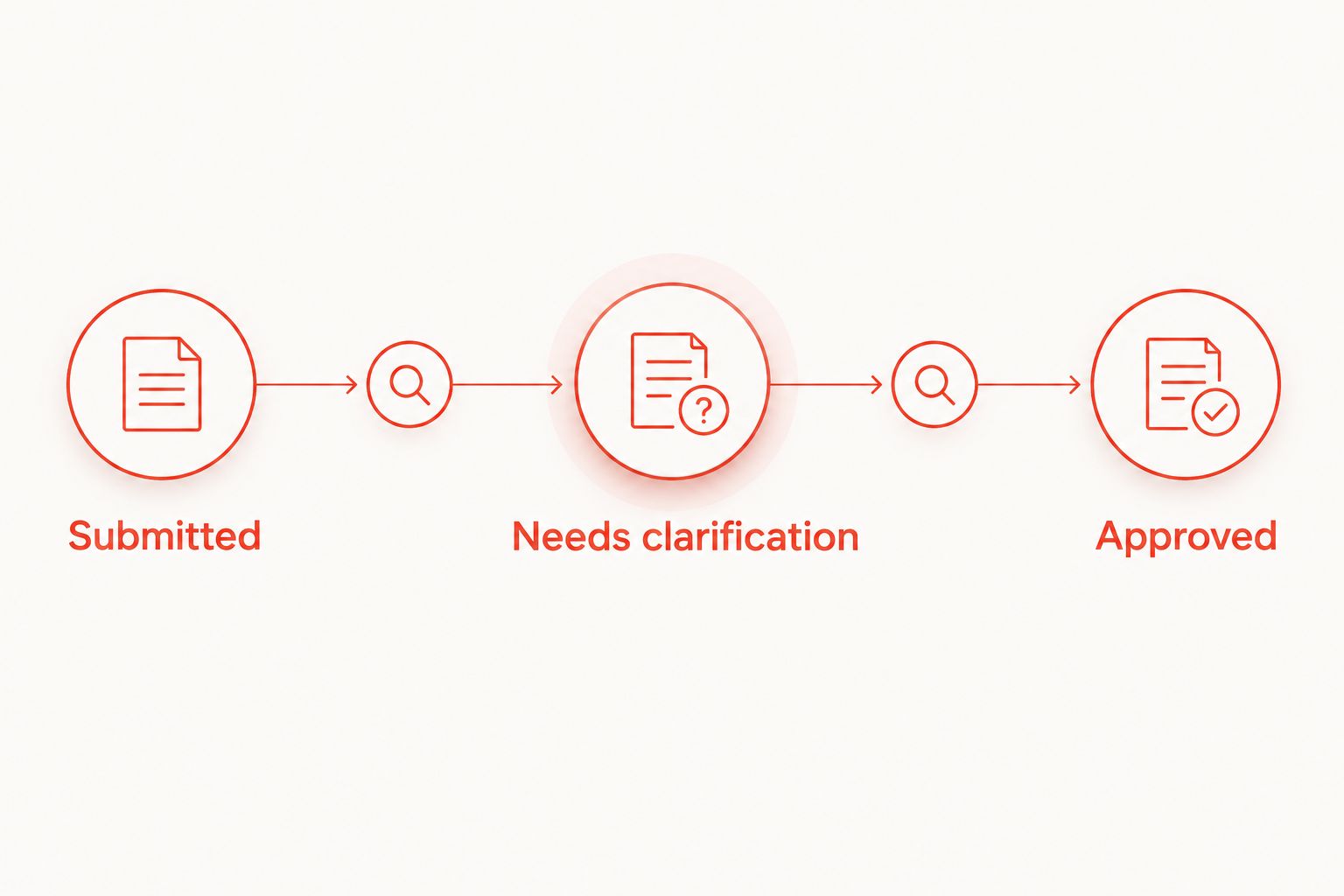
Use a spreadsheet and a shared folder before considering any additional system. Give each submission one of 3 statuses: Submitted, Needs clarification, or Approved. Keep the public inscription separate from private supporting documents.
Define your recognition rules before collecting names
Write a short eligibility and inscription policy that every participating organization can explain. Decide whether the project honors deceased veterans only, includes living veterans, or also recognizes civilian supporters. Do not let the word memorial make that decision implicitly.
Separate eligibility from optional inscription details. Your committee can require confirmation of qualifying service without requiring every family to publish a rank, unit, or service period. A shorter inscription is better than a longer one filled with unresolved information.
For your 2026 submission form, distinguish the required name field from optional service fields. Explain how your organization handles missing records, disputed information, and requests submitted by someone other than a relative.
- Define who qualifies for recognition and who decides exceptions.
- Identify required information and optional inscription details.
- Name 1 approver responsible for releasing each final inscription.
- State how families can raise a concern or request a correction.
- Explain whether future additions will follow the same policy.
Collect names separately from military service facts
Ask contributors to enter each field separately rather than sending a finished paragraph. A display name, legal name, nickname, branch, rank, unit, and service period answer different questions. Keeping them separate helps reviewers spot a date placed in the wrong field or a nickname mistaken for an official name.
Ask for the relationship between the submitter and the honoree. A friend or teammate can initiate a tribute, but your policy should identify whose approval is needed before production. Do not ask a volunteer to settle a family disagreement alone.
Collect only the supporting information your review requires. Military documents can contain sensitive personal details; keep them outside public order lists and restrict access to designated reviewers.
- Record the requested display name exactly, including accents and suffixes.
- Collect branch, rank, unit, and dates in separate optional fields.
- Identify the submitter and the person authorized to approve wording.
- Ask contributors to redact unrelated sensitive information.
- Keep a private note of the source supporting each service claim.
Match the inscription to the physical brick
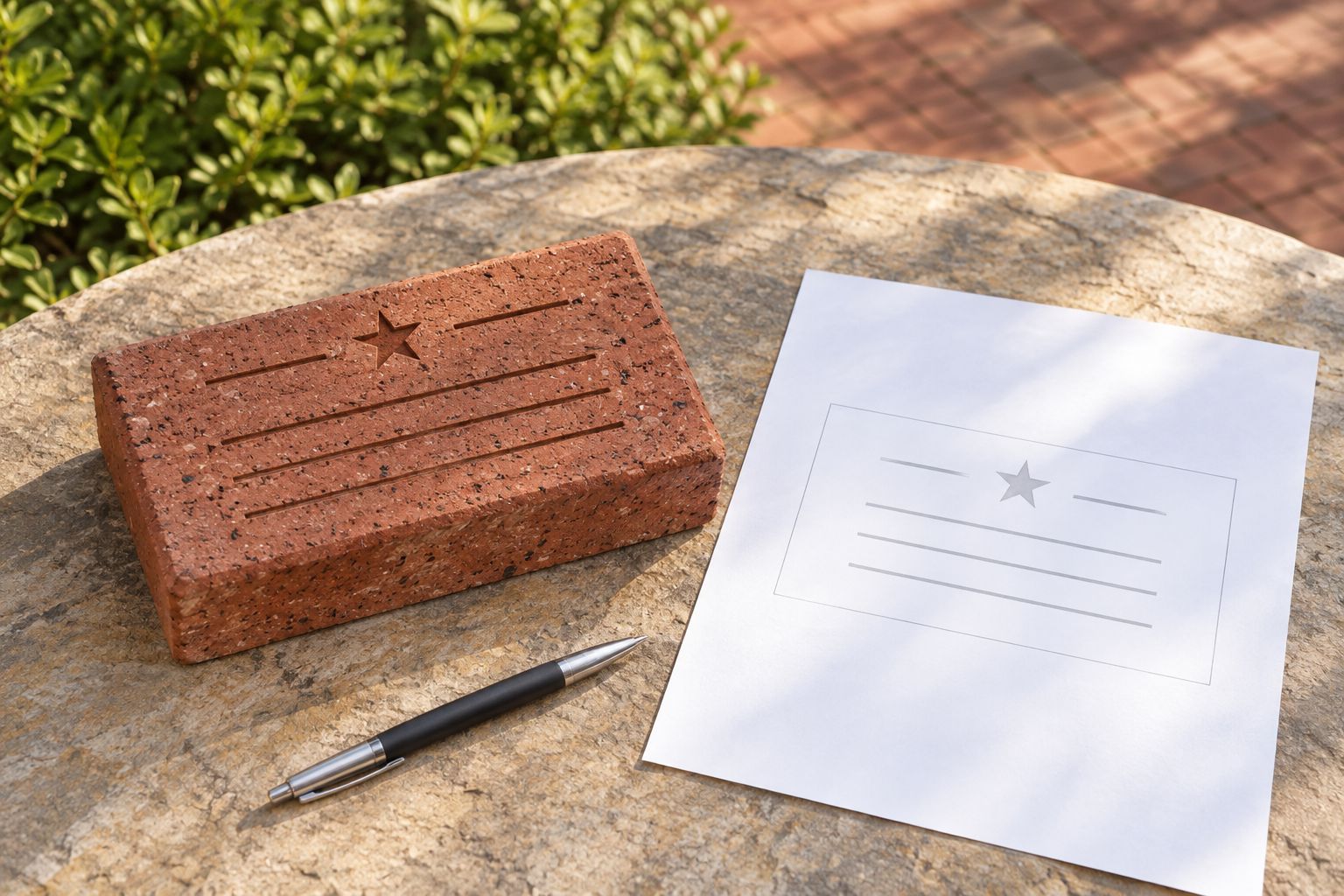
First, sketch the proposed inscription on paper and review it line by line. Keep an unshortened master record beside the display version so that fitting text never changes the underlying facts.
Bricks R Us is best for organizations seeking custom engraved memorial bricks and donor-recognition products. The company brings over 35 years of experience, free fundraising tools, and hands-on support; your committee still needs to verify each honoree’s information and authorize the wording.
Request a free sample brick through Bricks R Us before settling on the presentation. A sample helps your team evaluate the physical engraving, but it does not replace checking the specifications and proof for your actual order. Ask which text, symbols, and layout choices apply to the selected product.
- Confirm the selected product’s inscription limits before shortening names.
- Preserve an unabridged record of every approved service detail.
- Ask about supported punctuation, accents, symbols, and lettering.
- Review legibility and layout using a sample and the actual proof.
- Remove optional details rather than inventing unfamiliar abbreviations.
Check service details against appropriate records
Use an official service record when available to check military facts. A DD Form 214 is a separation document that can help verify information for veterans who have one; other service records are relevant when that document does not apply. Match the document to the person and the claim rather than treating any military paperwork as universal confirmation.
Read dates in context. Birth and death dates are not service dates, and a document showing one period of service does not establish that it covers an entire career. Ask what the proposed inscription means before approving a date range.
For a 2026 review policy, define how you will handle incomplete documentation without making an unsupported claim. If a rank, award, or unit remains unresolved, hold that detail for clarification or omit it with the approver’s agreement.
- Check names against the submitted records and family instructions.
- Verify the branch and the specific rank the inscription will state.
- Confirm what each date represents before engraving a range.
- Check decorations individually rather than inferring them from service.
- Record unresolved questions without copying sensitive documents into public files.
Approve the exact inscription with independent checks
Send the designated approver the inscription exactly as it will appear, including line breaks, abbreviations, punctuation, and any symbol. Approval of a biographical paragraph is not approval of a shortened engraving layout.
Use 2 reviewers with different tasks: one compares the proof with the source information, and the other reads only the displayed text. The second review checks whether a stranger can understand the tribute without access to the committee’s notes.
Keep a dated approval tied to a specific version. If anyone edits the inscription afterward, return the changed version for approval. A small correction can alter a name, date, or meaning just as easily as a large revision.
- Compare each character in the proof with the approved submission.
- Read names and abbreviations aloud to catch awkward wording.
- Ask the authorized approver to confirm the exact displayed version.
- Record the approval date and version in the submission register.
- Require renewed approval after any inscription change.
Release approved inscriptions and retain a correction record
Create the production list from approved entries only. Keep unresolved submissions in a separate queue so they cannot enter an order through a copied spreadsheet tab or an outdated attachment.
Before release, reconcile the list with the approval register. Confirm that each inscription has the correct recipient, wording, layout, and location assignment where applicable. The person sending the order should know who can authorize changes after submission.
Keep a record of approved wording after installation. If a family later identifies an error, your organization needs to distinguish what was requested, what was approved, and what was produced. Ask about correction procedures before ordering rather than assuming a replacement policy.
- Export only entries marked Approved.
- Check the production list against each final approved proof.
- Identify the person authorized to communicate order changes.
- Retain approvals and source notes according to your privacy policy.
- Give families a clear contact for reporting inscription concerns.
Request a free sample brick
Examine an engraved brick before your committee settles on its memorial presentation.
Compare verification approaches for your project
Use official records for service facts and family approval for personal presentation. Neither task replaces the other. A family can confirm the preferred display name without establishing a military decoration; a record can establish service information without deciding the family’s tribute wording.
Choose the lightest process that preserves a clear approval trail. A volunteer-led church project and a university memorial can use the same verification principles without using the same administrative setup.
| Approach | Best for | Main benefit | Key limitation |
|---|---|---|---|
| Family-led submission | Personal names and tribute wording | Establishes the requested presentation and contact | Does not independently verify military credentials |
| Official-record review | Branch, rank, dates, and documented honors | Connects service claims to supporting records | Records need careful interpretation and private handling |
| Shared spreadsheet and folder | Committees managing submissions manually | Keeps status, sources, and approvals together | Requires access controls and disciplined version management |
| Vendor-supported preparation | Organizations turning approved text into engraving | Helps organizers address product and layout questions | Does not replace family authorization or service verification |
These approaches work together rather than compete. Start manually, add support where it removes a specific administrative task, and keep responsibility for factual approval with your organization.
Common mistakes veterans’ memorial committees make
Treating the donor as the automatic final approver
A donor might be an employer, friend, alumnus, or sports teammate rather than a relative. Establish the approval route before accepting final text, particularly when surviving family members have different preferences. Keep gift recognition separate from authority over the veteran’s inscription.
Choosing the most impressive rank instead of checking it
Do not select a rank because it appears in an informal biography or seems consistent with the veteran’s age. Verify the proposed rank and its context. If the inscription cannot accurately explain a distinction, omit the rank with approval rather than simplify it incorrectly.
Mixing military dates with community affiliations
A university graduation year, church membership date, or sports season is not a service period. Label these details separately in your records. If your project includes both military service and a community connection, make the final wording understandable without committee explanation.
Assuming a memorial setting settles family preferences
A municipal garden, nonprofit courtyard, church walkway, campus memorial, and sports venue serve different communities. Confirm the intended tone and location with the appropriate decision-makers. Permission to honor someone does not automatically settle religious wording, photographs, symbols, or placement.
Letting the dedication date overrule verification
For a 2026 dedication, decide in advance what happens when an entry is still unresolved at the ordering deadline. Hold the inscription or use approved wording that excludes the disputed detail. An event date is not evidence that an unverified claim is correct.
FAQ
What should we put on memorial bricks for veterans?
Include the approved display name and only the service details your committee can verify. Branch, rank, dates, and a tribute message are optional choices, subject to the selected product’s inscription limits.
How do we verify a veteran’s name before engraving?
Compare the requested display name with supporting records and ask the designated approver to confirm the exact spelling. Resolve differences involving nicknames, suffixes, accents, or name changes before releasing the inscription.
Do we need a DD Form 214 for every veterans’ memorial brick?
Your organization should define which records it accepts rather than require the same document in every case. A DD Form 214 can support service verification when applicable, but other service records can be relevant to the person and claim.
Can we engrave a rank if the family is unsure?
Leave the rank off until it is verified and approved. A tribute using the person’s name and other confirmed details avoids publishing an unsupported military claim.
Who should approve the final memorial inscription?
The approver designated under your project’s policy should approve the exact inscription before production. Record that person’s authorization and obtain fresh approval if the text or layout changes.
Can Bricks R Us help us evaluate memorial bricks?
Bricks R Us offers custom engraved bricks, pavers, donor-recognition products, free fundraising tools, and hands-on support. Request a free sample brick to examine the physical presentation, while keeping factual verification and inscription approval with your organization.
What should we do when a family disputes service details?
Pause approval of the disputed detail and identify what supporting information would resolve it. Do not ask a production vendor or an uninvolved volunteer to choose between conflicting family accounts.
One last thing
Ask someone who has never seen the submission to read the final inscription. If that reader cannot tell whether a date refers to military service, a lifetime, or a graduation year, revise the wording before approval.
The most meaningful memorial does not need every available detail. It needs a name treated carefully, facts represented honestly, and a family who understands what will be engraved.