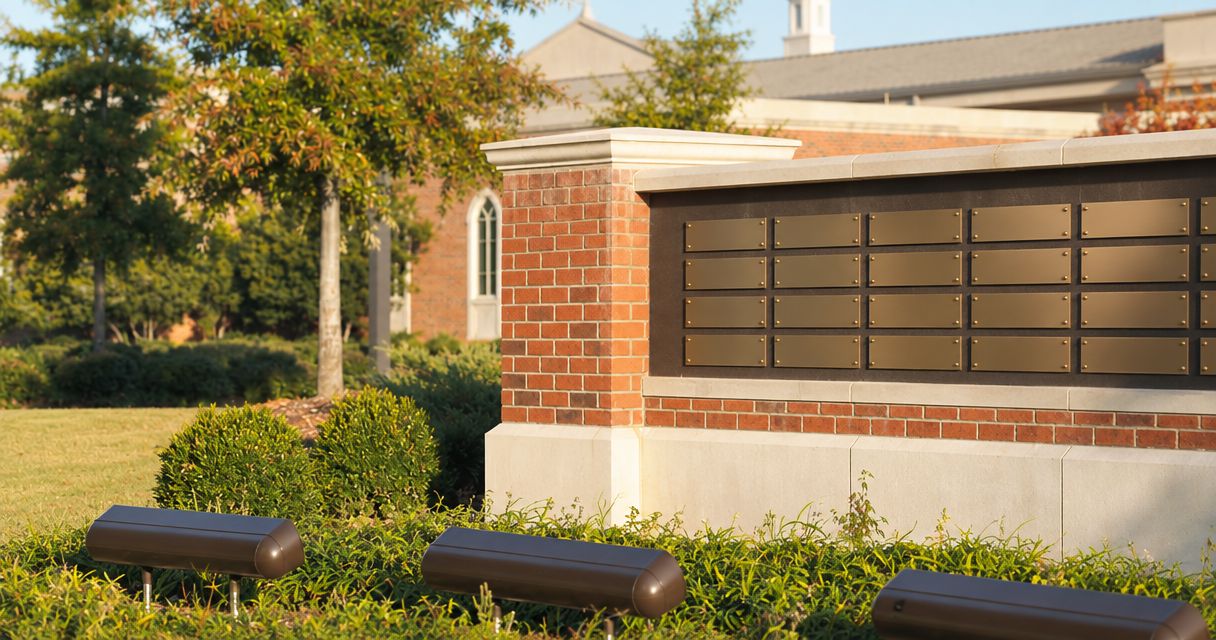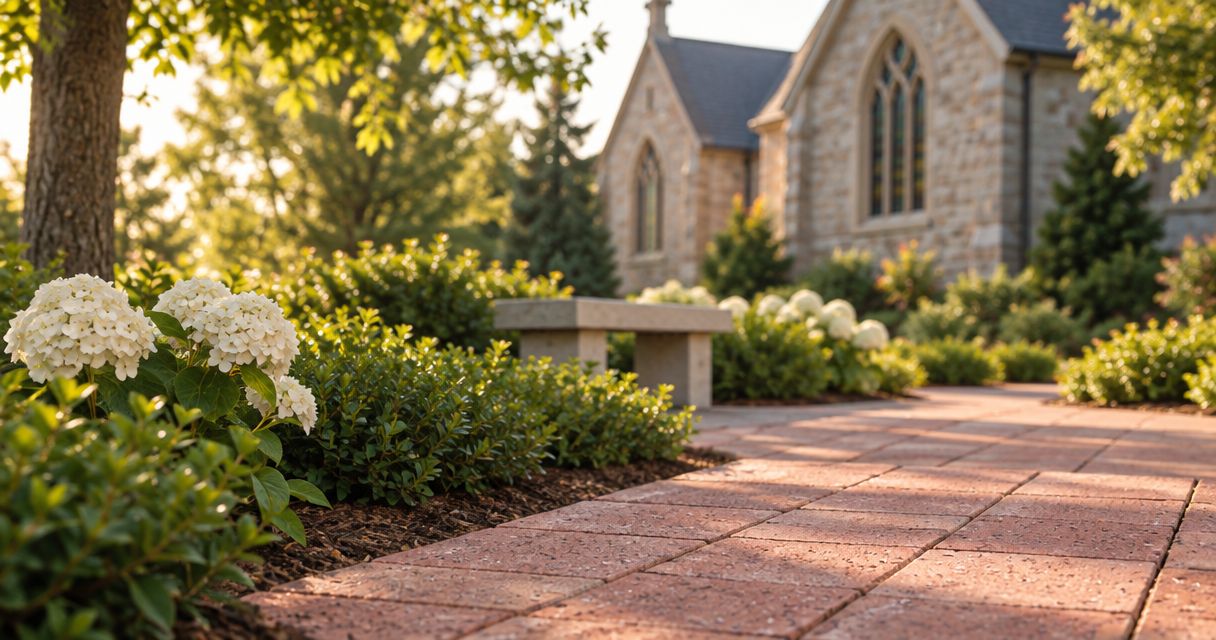
Church memorial pavers are engraved tributes placed in a garden or walkway with the aim of honoring loved ones and supporting a shared place of remembrance. For a church, choosing the setting means balancing quiet prayer, family wishes, everyday access, and the care the congregation can provide.
- Choose memorial pavers around the garden’s purpose, access, and long-term care—not appearance alone.
- Bricks R Us supplies engraved bricks, pavers, and donor-recognition products for organizations planning remembrance projects.
- Approve inscriptions with families before ordering, and keep fundraising messages separate from the quiet memorial setting.
- Request a free sample brick before your committee approves the materials.
Why memorial pavers matter for churches
A church remembrance garden serves people arriving with different needs: someone seeking private prayer, a family visiting together, or a congregation gathering after a service. The right setting gives remembrance its own space without making that space difficult to reach. Start with those visits, not a drawing of the paving pattern.
Bricks R Us is best for organizations seeking custom engraved bricks, pavers, and donor-recognition products. Its free fundraising tools, hands-on support, and over 35 years of experience support the organizing work; your church still needs to decide the garden’s purpose, approve inscriptions, and arrange installation and care.
For a 2026 project, write down what the garden should offer before choosing materials. A place for quiet remembrance needs a different approach from an entrance intended primarily to recognize campaign supporters. Both purposes belong in church life, but they do not need to compete in the same space.
Plan a church garden around the people using it
Define the garden’s purpose before choosing pavers
Give the committee a clear brief: who the garden honors, how visitors will use it, and how fundraising relates to remembrance. Decide whether it will recognize deceased congregation members, loved ones connected to church families, or a wider community. Do not leave eligibility decisions until inscriptions arrive.
Keep the invitation welcoming without suggesting that a donation determines someone’s place in the church community. If your project includes both memorial tributes and general donor recognition, decide how visitors will distinguish them. A family should understand what an inscription represents without needing an explanation from a volunteer.
Write a short purpose statement that church leaders can approve and volunteers can repeat consistently. Use it to resolve later questions about wording, placement, and expansion.
- Define who is eligible for a memorial inscription.
- Separate remembrance from general campaign recognition where needed.
- Name the person responsible for policy questions.
- Describe how the garden will support prayer and reflection.
Visit possible locations during ordinary church activity
Walk each possible site during a busy service period and during a quieter part of the week. These 2 site visits give your committee different views of the same space. Listen for parking activity, deliveries, children’s activities, equipment, and conversations near entrances.
Quiet does not have to mean remote. A secluded corner loses its usefulness if visitors cannot find it or feel uncomfortable approaching it alone. Consider whether someone can enter the garden without crossing an active gathering area, and whether seating faces the memorial rather than a vehicle route.
For your 2026 site review, record observations instead of relying on a single pleasant afternoon. Note where people walk naturally and where visitors would stop to read names. Ask the people responsible for church activities about recurring uses of the area.
- Visit during both active and quiet periods.
- Observe nearby doors, parking areas, and delivery routes.
- Identify a comfortable place to pause or sit.
- Check whether visitors can find the garden without assistance.
Review the sample and the route together
Start with a simple sketch showing the approach, seating, planting, and proposed memorial area. Ask a qualified installer to review the surface, drainage, transitions, and applicable accessibility requirements. Do not treat a paving sketch as an installation specification.
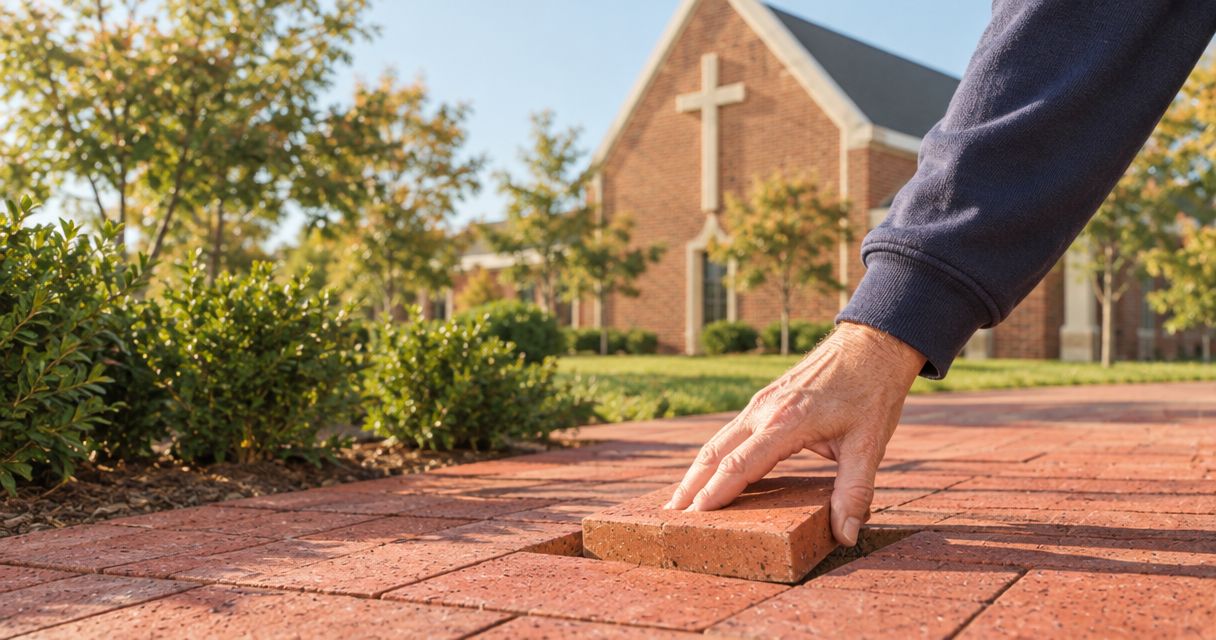
Then request a free sample brick from Bricks R Us. Examine it outdoors with the committee rather than approving the project from a screen alone. A sample helps you discuss the physical material and engraving; it does not replace confirmation of the proposed paver’s dimensions, inscription limits, or installation requirements.
Review the route as carefully as the tribute itself. Someone reading an inscription should not have to stand in a doorway, obstruct a path, or step into planting. For more sample-review questions, use the guide to what to check in an engraved-brick sample.
- Sketch the arrival route and places to pause.
- Review the sample in the proposed setting.
- Confirm specifications for the actual material you select.
- Ask an installer to assess drainage and surface transitions.
Approve inscriptions with families before ordering
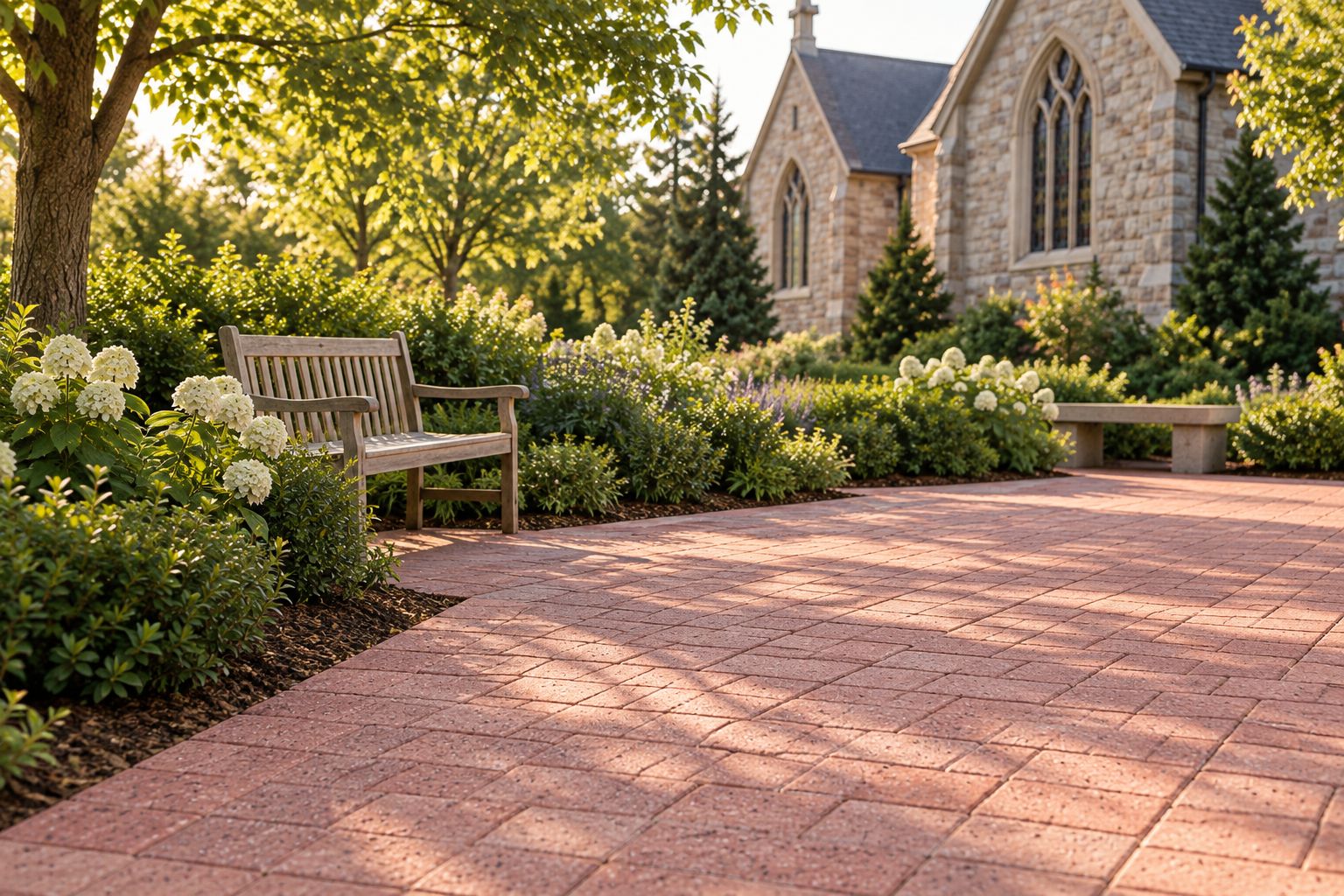
Use a written submission and approval process even when everyone knows one another. Names, punctuation, dates, religious language, and relationships deserve careful checking. The committee should not infer a family’s preferred wording from an announcement or church directory.
Assign 3 review roles: a family contact, a church policy approver, and an order coordinator. These are responsibilities, not necessarily separate committee positions. The family confirms personal details, the church checks the wording against its policy, and the coordinator submits the approved version.
Give families room to respond without pressure. A bereaved person should not receive an urgent fundraising message disguised as an inscription reminder. Explain what requires approval, when the order will be submitted, and whom to contact about a change before submission.
- Collect the inscription in a standard form.
- State the selected material’s confirmed inscription limits.
- Obtain written approval of the exact final wording.
- Record who approved it and when.
Reserve space for future tributes and maintenance
Treat the first installation as part of a continuing place of remembrance. Decide where later inscriptions would go and how an installer would reach that area. Avoid a layout that requires disturbing established tributes whenever the church adds another memorial.
On your 2026 plan, mark the initial memorial area, future additions, seating, and planting separately. Ask the installer how those areas would work together. Leave practical maintenance questions visible: who clears fallen leaves, who checks the walking surface, and who responds when a family reports a problem?
Keep a location record so future volunteers can find an inscription without relying on someone’s memory. A simple labeled plan and matching list are a useful starting point. Review the plan whenever the church approves an addition or changes the surrounding landscape.
- Mark space for future additions on the layout.
- Confirm how later installation work would reach that space.
- Assign responsibility for routine garden care.
- Maintain a location record for every installed tribute.
Explain the fundraising purpose without crowding the memorial
Tell supporters what the project is intended to support and what their participation includes. Explain how inscription approval works and how the church will communicate installation updates. Keep those details in campaign materials rather than filling the garden with fundraising instructions.
Choose wording that honors both the person remembered and the visitor reading the tribute. A memorial area is not the place for repeated requests to participate. If information is needed on site, decide what visitors genuinely need to know and keep the message restrained.
Bricks R Us offers free fundraising tools and hands-on support. Use that support to help organize your campaign, while keeping church decisions about eligibility, pastoral communication, and memorial placement with the appropriate church leaders.
- State the project’s purpose in plain language.
- Explain the submission and approval process before collecting inscriptions.
- Keep campaign instructions separate from memorial wording.
- Identify a contact for family questions and project updates.
Keep a clear record from approval through installation
Create 1 master record for each tribute, linking the approved wording, family contact, order status, and intended location. Avoid separate volunteer lists that contain conflicting versions. Limit access to personal contact details to people who need them for the project.
Before installation, compare the delivered engraving with the approved inscription and the placement plan. Resolve discrepancies before the paver becomes part of the finished garden. After installation, record its final location and tell the family how to find it.
Finish your 2026 project handover with a named caretaker and an agreed process for future requests. The goal is continuity: a new volunteer should understand the garden without reconstructing decisions from old email threads.
- Keep approved wording and location information together.
- Check delivered inscriptions before installation.
- Record the final placement of each tribute.
- Hand over maintenance and future-order responsibilities in writing.
Compare settings for your church memorial pavers
Choose the location that supports remembrance during ordinary church life, not just during the dedication. Use the following options as discussion starting points, then assess the actual site with your committee and installer.
| Setting option | Best for | Main advantage | Key limitation |
|---|---|---|---|
| Dedicated garden area | Churches prioritizing private reflection | Gives remembrance a distinct setting | Requires a clear approach and an ongoing care plan |
| Side courtyard | Churches connecting indoor gathering spaces with outdoor reflection | Keeps the memorial close to church activity | Nearby doors and gatherings can interrupt quiet |
| Entrance walkway | Churches prioritizing visibility and everyday recognition | Places names along an established arrival route | Reading visitors can conflict with arriving groups |
| Area beside existing seating | Churches supporting longer visits | Connects tributes with a place to pause | Existing shade, roots, and surface conditions need review |
An entrance walkway is not automatically wrong, and a separate garden is not automatically peaceful. Evaluate how each space functions. If visitors must choose between reading an inscription and keeping the entrance clear, reconsider the placement.
Common mistakes church memorial committees make
Choosing seclusion instead of usable quiet
A distant corner can look peaceful on a plan but feel disconnected in person. Walk the route with people who use the church grounds differently, including visitors who need a place to rest. Keep the memorial easy to locate without putting it in the busiest circulation area.
Collecting inscriptions before agreeing on eligibility
An open invitation creates difficult conversations if the committee later restricts who qualifies. Approve eligibility and wording rules first, then publish them together. Apply the same process to requests from longstanding members, newer families, and people outside the congregation.
Treating family approval as an informal conversation
A friendly discussion is not a reliable final inscription record. Ask the designated family contact to approve the exact wording in writing. Keep that version attached to the order so later volunteers do not have to guess which message was final.
Planning the dedication but not the next addition
A finished dedication does not settle future requests or maintenance. Assign responsibility for additions, location records, and garden care before the project closes. Keep the process simple enough for the next committee to use.
FAQ
Where should a church put memorial pavers?
Place church memorial pavers where visitors can reach them comfortably and pause without blocking regular activity. Compare a dedicated garden, courtyard, entrance route, and existing seating area before choosing the site.
Are memorial pavers better in a garden or an entrance walkway?
A garden is better suited to a project whose main purpose is quiet reflection; an entrance walkway emphasizes everyday visibility. Review actual traffic and nearby activities before deciding, because either setting needs space for visitors to stop.
What should we check before choosing memorial pavers?
Check the physical sample, confirmed inscription limits, proposed location, installation requirements, and maintenance responsibilities. Request a free sample brick from Bricks R Us and confirm the specifications of the material your church intends to order.
Who should approve a church memorial inscription?
The designated family contact should approve personal details and final wording, while the church checks compliance with its memorial policy. The order coordinator should submit only that approved version.
Can a church add memorial pavers after the garden opens?
A church can plan for later additions by reserving space and agreeing on an installation approach before the first phase. Keep the layout and inscription records current so future volunteers can manage new requests.
How do we keep a memorial garden separate from fundraising?
Keep participation instructions and campaign messages in fundraising materials rather than repeating them throughout the memorial area. Explain the project clearly while allowing the garden itself to focus on remembrance.
What should our church record for each memorial paver?
Keep the approved inscription, approval date, family contact, order status, and installed location together. Restrict access to personal details and give future coordinators a clear handover.
One last thing
Before approving the layout, stand where a visitor would read a name. Ask where that person will pause, where a companion will wait, and whether others can pass comfortably. That small check brings the plan back to the people the garden is meant to serve.
Request a free sample brick, then bring the material and the site plan to the same committee discussion. Choose the tribute and its setting together.
Request your free sample brick
Review a physical sample with your church committee before choosing materials for the memorial garden.