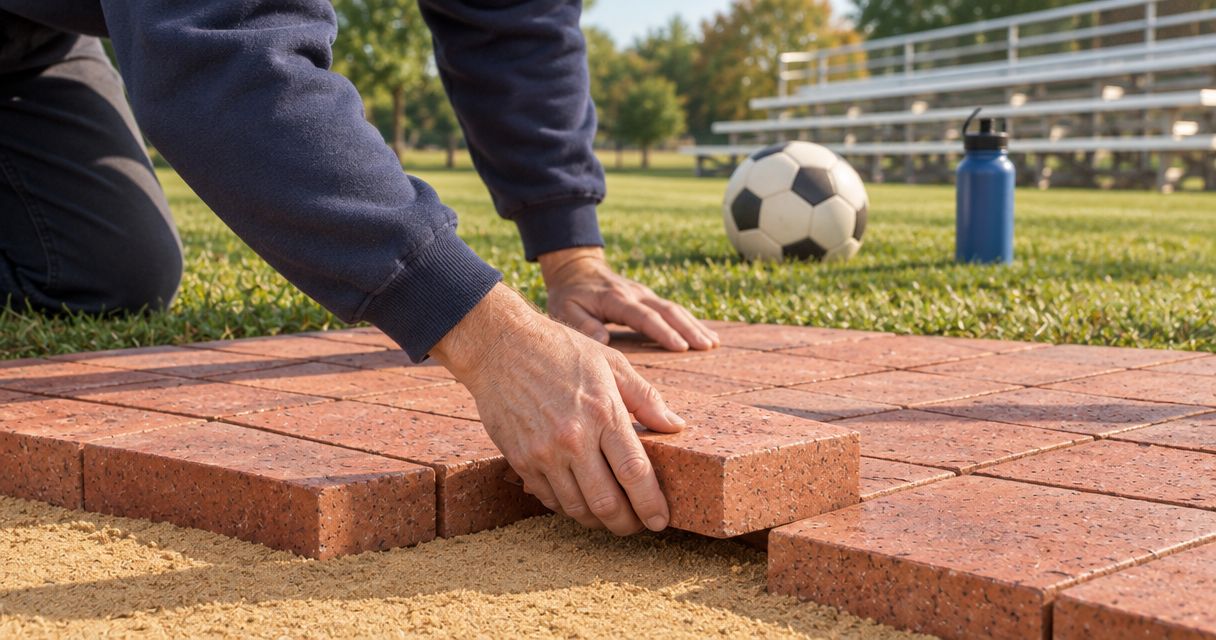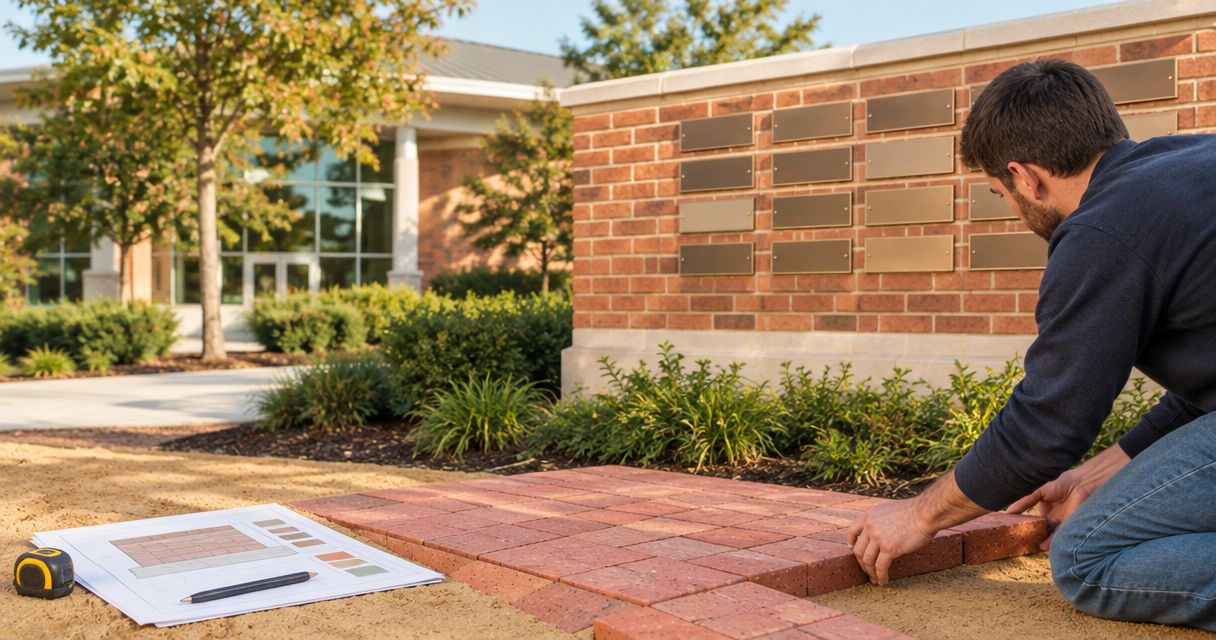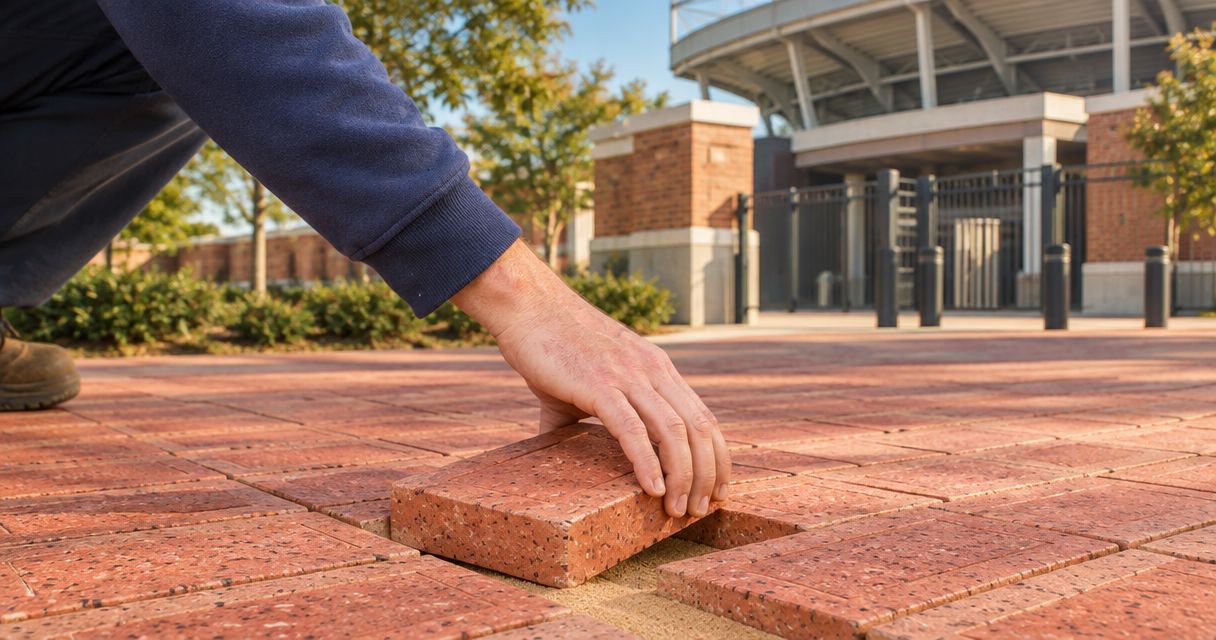
Stadium entrance engraved bricks are inscribed bricks used to recognize supporters and connect fundraising with a shared gathering place. Review a physical sample before approving your campaign: the inscription needs to read clearly, while the proposed installation needs a separate facilities review.
- For stadium entrance engraved bricks, review the inscription and installation plan separately before approving either.
- Bricks R Us offers a free sample brick for organizations evaluating engraved bricks and donor recognition.
- Check the sample outdoors, confirm donor wording, and document approval before opening campaign orders.
- A sample helps you evaluate appearance; it does not establish whether a stadium entrance installation meets site requirements.
Why engraved bricks matter for stadium organizations
An entrance brings donor recognition into a place supporters already associate with their school, team, or community. The challenge is making that recognition work alongside ticket lines, accessible routes, maintenance, and event-day movement.
Bricks R Us designs and sells engraved bricks, pavers, and donor-recognition products for fundraising organizations. Bricks R Us engraved bricks are best for organizations planning physical donor recognition; a sample review does not replace installation planning.
For your 2026 campaign, separate the emotional decision from the site decision. A meaningful tribute still needs accurate wording, an approved location, and a clear process for future additions.
The stakeholders vary, but the review principles stay consistent:
- Nonprofits: connect recognition to the mission without promising an unapproved installation date.
- Schools and universities: coordinate alumni details, campus approvals, and facilities responsibilities.
- Churches: review tribute language sensitively and agree who approves faith-based messages.
- Municipalities and community memorial projects: confirm public-space permissions and family consent where appropriate.
- Sports organizations: account for entrance queues, team recognition, and event schedules.
These groups sometimes share a stadium project. Name one campaign decision-maker so conflicting feedback does not become conflicting donor instructions.
How to review a stadium entrance brick sample
Use these 6 steps to turn a sample into a documented decision. Start with a written brief and a simple review sheet; neither requires a dedicated ordering system.
The sequence matters. Establish what the sample must demonstrate before deciding whether you like its appearance.
Define the recognition purpose
Write a short statement explaining who the engraved bricks will recognize and what the fundraising project supports. Keep recognition eligibility separate from inscription rules: deciding who can participate is different from deciding what fits on a brick.
A university stadium project might need distinct rules for alumni, families, and teams. A community stadium might need a process that treats local organizations and individual donors consistently. Choose the rules before collecting names.
Approve the purpose before approving the sample. Otherwise, a committee can accept an attractive example without noticing that the proposed format does not suit the messages donors will submit.
For a 2026 launch, date the brief and identify which version governs campaign materials. A later change should trigger a deliberate update, not a quiet edit to one form.
- State the project purpose in one sentence.
- Identify eligible recognition categories.
- Name the person authorized to resolve exceptions.
- List the wording decisions that still need approval.
Examine the sample at the proposed entrance
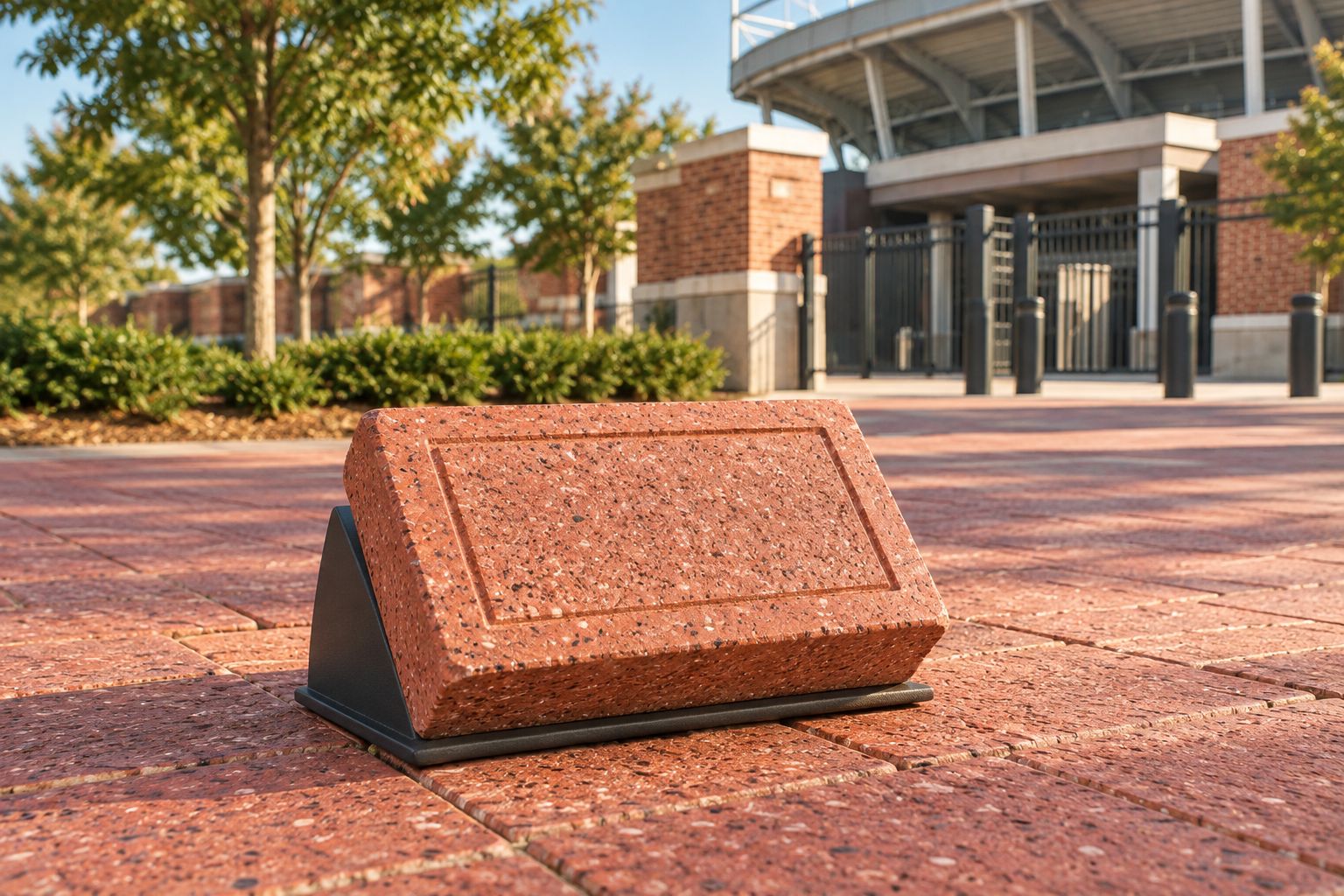
Start by taking an available physical example outside and recording what you can actually see. Then request a free sample brick from Bricks R Us to evaluate the material and engraving directly rather than relying only on a photograph.
View the sample near the intended setting, without placing a loose brick where someone could trip. Look at it standing upright as well as close up. Notice shadows, surrounding paving, and whether the inscription remains understandable without crouching.
A generic sample shows the appearance of that sample. It does not automatically confirm your final layout, wording, or suitability for the location. Ask which characteristics represent the proposed order and which require separate confirmation.
- Examine letter edges and the visible engraving.
- Compare the sample with surrounding paving in daylight.
- Review legibility from a normal standing position.
- Photograph the sample for the approval record.
Test the inscription rules with real message types
Use a shared document to draft representative inscriptions before opening donor submissions. Include a short family name, a longer organizational name, and a memorial message. Use consented details or clearly fictional internal drafts that will never enter the production file.
Evaluate spelling, punctuation, capitalization, and line breaks separately. A message can fit the approved format and still contain the wrong name. Conversely, an accurate message can become difficult to read when its lines divide awkwardly.
Bricks R Us offers free fundraising tools and hands-on support. Ask which available tools fit your collection and approval process, while keeping your own written inscription rules as the decision reference.
For your 2026 inscription policy, explain how you will handle messages that need revision. Do not promise that every submission will be accepted exactly as entered.
- Draft examples covering the message types you expect.
- Confirm applicable layout limits before publishing instructions.
- Define rules for names, dates, abbreviations, and symbols.
- Require donor approval of the final inscription text.
Separate appearance approval from site approval
Ask your facilities lead or qualified installation professional to review the proposed location. The campaign committee can approve the recognition concept, but that approval should not stand in for decisions about the walking surface, drainage, accessibility, or installation method.
A tabletop sample cannot demonstrate performance in the completed entrance. Its role is narrower: it helps you assess the visible product and ask better questions about the proposed installation.
Request written confirmation of the material and installation requirements relevant to your project. Leave performance claims out of donor materials unless they have been confirmed for the actual product and intended use.
Keep these approvals distinct in the record. A sample can pass the appearance review while the location still needs work.
- Confirm who controls the entrance and adjoining land.
- Ask how the installation will meet applicable accessibility requirements.
- Review drainage, surface transitions, and maintenance access.
- Document who approves the installation method and site readiness.
Assign the review and ordering responsibilities
Use a shared checklist to assign responsibilities before collecting orders. Give inscription review, facilities approval, and donor communication named owners; several volunteers can contribute without several people independently releasing production files.
A practical structure uses 3 review groups: campaign, donor records, and facilities. These are responsibilities, not mandatory staffing levels. In a smaller organization, one person can hold more than one role while still documenting each decision separately.
Use the committee preparation guide to organize the handoffs. Schools can include an alumni contact, churches a pastoral representative, and municipalities the appropriate public-space decision-maker without changing the basic approval sequence.
For the 2026 season, work backward from actual facility commitments rather than publishing an installation date first. Confirm relevant production and installation arrangements before promising a dedication event.
- Assign one owner for the master donor record.
- Name the final inscription approver.
- Identify the facilities contact and installer decision-maker.
- Define who sends donor corrections and status updates.
Record the decision and plan future additions
Finish the review with a dated decision sheet, not a verbal agreement. Record what was accepted, what remains unresolved, and which documents describe the approved project.
Keep 2 separate versions of inscription information: the donor-submitted text and the approved production text. This is a recommended recordkeeping practice, not a reason to maintain competing production spreadsheets. Mark one file as the authorized release.
Plan how later supporters will join the project. An entrance filled without an expansion plan creates a different problem from a campaign that intentionally reserves room. Ask facilities staff how additions would be handled before advertising ongoing participation.
For a 2026 approval packet, retain the sample reference, layout decisions, donor wording rules, and site sign-off together. The packet should let a new volunteer understand the decision without reconstructing committee conversations.
- Record the sample reviewed and the decision date.
- Save donor approvals beside the final inscription record.
- Mark unresolved questions as release blockers.
- Document the process for later additions and corrections.
Request your free sample brick
Review a physical sample as you plan your stadium entrance donor-recognition project.
Compare sample-review options
Use each review method for the question it can answer. A photograph helps circulate feedback; a physical sample supports a hands-on appearance review. Neither replaces the facilities decision about the entrance.
| Review option | Best for | Main benefit | Key limitation |
|---|---|---|---|
| Photograph review | Sharing initial feedback with a remote committee | Gives reviewers a common visual reference | Does not provide a hands-on view of texture or depth |
| Indoor physical sample | Inspecting engraving and handling the material | Lets you examine the sample closely | Does not reproduce the entrance setting |
| Outdoor physical sample | Comparing appearance near the proposed entrance | Shows the sample alongside surrounding paving and daylight | Does not prove installed performance |
| Installer-reviewed layout | Evaluating the proposed placement and site questions | Connects the recognition concept with installation planning | Does not verify donor spelling or consent |
The strongest approval combines the relevant methods rather than treating them as substitutes. Begin with the simplest review, then escalate unresolved questions to the person qualified to answer them.
Common mistakes stadium organizers make
Approving an entrance from a desk photograph
A photograph is useful for discussion, but it is not the same as examining a sample near the proposed paving. Review appearance outdoors and obtain separate site approval. Keep the entrance's operating needs in the decision, not just the tribute design.
Collecting names before agreeing on inscription rules
Early orders can create expectations your final format cannot accommodate. Publish approved wording instructions first, then give donors a clear correction process. Apply the same rules to school families, nonprofit supporters, congregation members, community groups, and sports donors.
Treating the sample as a performance guarantee
A sample shows a particular physical example. It does not establish how a completed walkway will perform under its actual installation and maintenance conditions. Ask for relevant written product information and obtain installation guidance for the site.
Promising the dedication before confirming dependencies
An event date does not resolve production, approval, or construction questions. Separate your fundraising launch from the installation commitment until the responsible parties confirm the plan. Communicate the confirmed milestones rather than filling gaps with optimistic dates.
FAQ
What should I check on engraved bricks for a stadium entrance?
Check inscription readability, visible engraving, and appearance beside the proposed entrance paving. Review accessibility, drainage, and installation requirements separately with the responsible facilities professional.
Can I approve a stadium brick project from a photograph?
A photograph is suitable for initial feedback, not a complete project approval. Review a physical sample and obtain separate confirmation of the site and installation plan.
Can I request a free sample brick from Bricks R Us?
Yes, Bricks R Us offers a free sample brick for organizations evaluating a fundraising or donor-recognition project. Use the sample to discuss appearance and ask which details apply to your proposed order.
Who should approve donor inscriptions for a stadium fundraiser?
A named campaign approver should release the final inscription text after donor confirmation. Facilities staff should approve site matters separately so wording approval is not mistaken for installation approval.
Should a sample brick include our final donor inscription?
A sample does not need your final donor inscription to support an initial appearance review. Confirm your actual inscription layout and wording separately before authorizing production.
Are engraved bricks or pavers better for a stadium entrance?
Choose between engraved bricks and pavers using the intended layout, recognition needs, and site requirements. Product appearance alone does not determine suitability; ask the facilities lead and supplier to confirm the proposed choice.
How do we prepare for adding donor bricks later?
Agree on expansion space, inscription rules, and approval responsibilities before launching the campaign. Ask the installation team how later additions would be handled and keep the approved donor records organized.
One last thing
Ask someone outside the committee to read the sample without coaching. Do not tell that person what the inscription says first. Record any words they struggle to read, then check whether the issue is the wording, layout, viewing conditions, or sample itself.
That small review keeps familiarity from doing the reading for you. Your donors should recognize the tribute without needing the campaign organizer beside them.