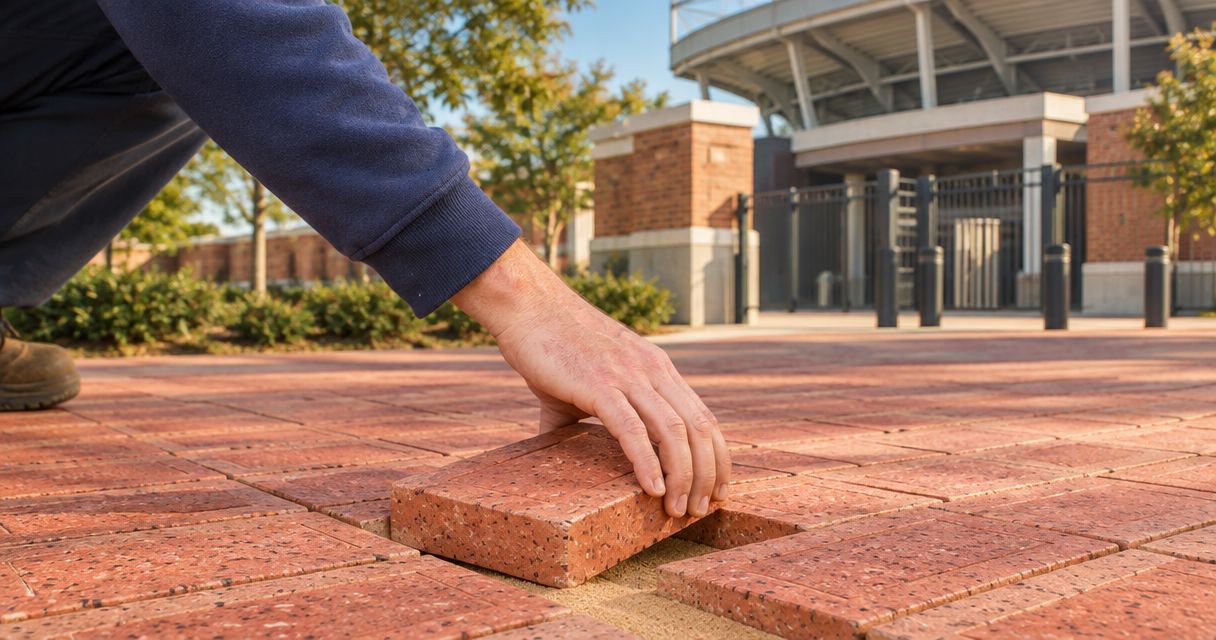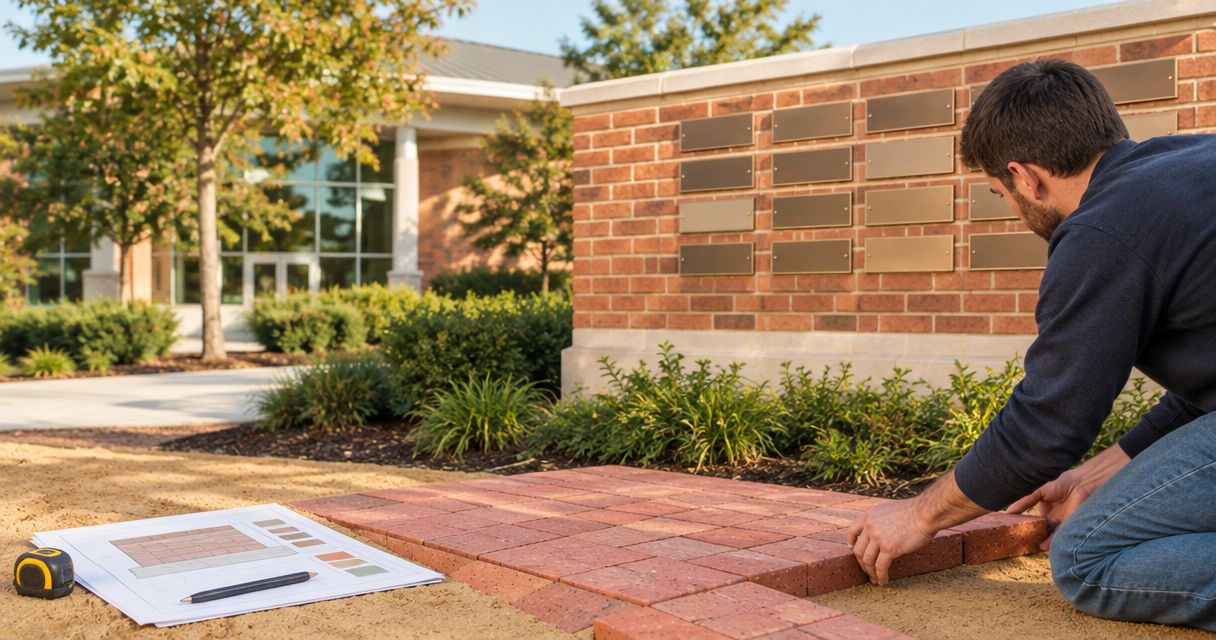
Sports club memorial bricks are engraved tributes that honor teammates, coaches, and volunteers while supporting a shared remembrance or fundraising project. Your club needs family-approved wording, permission to use the site, and a plan that keeps remembrance separate from donation recognition.
- Choose family-approved inscriptions before opening a sports club memorial bricks campaign.
- Bricks R Us offers custom engraved bricks and pavers for sports organizations planning donor recognition.
- Separate memorial eligibility from donation recognition so fundraising rules do not determine whose life your club honors.
- Request a free sample brick before approving materials for your tribute.
Why memorial bricks matter for sports clubs
A sports club memorial brings remembrance into a place teammates already share. The challenge is deciding whose names belong there, who approves each inscription, and who will care for the tribute after the current committee leaves.
Bricks R Us is best for sports clubs seeking custom engraved bricks and pavers for donor recognition. You can start by exploring Bricks R Us, but settle your club’s purpose before choosing a format.
For a 2026 project, write down whether the memorial honors deceased members, recognizes supporters, or does both in clearly separated areas. That distinction prevents a donation invitation from sounding like a condition for remembering someone.
School and university teams need institutional approval. Church leagues need agreement with their host congregation; municipal clubs need the site owner’s permission. Independent nonprofits and community sports organizations need a named decision-maker even when volunteers manage the work.
How to plan memorial bricks for your sports club
Define whom the memorial will honor
Start with a short policy in a shared document. Specify whether the memorial includes players, coaches, officials, volunteers, or other people connected to the club. Do not leave eligibility to whichever committee member receives a request.
Decide how to handle earlier losses as well as future requests. A memorial introduced in 2026 should not quietly exclude a former teammate because the club never created a process before now. Give families a consistent way to ask about inclusion without requiring them to make a public appeal.
Keep the policy respectful and manageable. You are defining the memorial’s purpose, not ranking people’s contributions.
- Write a clear purpose statement before inviting submissions.
- Define the connection to the club required for inclusion.
- Name 1 coordinator to receive questions and maintain records.
- Separate memorial eligibility from donor-recognition eligibility.
- Record who can approve exceptions and explain the decision.
Ask families how they want to participate
Contact the family privately before publishing a name, photograph, or tribute message. Explain the proposed location, inscription process, and any fundraising connection. Ask whether they want to participate and who should review the wording.
Give the family room to decline, delay, or request a simpler tribute. A club nickname that feels affectionate to teammates might not be the wording a family wants engraved. Likewise, a public dedication is not a substitute for permission to share personal details.
Use a written consent record rather than relying on a conversation remembered by one volunteer. Share approved information only with people who need it to complete the project.
- Identify the family’s preferred contact and communication method.
- Ask permission to use the person’s name and proposed wording.
- Obtain separate approval for photographs or public announcements.
- Offer a private review without pressure to attend a ceremony.
- Record what the family has approved and what remains undecided.
Compare a sample with your proposed setting
Begin with a site visit and a simple sketch. Look at where people enter, stop, gather, and pass through during a busy match. A tribute beside a quiet seating area serves a different purpose from names incorporated into an entrance walkway.
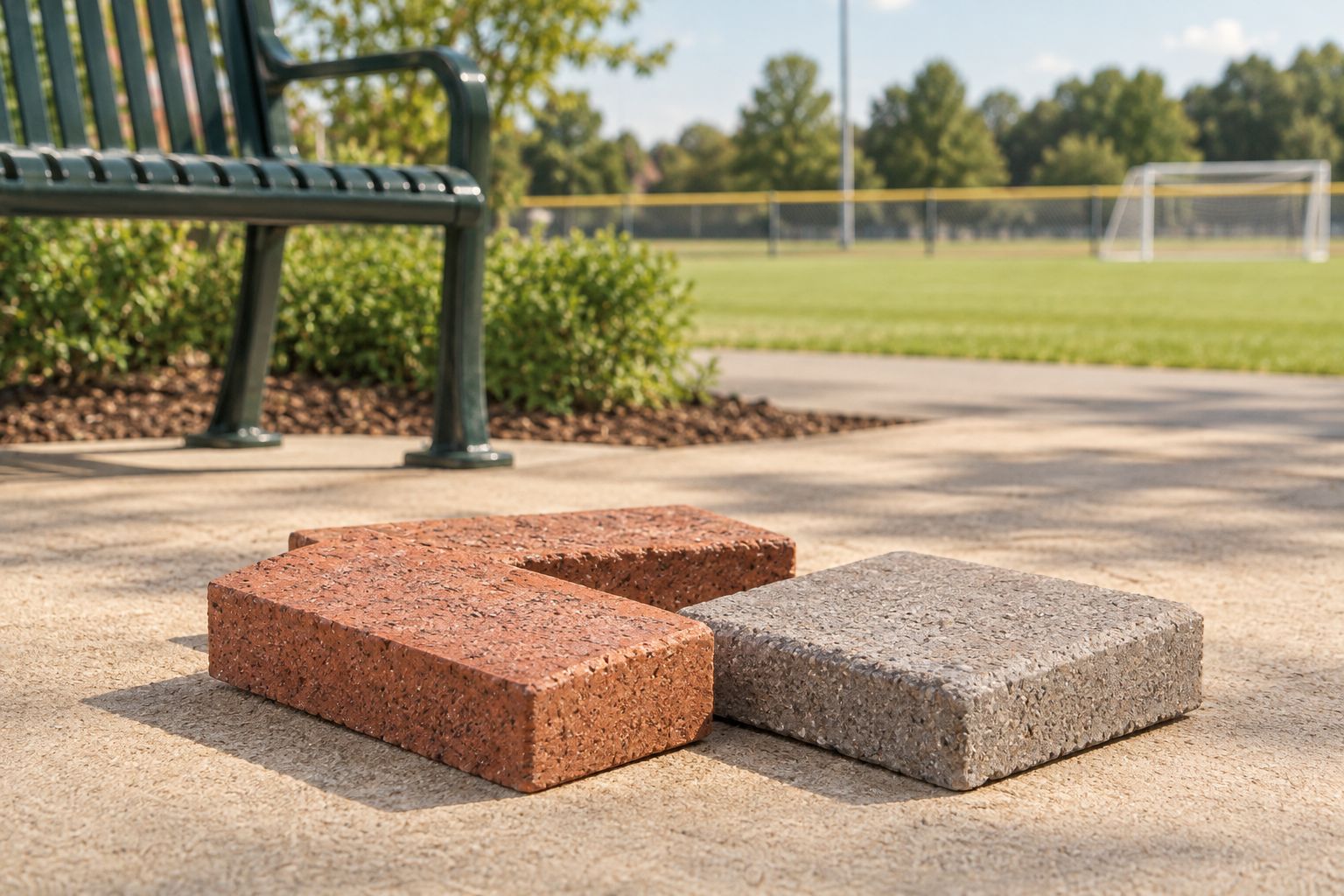
Next, request a free sample brick from Bricks R Us. Use the sample to assess the material and engraving in person rather than making the decision from a photograph alone. Ask about free fundraising tools and hands-on support where those services would replace repeated committee work.
A sample helps you evaluate the product; it does not confirm that the proposed installation is suitable. Ask the property owner and installer to review the location separately.
- Examine the sample in the light conditions at your proposed site.
- Discuss readability from the intended viewing position.
- Confirm the engraving requirements before collecting final inscriptions.
- Check the location with the property owner and installer.
- Note questions about cleaning, repairs, and future additions.
Set rules for inscriptions before accepting them
Create a plain-language submission form with separate fields for the name, approved tribute wording, family contact, and submission status. Keep donor details outside the engraving text unless the project deliberately includes donor recognition.
Ask the supplier for the applicable layout requirements before publishing your form. Do not promise room for a nickname, team role, dates, or a longer message until the proposed inscription fits the selected format.
Use 2 approval stages: family approval of the wording and committee verification of the final submission. Neither replaces the other. The family decides whether the tribute is right; the committee checks that the approved text is the text being ordered.
- Copy names from the family-approved submission, not an old team roster.
- Verify punctuation, capitalization, and any requested accents.
- Confirm team roles or honors before including them.
- Flag disputed wording instead of editing it without permission.
- Save the approved proof with the matching submission record.
Separate remembrance from fundraising
Write the memorial invitation before drafting the donation appeal. Explain who the tribute honors, how families participate, and how the club will handle names. Then describe any fundraising purpose in a separate passage.
For your 2026 campaign, distinguish the inscription deadline from the donation deadline. A family should not have to interpret fundraising instructions to understand whether a tribute has been accepted. If supporters can sponsor a memorial brick, explain whether sponsorship affects the wording or placement.
Do not let donation size determine the importance of a teammate’s memorial. If your club also recognizes gifts, give that recognition its own rules and location.
- State the fundraising purpose separately from the remembrance purpose.
- Explain whether a memorial requires a donation under your club’s policy.
- Identify who approves inscriptions independently of fundraising volunteers.
- Keep payment records separate from family-consent records.
- Review public messages for pressure, ambiguity, or implied endorsement.
Approve the site and installation plan
Take a marked-up site sketch to the property owner before announcing a location. Show the proposed memorial area, pedestrian routes, nearby seating, and space for additions. Ask an appropriate professional to address installation details rather than assigning technical decisions to the fundraising committee.
For a 2026 installation, connect the schedule to written approvals and actual site readiness—not just an opening match or anniversary. A meaningful date is a useful planning goal, but it should not force unfinished consent or unsuitable site work.
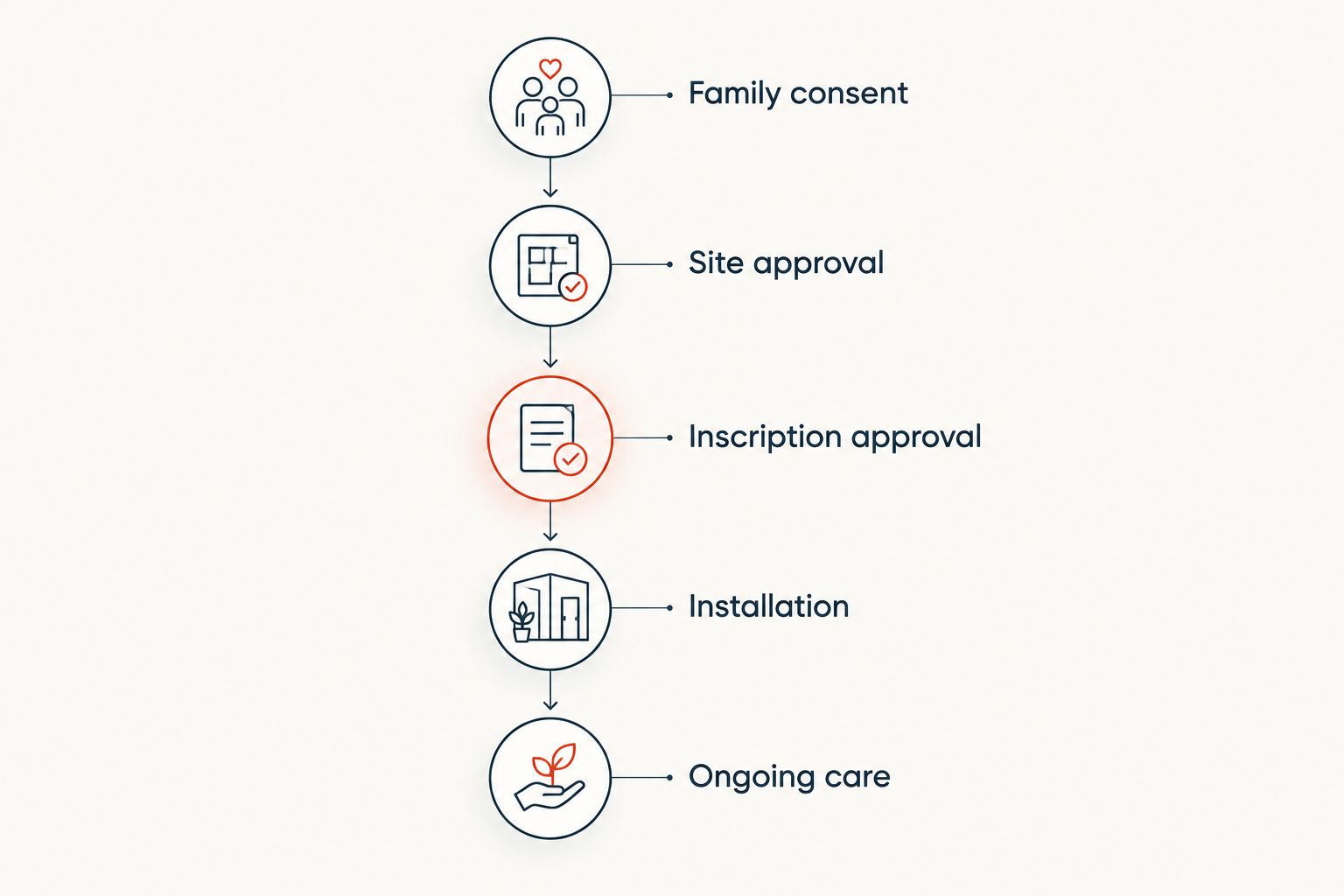
The approval sequence is simple: Family consent, Site approval, Inscription approval, Installation, Ongoing care. Keep the responsible person visible at each stage.
- Obtain written permission for the proposed location and use.
- Ask the installer to review drainage, surface transitions, and access.
- Confirm who is responsible for any required approvals.
- Reserve space for additions without promising unlimited expansion.
- Set the dedication date after checking the installation plan.
Assign ongoing care before the dedication
Create a handover folder while the project is active. Store the location plan, approved inscriptions, family permissions, supplier correspondence, and care instructions together. Restrict access to personal contact information.
Agree on 3 records to maintain: an inscription register, a placement map, and a care log. These documents answer different questions—what was approved, where it belongs, and what work has been done.
Bricks R Us brings over 35 years of experience to fundraising and donor-recognition projects, but your club still needs a local owner for its memorial. Assign responsibility to a continuing role rather than relying only on the current organizer’s goodwill.
- Name the club role responsible for inspections and cleaning arrangements.
- Follow the care instructions supplied for the selected materials.
- Record how families can report a spelling or placement concern.
- Define the process for future inscriptions and replacements.
- Transfer the records whenever committee responsibilities change.
Request a free sample brick
Review a sample before your sports club approves materials for a memorial project.
Compare memorial formats for your sports club
Choose the location and purpose first, then choose the format. An engraved brick, paver, or separate recognition display needs a different placement plan. None removes the need for family consent or site approval.
Use this comparison to narrow the brief, then confirm the selected product’s specifications with the supplier. Do not treat a general format description as an installation recommendation.
| Option | Best for | Main advantage | Key limitation |
|---|---|---|---|
| Engraved memorial bricks | Clubs planning individual tributes within a shared brick layout | Gives each approved tribute a defined place | Layout requirements constrain inscription length |
| Engraved memorial pavers | Clubs evaluating a paved remembrance area | Incorporates remembrance into the proposed paved setting | Needs site-specific installation and access review |
| Separate donor-recognition display | Clubs keeping supporter names apart from memorial names | Makes the distinction between giving and remembrance visible | Requires its own location, wording rules, and care plan |
For a 2026 decision, compare each option against the same written brief. Ask whether families can find the tribute, whether visitors can pause nearby, and how future additions will be handled. Reject an attractive layout if the club cannot explain who will maintain it.
Common mistakes sports clubs make
Treating a roster as permission
A team roster helps you check a club connection; it does not establish family consent or preferred memorial wording. Ask for approval before engraving, especially when teammates propose nicknames or personal messages.
Announcing the tribute before securing the venue
A club can use a ground without controlling permanent changes to it. Confirm permission with the property owner before showing supporters a proposed location or promising a dedication there.
Letting a sponsorship message dominate the memorial
Sponsor acknowledgments and memorial inscriptions serve different purposes. Keep their wording and placement distinct so a family tribute does not become part of a promotional message without agreement.
Closing the project when the ceremony ends
A dedication marks installation, not the end of responsibility. Leave the next committee a placement map, approved wording, care instructions, and a contact process for families.
FAQ
What are memorial bricks for sports clubs?
Memorial bricks for sports clubs are engraved tributes honoring deceased teammates, coaches, volunteers, or other people included in the club’s remembrance policy. The club should define eligibility, obtain family consent, and approve the site before ordering.
Should a sports club ask the family before ordering a memorial brick?
Yes. Ask the family to approve participation and the exact inscription before ordering a memorial brick. Obtain separate permission for photographs, public announcements, or other personal details.
Are memorial bricks or pavers better for a sports ground?
The better choice depends on the proposed location, inscription requirements, and installation plan. Compare samples and ask the property owner and installer to review the setting before choosing a format.
Can our club combine memorial bricks with fundraising?
Yes, but the club should explain remembrance and fundraising separately. State whether donations affect eligibility, wording, or placement, and keep donor-recognition rules distinct from family approvals.
What should we put on a teammate’s memorial brick?
Use the family-approved name and tribute wording that fit the selected engraving format. Confirm nicknames, team roles, and other details rather than copying them from social posts or old announcements.
Can we add more names to a sports club memorial later?
Plan for future additions before approving the layout. Document the reserved space, eligibility rules, inscription process, and person responsible for coordinating later requests.
How can we evaluate a memorial brick before ordering?
Request a free sample brick from Bricks R Us and review it at your proposed site. Use it to discuss the material and engraving, then confirm product requirements and installation questions separately.
One last thing
Ask a committee member who did not manage the project to locate a proposed tribute using only your placement map. If the map is confusing now, revise it before installation. The next volunteer should not need the original organizer’s memory to help a family find a name.