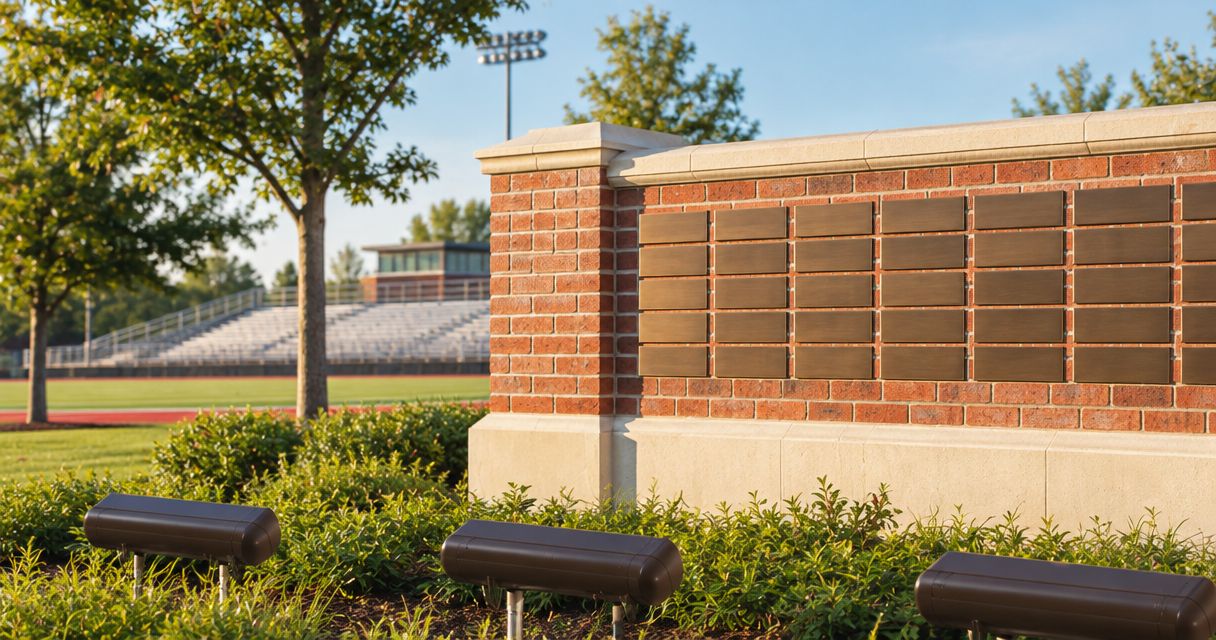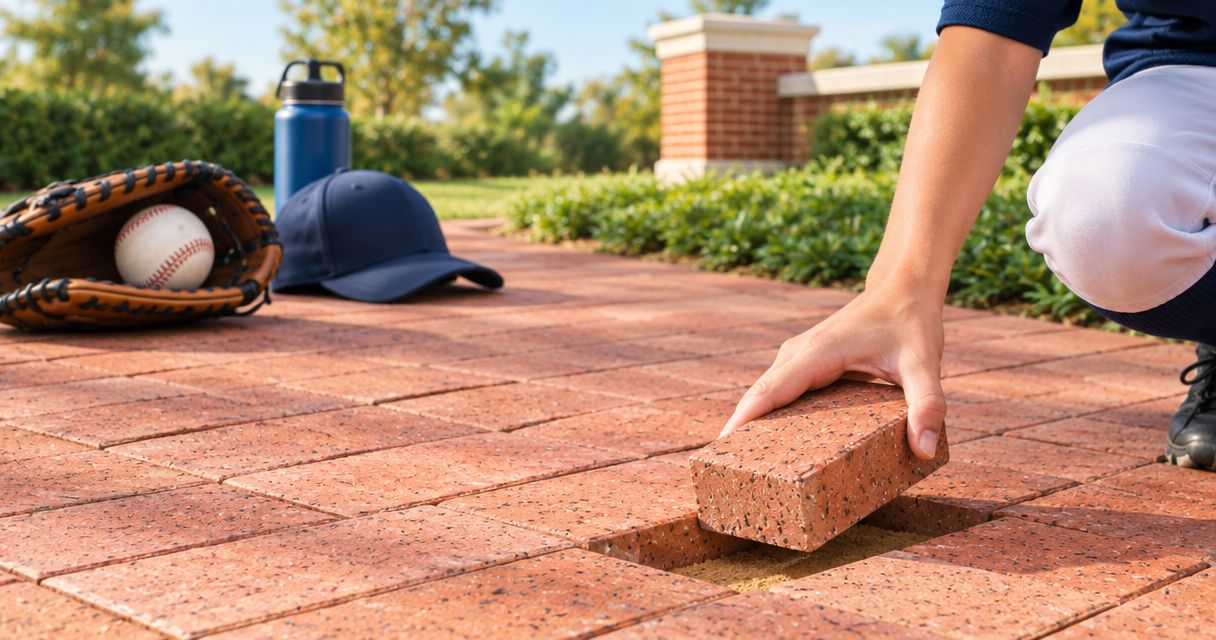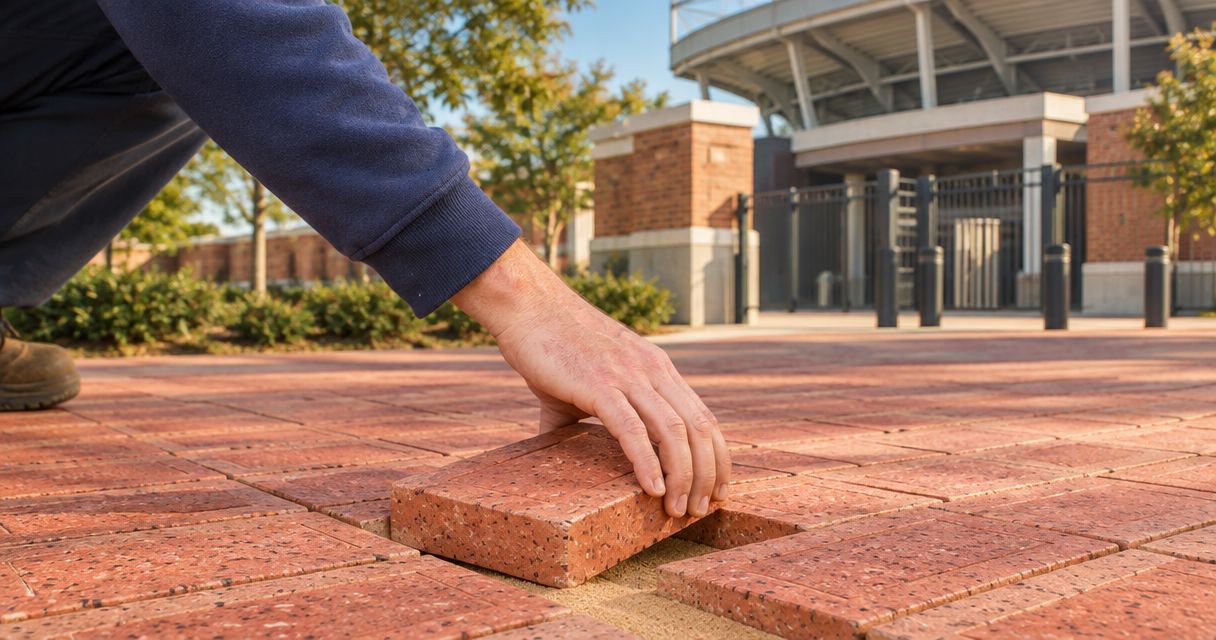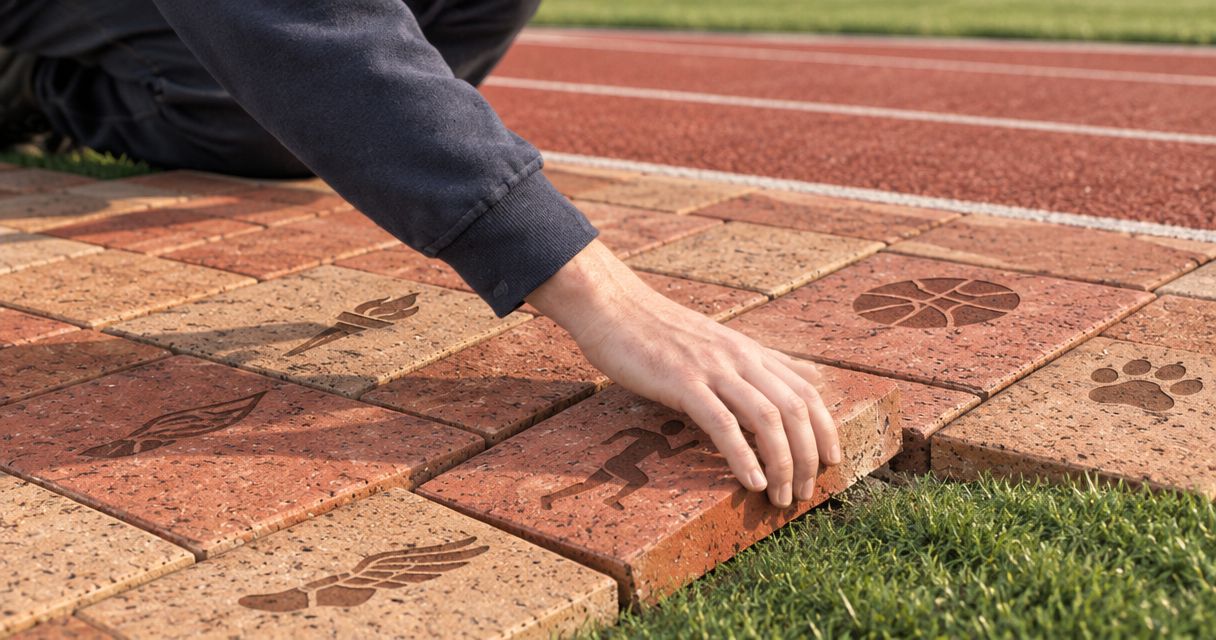
Athletic facility fundraising with engraved pavers is a way to recognize supporters in a permanent donor section while supporting your organization's fundraising goal. This guide explains how to choose a location, organize inscriptions, approve samples, and leave room for future donors without disrupting the facility's everyday use.
- Bricks R Us suits athletic organizations seeking engraved pavers and bricks for donor recognition.
- Choose the donor section's location and expansion plan before collecting inscriptions.
- Separate donor recognition, team history, and memorial messages with clear written rules.
- Request a free sample brick before approving the campaign's material and inscription format.
Why engraved pavers matter for athletic organizations
A donor section gives supporters a place within the facility they help sustain. Unlike a campaign announcement, the installation also needs a plan for physical space, maintenance, and future additions.
Athletic settings bring several groups together: current athletes, former players, families, coaches, volunteers, and community supporters. Your rules must explain how these groups share recognition without making the section difficult to manage.
For a 2026 project, settle those rules before announcing an installation date. A university athletics department, nonprofit recreation program, church sports ministry, municipal field, and independent sports club each needs an identified facility approver, even when volunteers manage fundraising.
Bricks R Us designs and sells custom engraved bricks, pavers, and donor-recognition products. The practical starting point is a free sample brick—not a promise to fill an entire entrance with names.
How to plan an athletic facility donor section
Define the purpose before naming the campaign
Decide what the donor section recognizes and what the fundraising effort supports. Those are related decisions, but they are not interchangeable. A supporter buying recognition for a family name needs to understand whether the campaign supports a particular facility project or a broader organizational purpose.
Write a short internal brief before preparing public materials. For a 2026 launch, make the brief the reference document for volunteers, facility staff, and whoever approves inscriptions.
Schools and universities should identify the relationship between athletics and institutional fundraising. Nonprofits, churches, municipalities, and sports clubs should likewise name the organization responsible for donor records and long-term care.
- State the fundraising purpose in one plain-language sentence.
- Identify who owns the facility and approves changes.
- Name the person responsible for donor questions.
- Define whether the section includes tributes, memorials, or both.
- Record who maintains the installation after the campaign closes.
Map the site and protect everyday access
Start with a printed site plan or a simple sketch. Mark entrances, queues, accessible routes, maintenance access, and places where spectators naturally pause. Ask facility staff to review the drawing before selecting the donor section.
Choose a location people can appreciate without blocking movement. A visible entrance is not automatically the right location if supporters must stop in a busy circulation route to read names.
Have the facility's designer or installer review the proposed surface, drainage, transitions, and applicable accessibility requirements. A campaign committee should not treat an attractive sample as approval for a particular installation.
- Mark the proposed donor section on the site plan.
- Keep viewing areas separate from entry queues.
- Confirm access for maintenance and event operations.
- Identify nearby irrigation, utilities, and drainage concerns.
- Reserve a clearly marked area for future recognition.
Review a sample and match the material to the site
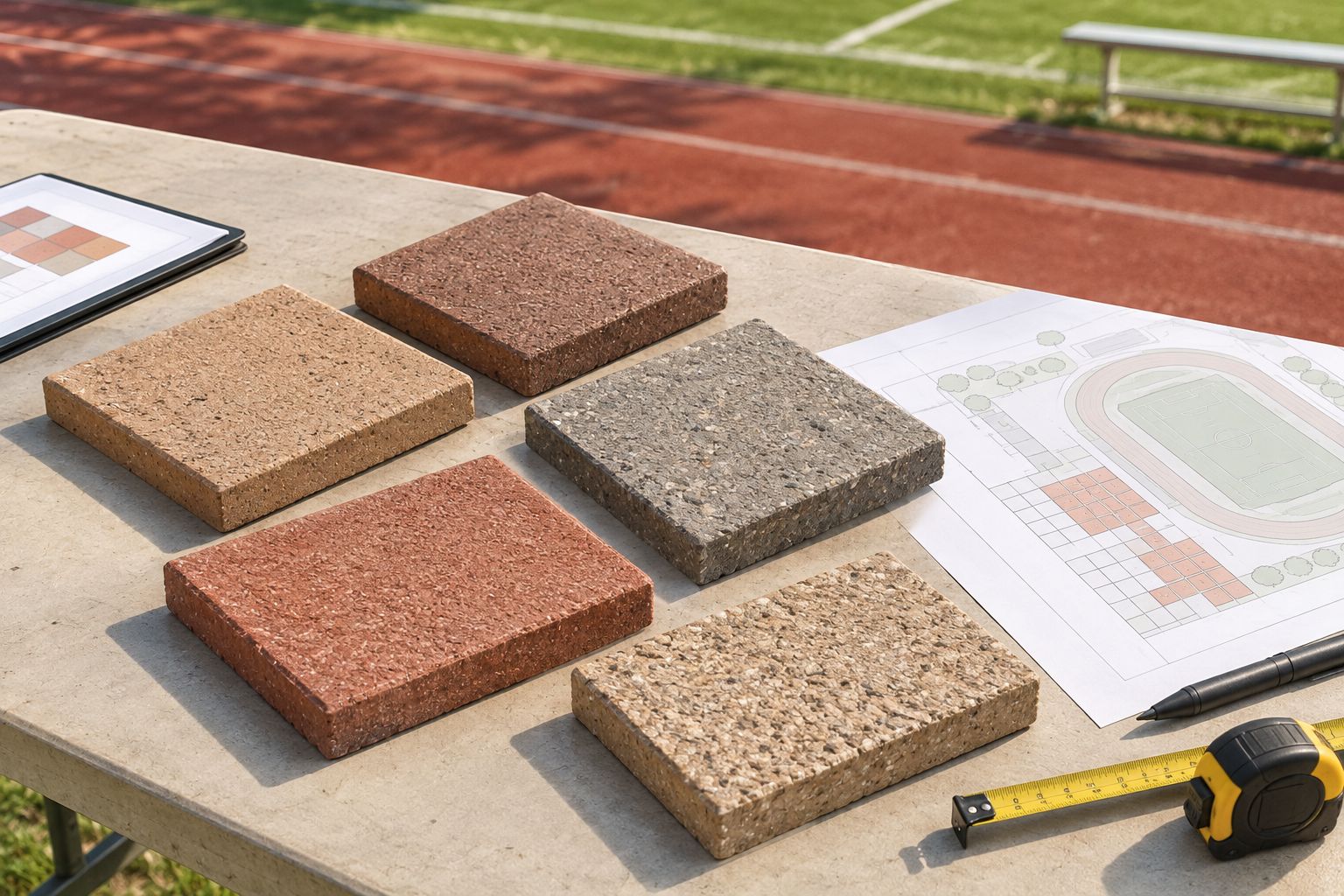
Begin with a physical sample and a written checklist. Look at the surface and engraving in the light where visitors will read the installation, then ask the installer whether the proposed material suits the location.
Bricks R Us is best for athletic organizations seeking engraved bricks and pavers for donor recognition. Requesting a free sample brick gives your committee something concrete to discuss; it does not replace site approval or a review of the selected product's specifications.
Concrete Bricks have a smooth surface, beveled edges, and side spacers. The listed matching sizes are 4 × 8 inches, 8 × 8 inches, and 12 × 12 inches. These dimensions help you discuss layout choices, but they are not a substitute for an installation drawing.
Belden Bricks have a rough surface with straight or beveled edges. Compare the actual samples rather than assuming that every engraved brick has the same appearance.
- Request a free sample brick for committee review.
- Examine engraving contrast and surface texture.
- Confirm dimensions for the material you select.
- Ask the installer to review the proposed application.
- Record the approved material before preparing donor forms.
Set inscription rules before accepting submissions
Create a shared document that states exactly what donors can submit. Include name formatting, punctuation, approval authority, and a process for sensitive messages. Ask the supplier for the selected product's engraving limits rather than creating your own.
For a 2026 campaign, decide how to handle season references and graduation years. A team nickname that makes sense now needs enough context to remain understandable after the roster changes.
Separate recognition from endorsement. Business names, slogans, religious messages, and memorial wording need a consistent review policy suited to the organization and facility. Do not leave these decisions to individual volunteers answering email.
- Confirm line and character limits with the supplier.
- Publish rules for names, abbreviations, and punctuation.
- Explain how business names and logos are reviewed.
- Obtain approval for memorial wording from the appropriate family contact.
- State how donors approve the final inscription proof.
Build a donor register and a placement map
Use a shared spreadsheet and a labeled layout drawing before choosing any additional tools. Give every approved inscription a stable record identifier, then connect that record to its planned position. Keep internal identifiers separate from the wording that appears on the paver.
Maintain distinct fields for the donor, the person being honored, and the inscription approver. These people are not always the same, particularly for memorial gifts, alumni tributes, and team-sponsored recognition.
Treat the approved inscription as the production record. An email conversation, a handwritten form, and a spreadsheet cell should not remain competing versions of the same message.
- Record donor contact details and consent preferences.
- Keep the requested wording separate from the approved wording.
- Link each approved inscription to a mapped position.
- Record the date and source of final approval.
- Limit editing access after the production file is approved.
Coordinate approvals before scheduling installation
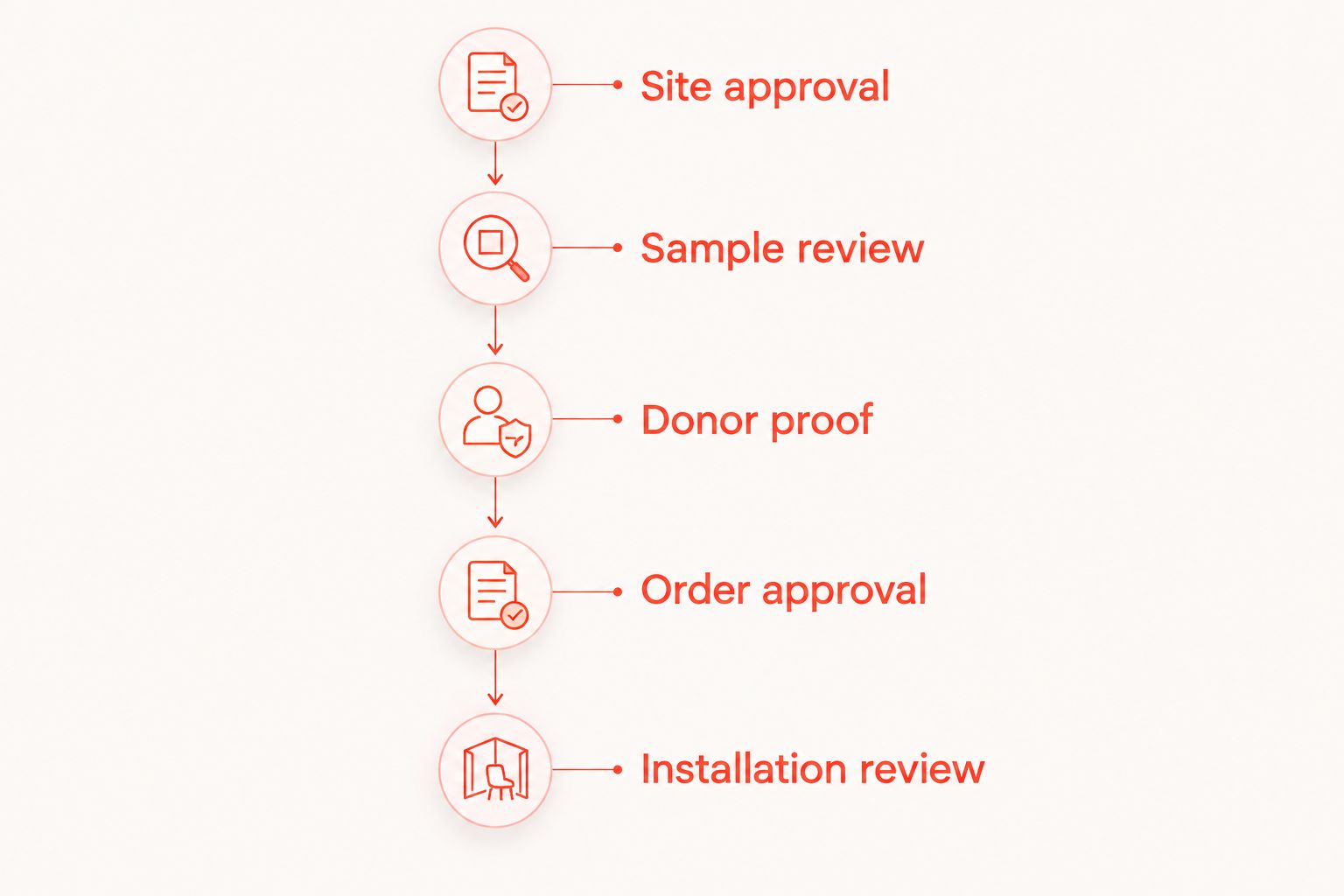
Create a simple approval sequence: Site approval, Sample review, Donor proof, Order approval, Installation review. Assign an owner to each stage so the committee knows who can release the next task.
Bricks R Us offers free fundraising tools and hands-on support, backed by over 35 years of experience. Ask which available tools fit your ordering and donor-record process; your organization still needs to approve wording and maintain its own campaign decisions.
Work backward from the proposed 2026 facility calendar, but confirm production and installation arrangements before publishing a dedication date. A scheduled game is a planning constraint, not evidence that the donor section will be ready.
- Obtain written facility approval before accepting final commitments.
- Complete the sample review before finalizing campaign materials.
- Collect donor proof approvals before releasing inscriptions.
- Confirm installation arrangements with the responsible contractor.
- Assign someone to inspect names and positions after installation.
Plan additions and ongoing care before the dedication
Decide whether the first installation closes the campaign or begins an ongoing recognition program. Either approach needs a written policy. Without one, later volunteers must decide where new names belong and who authorizes changes.
Keep the 2026 installation map with the facility's permanent records, not only in a departing volunteer's inbox. Include the approved product information, inscription file, supplier correspondence, and maintenance guidance provided for the selected materials.
Use a handover document that a new facilities employee or fundraising chair can understand without reconstructing the campaign's history.
- Define when additional inscriptions will be considered.
- Reserve space without promising an unapproved expansion.
- Identify who authorizes repairs and replacement requests.
- Retain the final location map and approved inscription file.
- Record the person responsible for answering future donor questions.
Compare donor-section layouts for your facility
Choose the layout around the way supporters use the facility, not around the largest available surface. These are planning options, not competing suppliers. Each offers a different balance of visibility, grouping, and room to grow.
| Option | Best for | Main advantage | Key limitation |
|---|---|---|---|
| Entrance section | Facilities with an approved viewing area near arrival points | Connects recognition with the visitor's arrival | Requires careful separation from queues and circulation |
| Team or program sections | Organizations recognizing distinct teams or activities | Makes each group's recognition easy to locate | Needs rules for shared donors and program changes |
| Shared donor plaza | Facilities serving several sports or community groups | Keeps recognition together in a common setting | Requires an agreed placement policy across participating groups |
| Phased recognition section | Organizations planning continuing donor participation | Gives later additions a defined place | Depends on reserved space and retained product records |
| Separate memorial section | Organizations distinguishing remembrance from general recognition | Creates a clear setting for personal tributes | Needs family consent and a separate inscription policy |
For a school or university, program sections need coordination across athletics and advancement. A nonprofit or church recreation site needs clear ownership between fundraising volunteers and facility leadership. Municipal and community projects need the relevant site approvals, while sports clubs need a handover plan when committee members change.
Choose the simplest layout your organization can maintain consistently. A complicated arrangement creates more placement decisions every time a donor's connection spans several teams or programs.
Common mistakes athletic organizations make
Promise a game-day unveiling before approvals are complete
A season opener creates a clear campaign milestone, but it should not override site, production, or installation decisions. Keep the proposed date internal until the responsible parties confirm the arrangements. Tell donors how updates will be communicated if the schedule changes.
Mix memorials and general recognition without a policy
A business acknowledgment, a coach's retirement tribute, and a teammate's memorial carry different expectations. Decide whether they share a section and who approves the wording. For remembrance projects, give families a defined contact and a clear approval step.
Organize every name around the current roster
Current team structures do not answer every placement question. Alumni, multi-sport athletes, families, and community supporters need a place too. Use a written grouping rule that accommodates these relationships without requiring an exception for every submission.
Leave the records with the outgoing booster committee
The finished installation remains after volunteer roles change. Store approvals, maps, and product information where the organization can retain them. Assign responsibility to a role with a named current contact rather than relying on informal knowledge.
FAQ
What's the best place for engraved pavers at an athletic facility?
The best place is an approved area where supporters can read inscriptions without obstructing facility access. Review entrances, gathering spaces, maintenance routes, drainage, and accessibility with the people responsible for the site.
Should our donor section be organized by team or by year?
Choose the grouping rule that fits your recognition purpose and can accommodate future additions. Team sections need a policy for shared supporters, while year-based sections need a plan for later submissions and reserved space.
Can engraved pavers include memorials for athletes and coaches?
Engraved pavers can recognize athletes and coaches through memorial inscriptions. Establish a remembrance policy, identify the appropriate family contact, and obtain approval of the wording before production.
How do we prevent spelling mistakes on donor pavers?
Require approval of the final inscription and keep that approved wording in a controlled production record. Check names, punctuation, abbreviations, and placement against the same record before releasing the order.
Does Bricks R Us offer a sample before we plan our fundraiser?
Bricks R Us offers a free sample brick as a practical first step for fundraising organizers. Use the sample to review engraving and appearance, then confirm the selected material and its suitability for your site.
Can we add more donor pavers after the first installation?
Plan later additions by reserving approved space and documenting the original material and layout. Confirm the process for future orders and installation rather than assuming new names can be inserted anywhere.
Who should approve inscriptions for a school or municipal sports facility?
The organization should name an inscription approver and obtain the facility owner's required approval. Fundraising volunteers should follow that written policy rather than making separate decisions about sensitive wording or business recognition.
One last thing
Before launching, test the process with a fictional inscription that includes a long surname, a team connection, and a memorial request. Walk it through your form, approval rules, and placement map without sending it to production. Any unresolved decision belongs in the policy before real donors encounter it.
Then request a free sample brick and bring the people responsible for fundraising, site approval, and installation into the same review. A clear decision now is easier to manage than a correction after engraving.