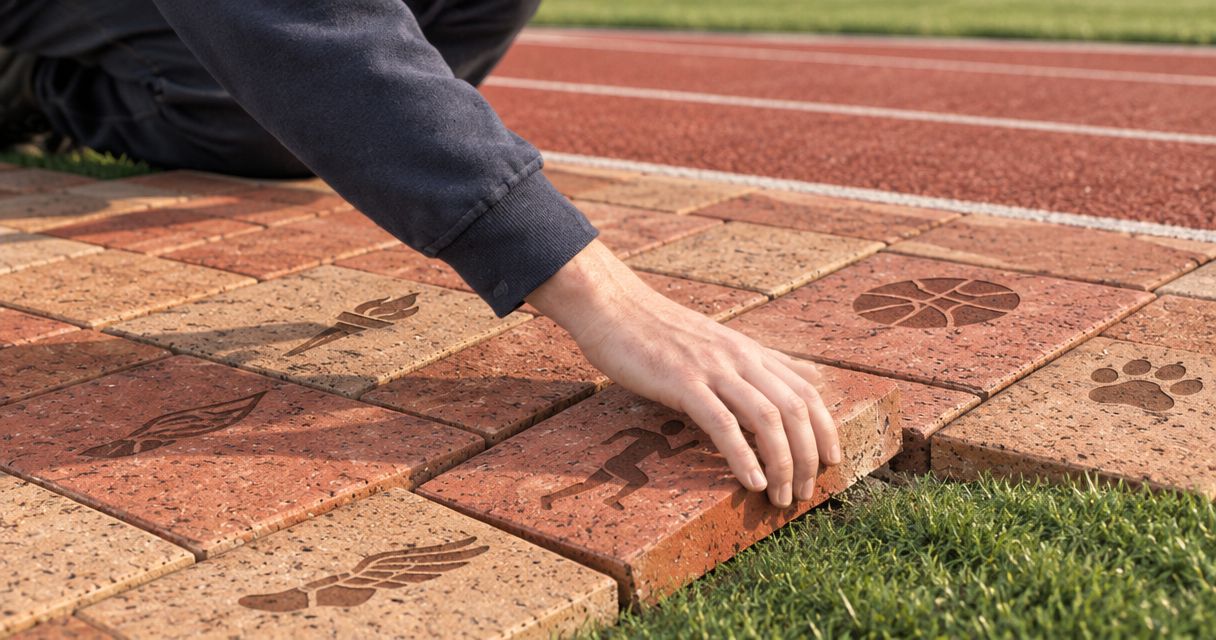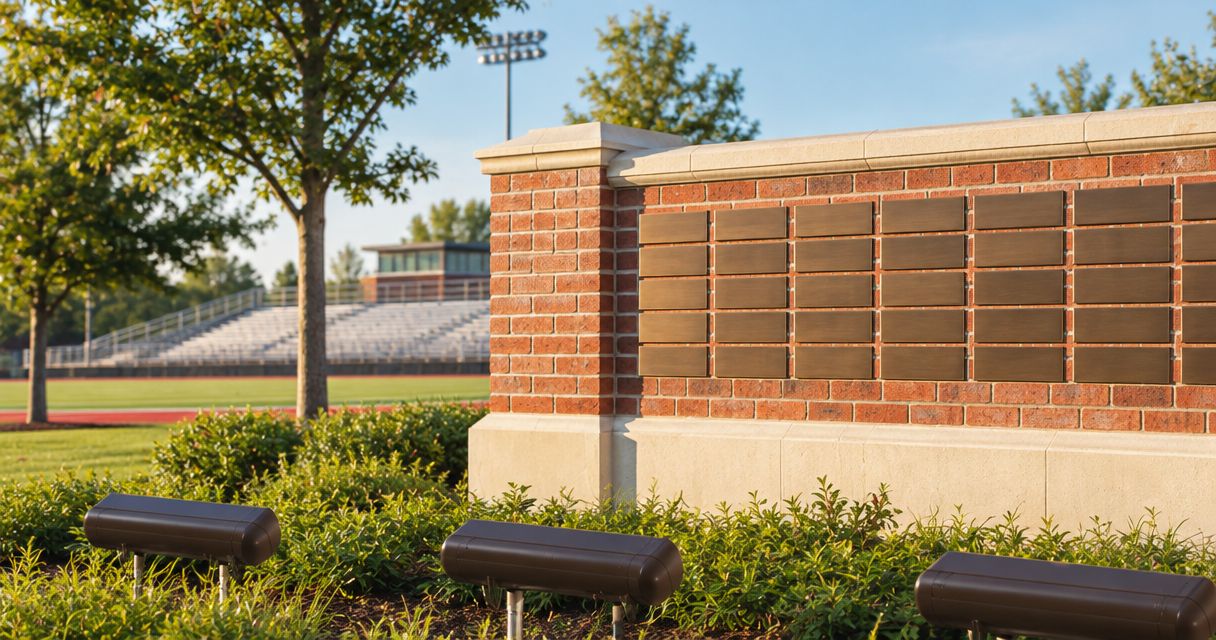
Youth teams’ personalized bricks are engraved tributes used to recognize supporters and raise funds for a shared project while protecting players’ personal information. This 2026 guide explains how to choose inscriptions, obtain guardian approval, and keep private order details out of a public walkway.
- Personalized bricks for youth teams should recognize support without exposing player schedules, contact details, or birth dates.
- Bricks R Us serves organizations planning engraved-brick fundraising and donor recognition; your team must set its privacy rules.
- Offer team tributes, family recognition, and anonymous participation rather than requiring a child’s name.
- Approve engraving, public photographs, and online recognition separately before publishing player information.
Why personalized bricks matter for youth teams
A fundraising brick joins two different records: a private transaction and a public inscription. Treating them as the same record creates an avoidable privacy problem. The organizer needs contact information to resolve an order; the public does not.
Youth teams also have changing rosters, shared facilities, and families with different comfort levels about recognition. A guardian who supports the fundraiser should not have to choose between contributing and publishing a child’s identity.
Bricks R Us designs and sells custom engraved bricks, pavers, and donor-recognition products for fundraising organizations. Bricks R Us is best for organizations seeking personalized bricks for fundraising and donor recognition. Your team still needs its own consent process, records policy, and site approval.
For a 2026 campaign, make the privacy rules part of the launch plan rather than a correction after orders arrive. A school team, nonprofit league, church sports program, university youth camp, or municipal recreation program can use the same core process while following its host organization’s requirements.
How to plan a privacy-first youth team brick fundraiser
Set your inscription rules before collecting orders
Start with a short written policy that families can understand without a meeting. Explain where the bricks will go, who can see them, and which kinds of recognition your team accepts. Make clear that participation never requires naming a player.
Choose information limits before reviewing individual requests. For example, a team tribute recognizes the group without identifying a child, while a full name paired with a team affiliation discloses more. Initials reduce the information shown, but they do not guarantee anonymity in a small community.
For your 2026 policy, use these boundaries:
- Accept team tributes, approved family recognition, and general messages of support.
- Exclude birth dates, home addresses, phone numbers, and personal email addresses.
- Exclude practice schedules, school-day routines, and travel details.
- Offer a recognition-free way to support the project.
- Explain how your team handles requests that fall outside the rules.
Review the location before promising recognition
Visit the proposed site with the facility owner or project contact. A walkway outside a school, a public park entrance, and an access-controlled sports facility present different viewing conditions. Describe the actual setting to families; do not describe a public installation as private.
Also discuss future changes. Ask who approves installation, maintains the area, and responds when a family raises a concern about an inscription. Do not promise that an engraved name can be removed or replaced until the responsible parties confirm the process.
Use the same visit to coordinate the fundraiser with facility work and team activities. The guide to planning a sports brick fundraiser around the season covers that separate scheduling task.
- Confirm who owns the installation area and approves the project.
- Record whether visitors can freely view or photograph the bricks.
- Identify the person responsible for installation and ongoing care.
- Ask how future additions and correction requests will be handled.
- Describe the location accurately on the order form.
Build an order form that separates private and public information
Begin with a simple document or spreadsheet. Create separate fields for the purchaser’s contact details and the exact inscription intended for engraving. Label them clearly so a volunteer never has to guess which information belongs on the brick.
For each order, keep 1 approved inscription as the source of truth. Replacing scattered email edits with a single approved version makes the final review manageable. Keep payment processing separate from volunteer inscription records; do not ask volunteers to collect card details in a shared spreadsheet.
After drafting your 2026 form, ask Bricks R Us which free fundraising tools and hands-on support fit your ordering process. Confirm how any proposed tool handles access and exports before entering family information; a convenient tool does not replace your privacy policy.
- Collect only the contact details needed to manage the order.
- Put the public inscription in a clearly marked field.
- Keep private notes out of engraving files and public proofs.
- Record the approval status beside the current inscription.
- Test the form with a fictional order before sharing it.
Obtain guardian approval for the exact inscription
Show the guardian precisely what your team plans to engrave, including spelling, punctuation, and line breaks. Ask for written approval when an inscription identifies a minor. A coach’s roster, a previous fundraiser, or a child’s participation does not replace that approval in your campaign process.
Separate the decisions. Approval to engrave a name should not automatically authorize a social media post, a searchable online list, or a photograph connecting the child to the brick. Invite the player’s input in an age-appropriate way without asking the child to manage the permission process.
- Explain that the approved inscription will be publicly visible.
- Show the exact text rather than a summary of the request.
- Record who approved the inscription and when.
- Ask separately about online recognition and identifiable photographs.
- Pause disputed requests and refer them to the organization’s designated lead.
Check every inscription before submitting it
Use 2 reviewers for the final inscription check. One reviewer compares the engraving text with the guardian-approved version; the other checks it against the campaign’s content rules. This is a recommended workflow, not a substitute for the supplier’s own proofing instructions.
Keep the review focused. Volunteers need the approved text and order reference, not a family’s full history or an explanation of a sensitive situation. If a requested edit changes the approved wording, return it for approval instead of treating it as a harmless correction.
The following 3 checkpoints keep the sequence clear: draft text, guardian approval, and submission check. Do not advance an unresolved order just to keep it in the current batch.
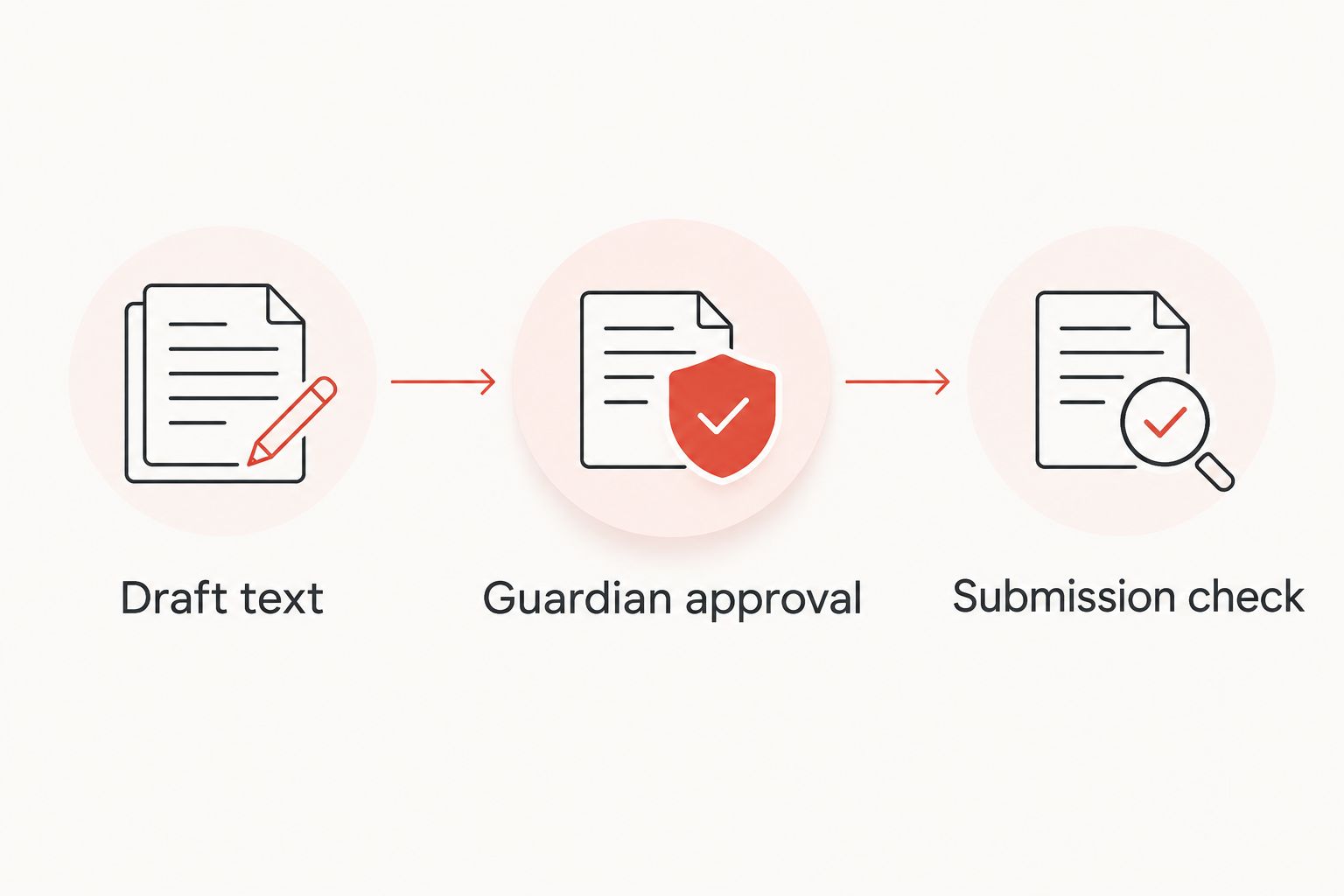
A shared status list can track progress without displaying every family’s details. Keep approval evidence in the restricted order record, and use an order reference for routine committee updates.
- Compare spelling and line breaks against the approved version.
- Check for prohibited personal information and unapproved additions.
- Flag unclear consent instead of inferring permission.
- Give the supplier only the information required for the order.
- Record submission status so volunteers do not send conflicting versions.
Plan installation photos without identifying players by default
Decide what your team will photograph before installation day. A close-up of a child’s name, a player standing beside that name, and an online location tag reveal different information. Review the whole post, not just the photograph.
For your 2026 installation update, focus on the finished project when individual recognition is unnecessary. A view of the walkway or volunteers working away from readable inscriptions can tell the project’s story without creating a player directory. Check the frame for other children and neighboring inscriptions too.
- Confirm permission before connecting an identifiable child to an inscription online.
- Review captions, tags, and location details together.
- Avoid publishing rosters or lists of participating children.
- Let families decline photographs without affecting their participation.
- Have the designated lead approve public updates before posting.
Hand over records and plan for later requests
Write down what happens after installation. Youth sports committees change, and a privacy process should not depend on one volunteer remembering where the approvals are stored. Give the next organizer a clear record of responsibilities, not unrestricted copies of every file.
Set a retention schedule with the host organization. Keep records required for accounting, approvals, and unresolved issues under the appropriate controls; remove unnecessary working copies according to that policy. Do not promise deletion of records the organization must retain.
- Name the person who receives correction and privacy requests.
- Store final approvals where only authorized people can access them.
- Remove access when volunteers leave their roles.
- Review shared drives, downloads, and email attachments for extra copies.
- Explain the confirmed correction process without guaranteeing an outcome.
Compare recognition options for your team
The best inscription is the one the family understands and approves—not the one containing the most detail. Offer a small set of choices so families can participate without composing a message from scratch.
These are recognition formats, not competing products. Each has a useful role and a limitation. Apply the same approval rules regardless of the format a family chooses.
| Recognition option | Best for | Main advantage | Key limitation |
|---|---|---|---|
| Team tribute without player names | Group recognition | Celebrates the team without identifying individual children | Does not provide individual recognition |
| Family recognition | Households comfortable with public acknowledgment | Recognizes support without requiring a player’s first name | A surname can still identify a child locally |
| Initials-only inscription | Families seeking less identifying detail | Publishes less information than a full name | Initials and context can still reveal identity |
| Approved player-name inscription | Families explicitly choosing individual recognition | Provides the requested personal tribute | Makes the child’s name public and needs careful approval |
| General support message | Donors who prefer not to be named | Recognizes the cause rather than a person | Provides no personal identification for the donor |
Before settling on a material or layout, request a free sample brick. Review its surface and inscription readability with the project committee, then confirm the actual engraving limits for the product you select. A sample helps you evaluate the physical tribute; it does not demonstrate how your records or consent process will work.
Common mistakes youth teams make
Copying roster information into the fundraiser
A roster exists to run the team, not to supply public inscriptions. Build each order from the purchaser’s request and the guardian-approved text. Do not prefill children’s names, jersey details, or affiliations without checking what the family wants published.
Treating payment as permission to publish
A donation records support for the project. It does not answer whether a child’s name belongs on a brick or in an online update. Keep recognition choices explicit, and make participation possible without public identification.
Calling initials anonymous
Initials paired with a team, season, photograph, or small community can still point to a specific player. Describe initials as reduced-detail recognition, not guaranteed anonymity. Offer a general support message when a family wants no personal identification.
Solving sensitive requests in a group chat
Family disagreements and privacy concerns do not belong in a team-wide discussion. Move the request to the designated lead, restrict access to the details, and hold the inscription until the organization resolves approval. Give volunteers a status update without circulating the circumstances.
FAQ
Should personalized bricks include a youth player’s full name?
A youth player’s full name should appear only after the guardian approves that exact public inscription under the organization’s policy. Offer team tributes, family recognition, and general support messages so naming a child is never required.
Are initials enough to keep a player anonymous?
Initials do not guarantee anonymity. Team affiliation, a photograph, or local knowledge can still identify the player, so describe initials as a reduced-detail option.
Can a coach approve brick inscriptions for every player?
Your campaign should obtain guardian approval for inscriptions identifying minors rather than relying on a coach’s blanket approval. Follow the host organization’s requirements and refer unclear or disputed requests to its designated lead.
Do we need separate permission to post photos of the bricks?
Treat online publication as a separate permission decision from engraving. Explain whether the post will show readable names, identifiable children, or location details, and follow the organization’s photo policy.
What should we do if a family changes its inscription?
Update the order’s approved version and obtain approval for the revised text before submission. If the order has already been submitted or engraved, ask the supplier and facility contact what correction options apply before making promises.
How long should a youth team keep brick order records?
Set the retention period with the host organization rather than choosing an arbitrary deadline. Preserve required accounting and approval records, restrict access, and remove unnecessary copies under that policy.
What should we check in a free sample brick?
Check the sample’s surface and inscription readability, then confirm the engraving limits for your selected product. A sample supports the physical product decision; it does not replace guardian approval or a records policy.
One last thing
A donor’s name and a player’s name do not have to be the same inscription—or appear at all. Separating the gift from the public tribute gives families a genuine choice while keeping the fundraiser welcoming.
Before opening your 2026 campaign, ask Bricks R Us for a free sample brick and review it alongside your draft inscription rules. Make the physical product and the permission process clear before families order.