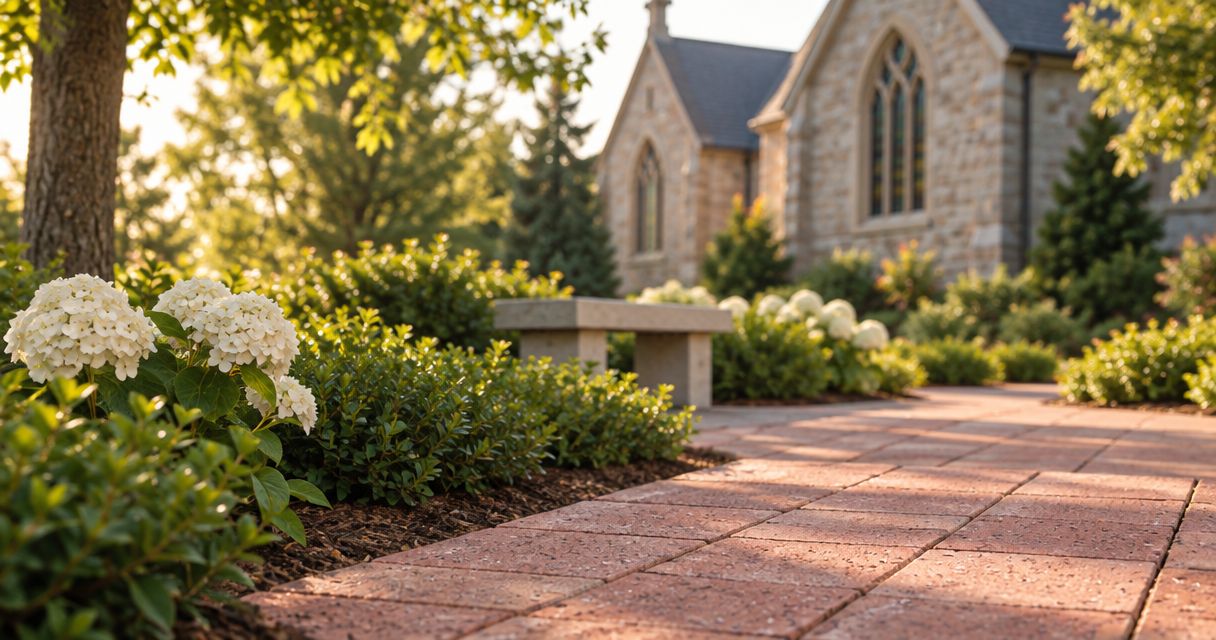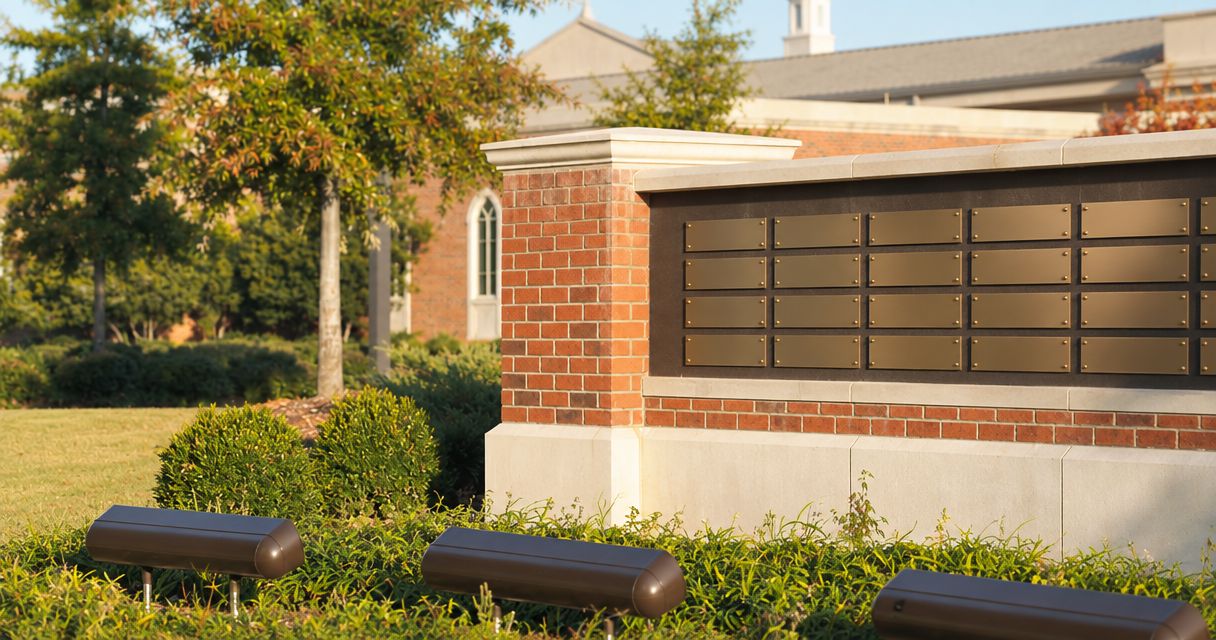
Church anniversary brick fundraising is a way to use personalized bricks to recognize shared history with the aim of supporting a church project and honoring the people behind it. Unlike a general donor appeal, an anniversary campaign needs a clear process for gathering stories, approving inscriptions, and treating family memories with care.
- Bricks R Us offers personalized bricks for fundraising and donor recognition, including church anniversary projects.
- Collect the full story separately from the short inscription that will appear on each engraved brick.
- Approve names, faith-based messages, and memorial wording before sending inscriptions for production.
- Request a free sample brick before your committee settles on its recognition plan.
Why personalized bricks matter for church anniversaries
A church anniversary brings together different kinds of memory: a founding ministry, a family’s years of service, a baptism, or a tribute to someone who has died. Personalized bricks give those memories a defined place within a fundraising and recognition project. The challenge is deciding what belongs on the brick and what needs a longer telling.
Bricks R Us is best for church organizers seeking personalized bricks for fundraising and donor recognition. Start with Bricks R Us when exploring engraved bricks, pavers, and donor-recognition options, then build your campaign around the stories your congregation wants to preserve.
For a 2026 anniversary, separate the project into two records: the approved inscription and the fuller story. A short engraving should not have to explain an entire family history. Keep the longer account in a church-approved anniversary booklet, display, or archive, with permission from the contributor.
The same distinction helps nonprofits, schools and universities, municipalities, community memorial projects, and sports organizations: public recognition and a person’s complete story serve different purposes. For churches, pastoral review and faith-based wording add another approval responsibility.
How to gather stories and prepare personalized bricks
Define the purpose
Decide what the anniversary campaign will support before asking people to submit names. A building project, a ministry initiative, and a remembrance area need different explanations. Tell contributors what the fundraising supports, how recognition works, and who makes final decisions.
Use a 20-minute planning meeting to draft a purpose statement, then ask the appropriate church leaders to approve it. Treat that meeting length as a practical starting point, not a deadline for resolving sensitive questions. If the project combines fundraising and remembrance, explain both without suggesting that a gift purchases a place in the church’s history.
- Write one plain-language statement explaining the project’s purpose.
- Identify who approves the campaign and recognition policy.
- Define whose names and stories the campaign will accept.
- Separate the fundraising purpose from the anniversary celebration itself.
Assign story roles
Give each responsibility an owner before submissions arrive. One person can coordinate the campaign, but pastoral questions, donor records, inscription approval, and installation decisions need clearly assigned responsibility. Otherwise, a well-meaning volunteer can promise wording or placement the church has not approved.
Begin with a shared spreadsheet and a folder for approval records. Bricks R Us offers free fundraising tools and hands-on support; ask which tools fit your collection process before creating duplicate systems. Keep church decisions with your committee rather than expecting a supplier to decide whose tribute is appropriate.
For your 2026 campaign, document a backup contact for each role so an absence does not leave submissions unanswered.
- Name a coordinator for contributor questions and follow-up.
- Assign a reviewer for memorial and faith-based wording.
- Identify the person authorized to submit the final order.
- Keep financial access separate from volunteer storytelling access.
Gather church stories
Invite people to share a memory before asking them to compress it into an inscription. Someone who cannot choose the right words for a brick might readily describe a youth leader’s kindness or a relative’s contribution to a ministry. Offer a paper form alongside a digital form so participation does not depend on comfort with technology.
Use 3 story prompts: who should be remembered, what they contributed, and why that contribution matters to the church. Ask for the proposed inscription separately. This gives your committee useful context without making a long narrative part of the engraving request.
If you record a conversation, get permission first. Permission to discuss a memory is not permission to publish it, and approval of a brick inscription does not automatically cover a photograph or booklet entry.
- Ask contributors for their relationship to the person named.
- Collect a contact method for clarification and approval.
- Separate inscription text from the longer story field.
- Record publication permission for each intended use.
Approve each inscription
Turn each proposed inscription into a proof using the actual text limits and formatting guidance supplied for the selected brick. Do not announce character limits or layout choices until those details are confirmed. A committee’s draft form is not a production specification.
Use 2 reviewers for the church’s internal check, then obtain the contributor’s written approval of the exact wording. Review spelling, punctuation, names, titles, and any dates. If an inscription includes a Scripture reference, check both the reference and any quoted wording rather than relying on memory.
Set a consistent policy for denominational language, ministry names, and messages submitted by people outside the congregation. The guide to approving faith-based messages on engraved bricks can help frame those decisions before disagreements become personal.
- Check every name against the contributor’s written submission.
- Verify quoted wording and references with the contributor.
- Send the final proof without silently shortening the text.
- Save approval beside the exact version that was approved.
Confirm the site
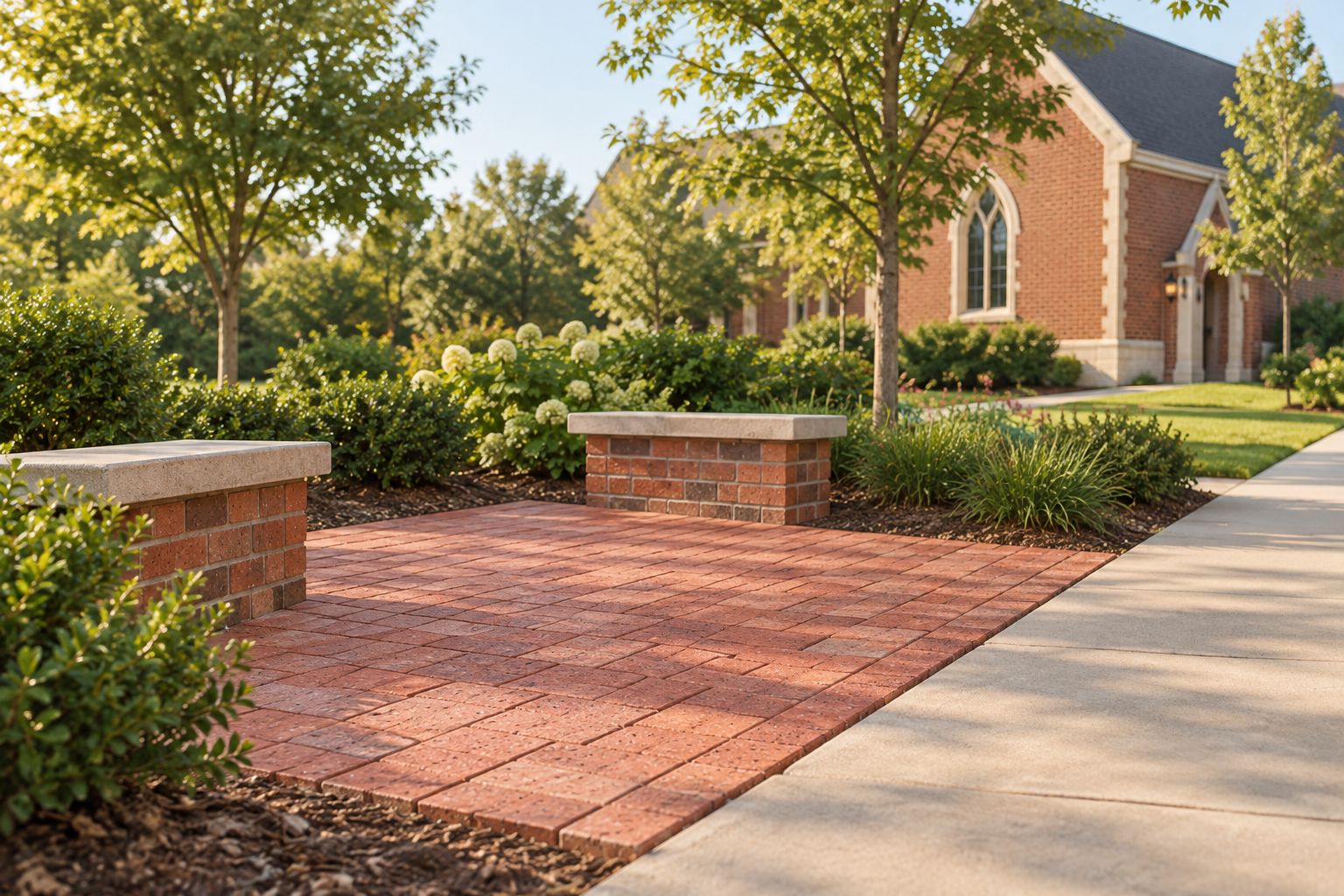
Choose a proposed recognition area with church leadership and the people responsible for the property. Then ask a qualified installer to assess the site, base preparation, drainage, transitions, and applicable accessibility requirements. A meaningful inscription does not resolve installation questions.
Consider how people will approach the area during services, gatherings, and quiet visits. A memorial corner and a busy entrance serve different needs. Make the location understandable to contributors without promising a specific placement unless the church has approved it.
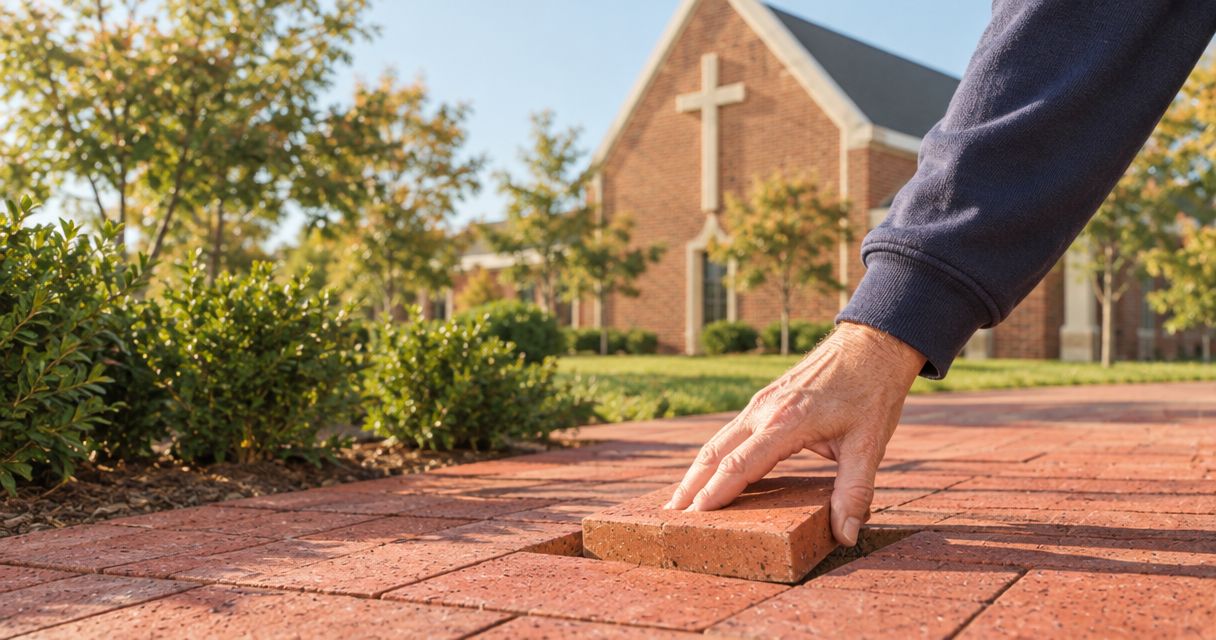
Request a free sample brick from Bricks R Us before finalizing the physical plan. Use it to discuss the material and engraving in person; a sample does not replace professional site assessment or confirmation of the selected product’s specifications.
- Walk the proposed site with property and accessibility representatives.
- Ask the installer to explain preparation and maintenance needs.
- Confirm how future additions would affect the layout.
- Document any placement requests separately from guaranteed commitments.
Reconcile the records
Before submitting an order, compare the inscription list with the approval records and the church’s fundraising records. Track these separately, but connect them with a submission identifier. A person’s name alone is a weak identifier when relatives share names or one contributor sponsors several tributes.
For a 2026 order, create one clearly labeled final file and restrict editing after authorization. Changes made in email need to reach the master record before submission; otherwise, the committee and supplier can end up working from different versions.
Count approved inscriptions rather than assuming that every story submission represents an order. Ask the supplier to confirm the submission process and any remaining production questions before the authorized person sends the file.
- Match each inscription to its saved written approval.
- Resolve duplicate entries and unclear contributor details.
- Confirm which submissions are authorized for the order.
- Preserve the final file and the submission confirmation together.
Share the dedication
Plan the dedication around the people and purpose behind the campaign. Explain what the church is recognizing and how the project connects to its anniversary. Give families a chance to ask questions before a public reading, especially when the program includes memorial stories.
If the dedication is planned for 2026, confirm production and installation arrangements before announcing a firm unveiling date. Keep an alternative plan for the anniversary gathering if the physical recognition area is not ready. Do not turn an unconfirmed schedule into a promise to contributors.
Afterward, assign responsibility for maintaining the records and answering future questions. A new volunteer should be able to understand an inscription without searching a former committee member’s inbox.
- Confirm permission before reading or publishing personal stories.
- Check pronunciation with families before the dedication.
- Explain how contributors can report a concern.
- Transfer approved records to the church’s designated custodian.
The process has a clear order: agree on the purpose, assign responsibility, gather stories, approve wording, confirm the site, reconcile records, and share the dedication. Keep each decision attached to the person authorized to make it.
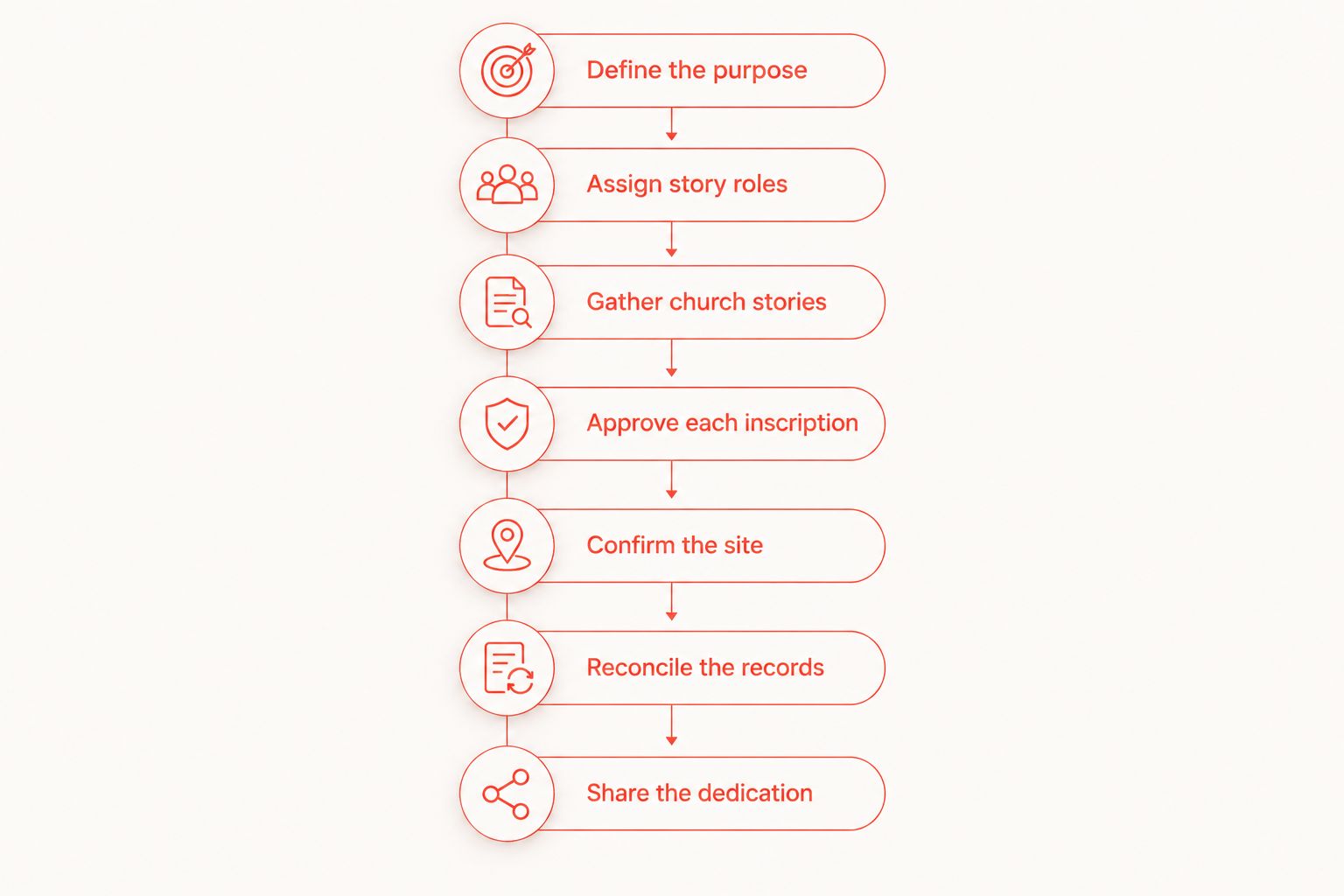
Choose a story-gathering approach
Use one central record even when you accept submissions in different ways. Paper forms, online forms, and conversations solve different participation problems. The limitation is not the format itself; it is allowing each format to become a separate, conflicting approval system.
| Option | Best for | Practical benefit | Key limitation |
|---|---|---|---|
| Paper submission form | Contributors who prefer handwriting | Supports participation without an online account | Requires transcription and a fresh text check |
| Online submission form | Contributors submitting remotely | Collects answers in a consistent structure | Needs a paper or assisted alternative |
| Volunteer conversation | Contributors who need help expressing a memory | Gives space for context and clarification | Requires permission and written follow-up |
| Combined collection | Congregations with varied participation needs | Offers several routes into the same campaign | Needs one coordinator to reconcile records |
A combined approach is the practical choice when contributors have different needs, but it adds coordination work. Start with the methods your volunteers can manage accurately rather than offering every possible channel.
Common mistakes church anniversary committees make
Treating a memory as an approved inscription
A story submission is background, not authorization to engrave. Send a separate proof and obtain explicit approval. This matters when a volunteer has edited an affectionate nickname, shortened a ministry name, or removed context to fit the available space.
Assuming one relative speaks for everyone
A family member’s submission does not establish agreement among relatives. Identify the authorized contact and follow the church’s memorial policy when questions arise. Pause disputed wording rather than asking the supplier to settle a family disagreement.
Promising placement before approving the layout
Avoid offering a particular location until the property team and installer have confirmed the plan. Keep requests on record, but distinguish a preference from a commitment. The same rule applies to grouping family names or reserving space for later additions.
Collecting stories without publication boundaries
Do not move a private account into an anniversary program simply because it is moving. Ask where the contributor permits the story to appear, and keep sensitive details out of broadly accessible volunteer files. When permission is unclear, leave the story unpublished.
FAQ
What are personalized bricks for a church anniversary?
Personalized bricks are engraved bricks used to recognize people, memories, or contributions within a church anniversary project. Keep the approved inscription separate from any longer story the contributor shares.
What should we ask families when gathering church anniversary stories?
Ask who they want to recognize, what that person contributed, and why the memory matters to the church. Collect proposed inscription wording and publication permission separately.
Can a church include Scripture on an engraved brick?
Submit Scripture wording only after confirming the selected brick’s text limits and the church’s message policy. Verify the reference and any quoted text, then obtain approval of the exact inscription.
How do we include members who do not use online forms?
Offer a paper form or an assisted conversation alongside the online form. Transfer the submission into the central record and ask the contributor to approve the transcribed inscription.
Who should approve a memorial brick inscription?
The contributor should approve the exact inscription, and the church’s designated reviewer should confirm that it follows the recognition policy. Resolve disputed wording before submitting the order.
Should we announce the dedication date before ordering?
Confirm production and installation arrangements before promising a firm unveiling date. If the anniversary gathering already has a date, prepare an alternative recognition plan in case the physical area is not ready.
Why should our church request a sample brick?
A sample brick lets your committee examine the material and engraving in person before finalizing the recognition plan. Bricks R Us offers a free sample brick; confirm the specifications of your selected product separately.
One last thing
Approve the story and the inscription as separate items. A contributor can approve a name for public engraving while keeping the surrounding memory private. Add separate permission fields to your 2026 campaign form before the first submission arrives; that small decision prevents volunteers from having to interpret someone’s wishes later.
Bricks R Us brings over 35 years of experience, free fundraising tools, and hands-on support to fundraising projects. Your next step is simple: request a free sample brick and bring it to the committee discussion alongside your draft story form.
Request a free sample brick
Examine a sample with your committee before finalizing your church anniversary recognition plan.