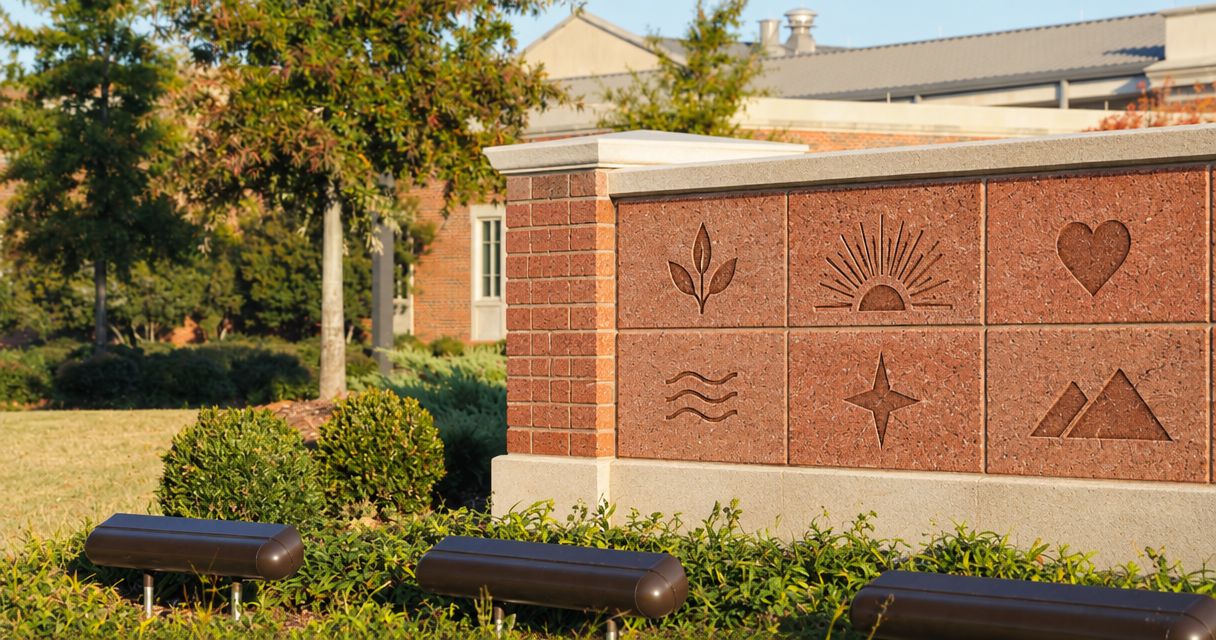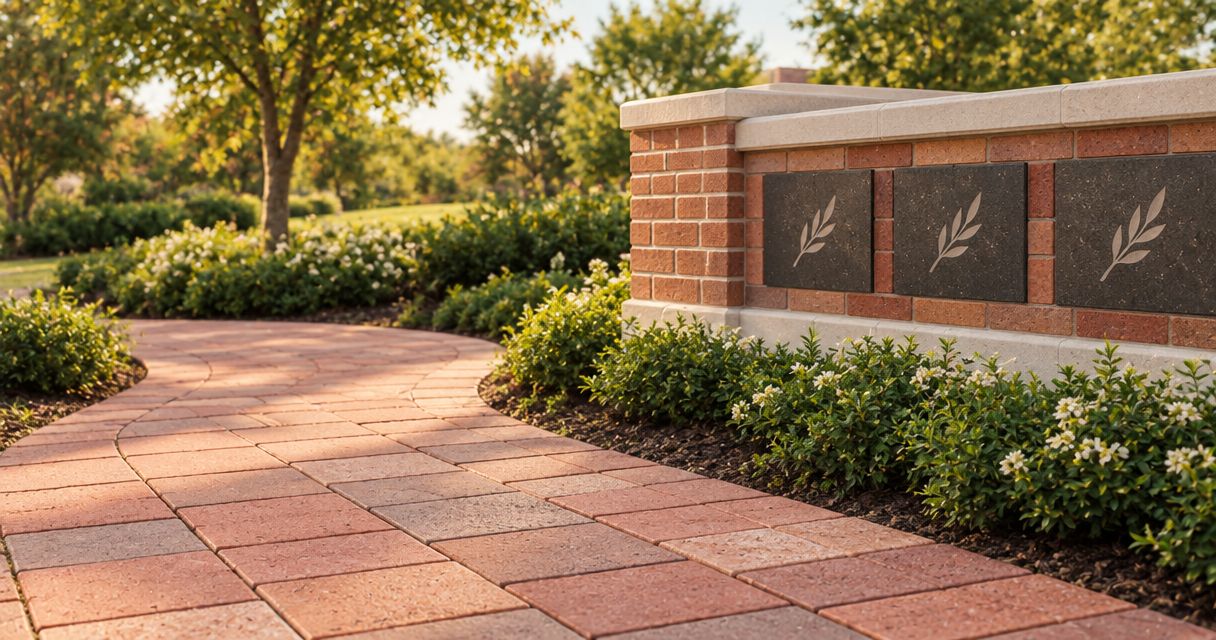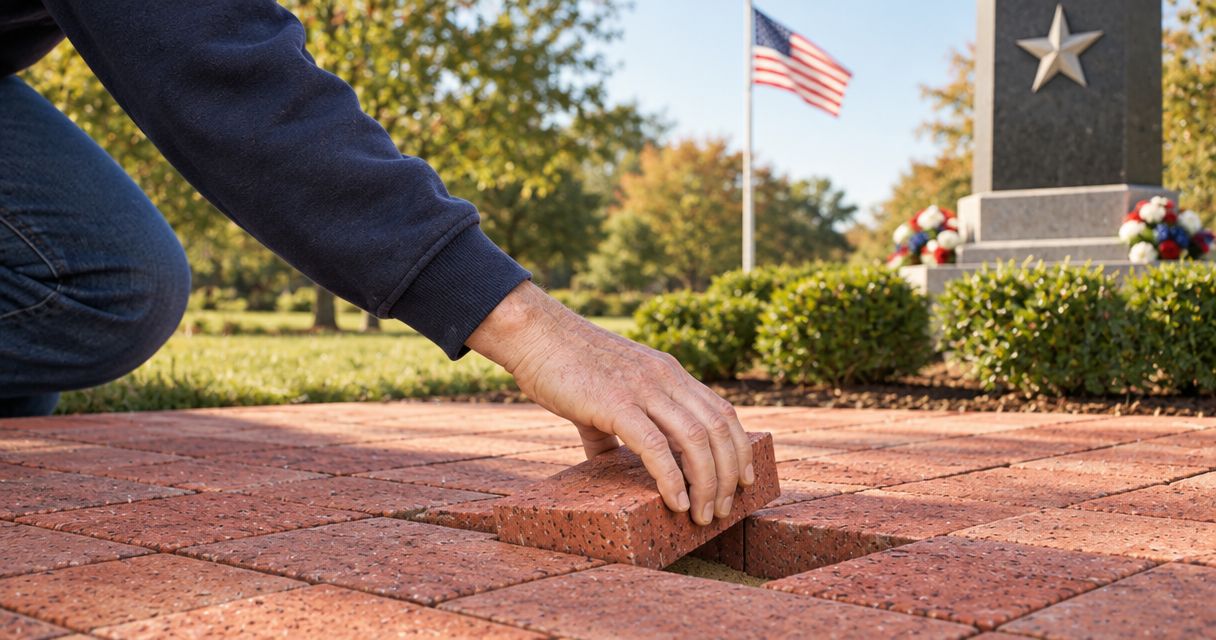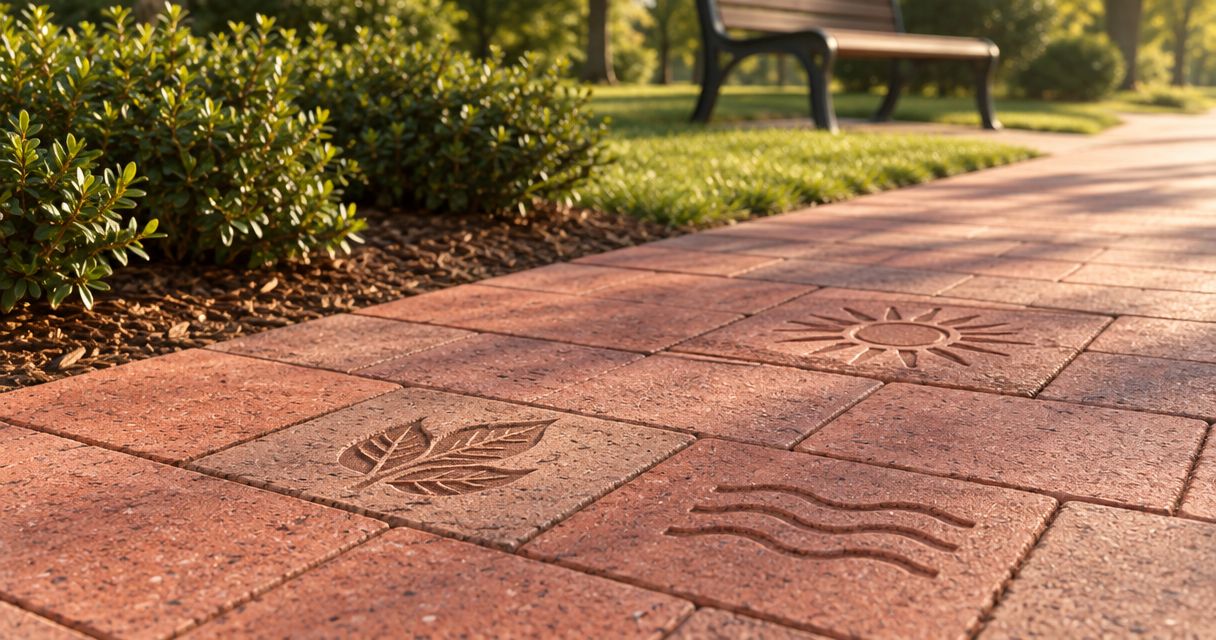
Best overall: a uniform name grid. Best for phased campaigns: expandable bands. Best for remembrance: a tribute inset. These engraved pavers for park walkways serve different purposes; choose the layout around public access, inscription rules, and future additions rather than decoration alone.
- For engraved pavers for park walkways, a uniform name grid is the best default for equal donor recognition.
- Expandable bands suit phased fundraising; tribute insets give memorial messages a distinct setting.
- Bricks R Us serves organizations planning engraved paver fundraising and donor-recognition projects.
- Request a free sample brick before approving the inscription style and walkway layout.
Why this matters
A municipal walkway must work as a public space before it works as a donor display. Visitors need a usable route, maintenance staff need an agreed care plan, and families need confidence that names will appear correctly.
Bricks R Us designs and sells custom engraved bricks, pavers, and donor-recognition products. For a 2026 park project, start with the recognition purpose and site approval process—not a finished illustration that leaves those decisions unresolved.
Bricks R Us is a fit for organizations seeking custom engraved pavers for park walkways and donor recognition. The designs below are planning concepts, not named product packages or promises about particular materials.
What makes the best engraved paver design?
Use these criteria before choosing a pattern:
- Readable recognition: Keep the inscription format consistent and review the actual lettering on a sample.
- Public access: Have the responsible municipal team review the route, surface, transitions, and applicable accessibility requirements.
- Fair treatment: Decide how individuals, families, organizations, and anonymous donors receive recognition.
- Future additions: Identify where later inscriptions belong without scattering them across unrelated spaces.
- Manageable upkeep: Confirm who handles cleaning, repairs, replacements, and inscription records.
- Clear approvals: Establish who accepts wording and who signs off before engraving.
Publish your inscription rules for engraved bricks in public parks before inviting submissions. A layout cannot resolve disputes over messages that the campaign never addressed.
Park walkway designs at a glance
| Design | Best for | Standout feature | Key limitation |
|---|---|---|---|
| Uniform name grid | Equal recognition across a general campaign | Repeated inscription format | Needs a clear location record |
| Perimeter border | Recognition beside a central route | Names follow the walkway edge | Reading position needs careful review |
| Expandable bands | Campaigns accepting future additions | Separate installation areas | Requires reserved space and records |
| Partner sections | Shared projects involving community groups | Recognition organized by participating group | Section boundaries can imply hierarchy |
| Tribute inset | Memorial and remembrance projects | A distinct place for personal tributes | Needs consent and sensitive wording rules |
1. Uniform name grid: best for equal donor recognition
A uniform name grid repeats a consistent inscription format across the designated paved area. It is the strongest starting point when your municipality wants recognition to feel shared rather than ranked.
For a 2026 campaign, settle the ordering method before accepting names. Alphabetical order, submission order, and assigned locations each require different recordkeeping; choose deliberately and explain the rule to participants.
Uniform name grid pros:
- Gives individuals and organizations a common recognition format.
- Keeps inscription review focused on a repeatable template.
- Makes the overall layout straightforward to explain.
Uniform name grid cons:
- Visitors need help locating a particular name in a large installation.
- Strict alphabetical placement becomes harder when later names arrive.
Best for: Municipal parks welcoming broad participation from residents, local nonprofits, school communities, congregations, and sports organizations.
Keep a location register that connects every approved inscription to its installed position. A consistent grid still needs a finding system; otherwise, a family can know its tribute exists without knowing where to look.
Verdict: Buy into the uniform name grid when equal treatment is your main design goal.
A simple rectangular recognition area also gives your committee a clear starting point for discussing boundaries, walking routes, and future space.
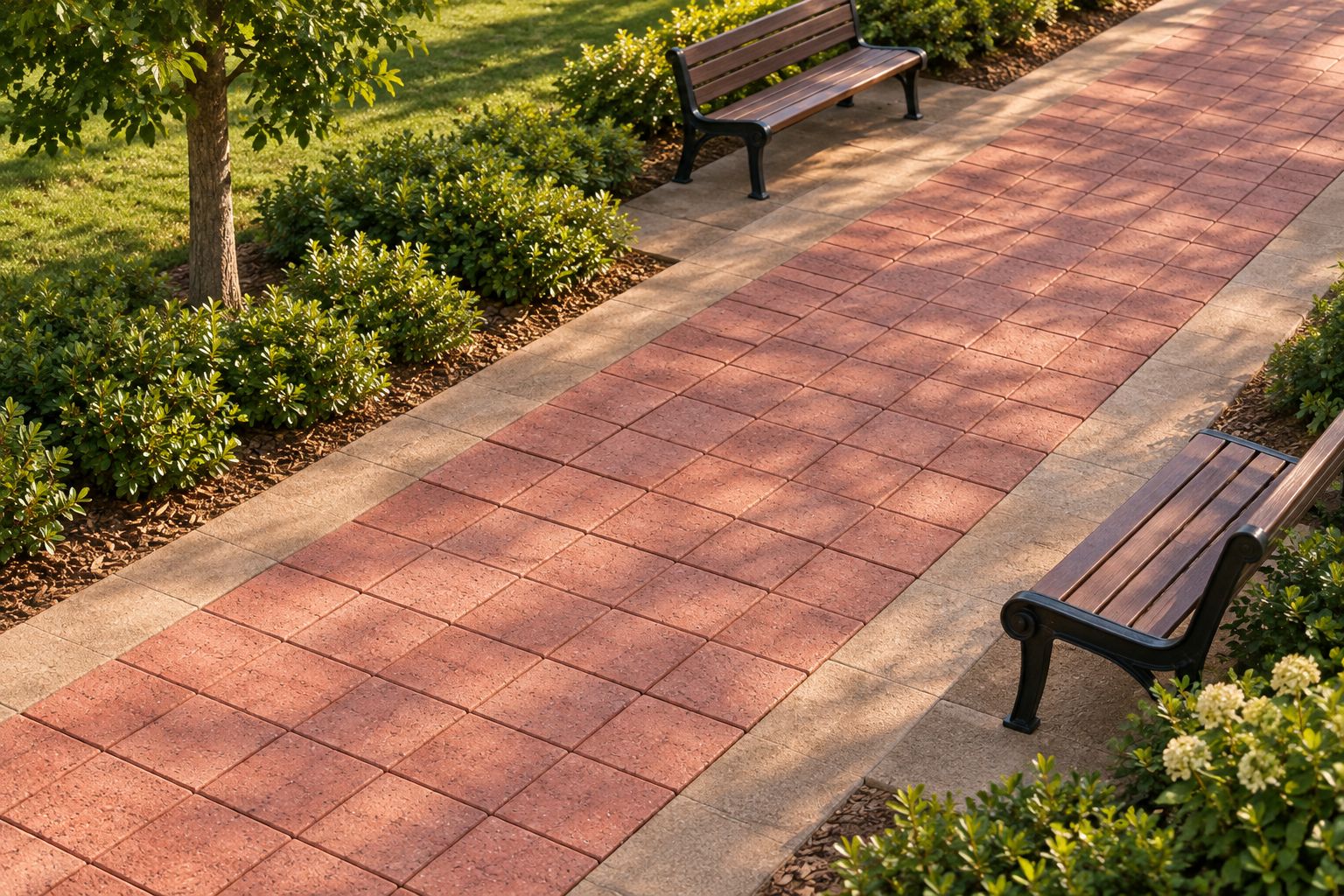
2. Perimeter border: best for keeping recognition at the edges
A perimeter border places engraved units along the edge of a walkway or gathering area. Choose this concept when the central space has another purpose and you want donor recognition to frame it.
Check where people will stand while reading. An edge beside planting, seating, or a busy entrance needs a different review from an edge beside an open gathering area.
Perimeter border pros:
- Gives recognition a defined boundary.
- Leaves the central design visually separate.
- Creates a clear sequence for organizing inscriptions.
Perimeter border cons:
- Readers can interrupt circulation if the viewing position is poorly planned.
- Curves and corners complicate inscription orientation.
Best for: Park entrances, gathering spaces, and walkway edges where a continuous border fits the approved site plan.
Review the border from both directions of travel. Decide which way the lettering faces, where the sequence begins, and whether visitors can read inscriptions without stepping into planting or leaving the intended route.
Verdict: Hold the perimeter border until the municipality approves the reading position and edge conditions.
3. Expandable bands: best for phased fundraising
Expandable bands divide recognition into planned strips or zones that can be completed separately. This design suits a campaign that expects to accept more names after its initial installation.
If your first installation is planned for 2026, mark the later recognition areas on the same drawing. Empty space needs an agreed purpose, not an assumption that someone will find room later.
Expandable bands pros:
- Assigns future inscriptions a clear destination.
- Lets the committee explain campaign phases visually.
- Separates current approvals from later submissions.
Expandable bands cons:
- Reserved areas need an acceptable interim treatment.
- Later work requires coordination with park operations.
Best for: Ongoing municipal fundraising programs, recurring community campaigns, and projects with confirmed phased site plans.
Record the boundary of each band and the rule for filling it. Also identify who retains the inscription files when committee members or municipal staff change.
Do not promise that later work will match an earlier installation exactly. Ask about material continuity and the process for reviewing additions before making that commitment to donors.
Verdict: Buy into expandable bands when future recognition is part of the plan from the start.
4. Partner sections: best for shared community projects
Partner sections organize inscriptions around participating groups rather than placing every name in one undivided field. A park project might involve nonprofit supporters, schools and universities, churches, neighborhood groups, and sports organizations.
Give these participants the same written recognition rules. Different section sizes or locations need an explanation so the arrangement does not unintentionally communicate that one community matters more than another.
Partner sections pros:
- Gives participating organizations a defined recognition area.
- Helps committees coordinate submissions by group.
- Makes a shared project easier to explain to supporters.
Partner sections cons:
- Uneven participation can leave awkward gaps.
- Group boundaries can suggest unintended status differences.
Best for: Municipal projects with established partner organizations and an agreed allocation process.
Plan for supporters who do not belong to a participating group. Also decide how a family connected to a school, church, and sports club chooses its placement; donors should not have to resolve an administrative puzzle to participate.
Verdict: Hold partner sections until every participating group accepts the allocation and naming rules.
5. Tribute inset: best for a distinct remembrance space
A tribute inset places memorial inscriptions within a clearly defined part of the park. It separates remembrance from general donor acknowledgment without requiring every campaign inscription to carry the same emotional purpose.
The surrounding space matters as much as the paving pattern. Review whether visitors can pause, read, and gather without blocking the main route or conflicting with nearby activities.
Tribute inset pros:
- Gives remembrance a distinct setting.
- Supports a consistent memorial inscription format.
- Separates personal tributes from general campaign recognition.
Tribute inset cons:
- Family consent and wording need careful handling.
- Later additions require a clear placement policy.
Best for: Community memorial projects, remembrance gardens, and park tributes coordinated with families or sponsoring organizations.
Use the same care whether a tribute comes from a nonprofit, school, church, municipality, or sports club. Confirm names, dates when included, and the identity of the person authorized to approve the inscription.
Verdict: Buy into a tribute inset when remembrance is the primary purpose and consent procedures are settled.
How the designs rank
The uniform name grid is the default because its repeated format supports equal recognition. Expandable bands lead for ongoing campaigns; perimeter borders, partner sections, and tribute insets answer more specific site or recognition needs.
These recommendations compare layout purposes, not tested products. Final suitability depends on the actual site, approved materials, inscription format, and municipal review.
Turn the preferred layout into an approval plan
Before your 2026 committee approves production, prepare 3 layout drawings for discussion: the full site, the inscription arrangement, and the proposed future-addition area. Label a drawing “not applicable” when the project has no future phase rather than leaving the question unanswered.
Review the site
Ask the municipal project lead to identify the people responsible for site access, installation approval, and maintenance. Include the actual recognition area and the places visitors will stand to read it.
Bring the grounds team into this discussion before the design is settled. Their questions belong in the plan, not in a repair request after installation.
Set the rules
Write the permitted inscription format, ordering method, approval authority, and correction process. Include rules for business names, personal messages, symbols, and anonymous recognition where relevant.
Apply the published policy consistently across nonprofit, education, faith, municipal, memorial, and sports participants. Refer sensitive questions to the municipality’s designated reviewer rather than asking volunteers to improvise decisions.
Proof the names
Use 2 approval stages: participant approval of the inscription, followed by committee verification against the final production record. Keep the approved text intact when transferring it between forms or files.
Read names character by character. Check punctuation, capitalization, and any dates separately; a visually balanced layout does not make an inscription accurate.
Review the sample
Request 1 sample brick before approving the inscription approach. Look at it outdoors, compare it with your draft wording, and ask which details apply to the paver option under consideration.
Bricks R Us offers a free sample brick as a practical next step. Use the sample conversation to discuss free fundraising tools and hands-on support for your organization’s project.
Request your free sample brick
Discuss your park project and review an engraving sample before settling the design.
Which park walkway design should you choose?
Choose the uniform name grid unless a specific project requirement points elsewhere. It gives a general municipal campaign a clear, repeatable recognition structure without dividing participants into separate categories.
Choose expandable bands for planned additions, a perimeter border for an approved edge treatment, partner sections for an agreed shared project, or a tribute inset for remembrance. For your 2026 decision, approve the layout and the inscription policy together; neither is complete without the other.
FAQ
What's the best design for engraved pavers for park walkways?
A uniform name grid is the best default for a general municipal donor-recognition campaign. Choose a different layout when phased additions, partner groups, or a dedicated memorial purpose require it.
Should donor names go in alphabetical order on park pavers?
Alphabetical order works when the committee can manage placement and later additions consistently. Submission order or assigned locations are alternatives, but the campaign should publish its chosen method before collecting names.
Can a park walkway include both donor names and memorial tributes?
A park walkway can be planned with separate donor and memorial areas. Give each area a clear purpose, consistent inscription rules, and an approval process appropriate to the messages.
How do you plan for more engraved pavers later?
Reserve a defined addition area on the original site plan. Record how future inscriptions will be ordered, approved, and installed, and discuss material continuity before promising a matching result.
Who should approve inscriptions for a municipal park?
The municipality should name an authorized reviewer before the campaign accepts inscriptions. Participants should approve their own submitted wording, while the designated reviewer checks it against the public recognition policy.
Can schools, churches, nonprofits, and sports clubs join the same park campaign?
A shared park campaign can include these organizations under a common recognition policy. If the design uses partner sections, agree on allocation, placement, and recognition for unaffiliated supporters before launch.
How can I review an engraving before choosing the walkway design?
Request a free sample brick from Bricks R Us. Review the sample alongside your proposed inscription and ask which engraving and material details apply to the pavers being considered.
One last thing
Test the finding system before approving the layout. Give someone outside the committee a draft plan and an approved donor name, then ask them to locate it without help. If the task is confusing on paper, revise the location record and visitor instructions before installation.