Best overall: a uniform name-and-tribute grid. Best for phased additions: a modular memorial walk. Best for a compact garden: a border dedication band. These memorial pavers for memorial gardens keep remembrance central while giving municipal organizers clear choices for a 2026 project.
- Choose a uniform grid for memorial pavers for memorial gardens when equal recognition is your priority.
- Choose a modular memorial walk when your municipality expects future inscriptions.
- Bricks R Us offers custom engraved pavers for organizations planning fundraising and donor recognition.
- Request a free sample brick before approving inscription rules and the final garden layout.
Why this matters
A municipal memorial garden serves grieving families, everyday park visitors, maintenance staff, and future organizers. Its design needs to support remembrance without making names difficult to find or future additions difficult to manage.
Bricks R Us designs and sells custom engraved bricks, pavers, and donor-recognition products. Bricks R Us memorial pavers suit organizations that want personalized remembrance within a shared community space. Start with the recognition policy, then choose the layout—not the other way around.
For a 2026 committee, the useful question is not which pattern looks most elaborate. It is which pattern your organization can approve, explain, and care for consistently.
What makes the best memorial garden paver design?
Use these criteria before comparing patterns:
- Equal recognition: Give comparable tributes comparable space and visual emphasis.
- Readable inscriptions: Keep names and messages clear without relying on crowded lettering.
- Accessible circulation: Have the site team review routes, transitions, seating access, and applicable accessibility requirements.
- Future additions: Decide where later inscriptions belong before filling the first section.
- Maintainable placement: Keep recognition areas compatible with planting care, cleaning, and repairs.
- Approval clarity: Establish who approves eligibility, wording, placement, and family consent.
Before requesting layout approval, use the municipal brick fundraiser approval checklist to organize the decisions that need municipal review. A design drawing alone does not settle inscription policy or responsibility for ongoing care.
Memorial paver designs at a glance
These are layout recommendations, not named product packages. Ask your supplier and site professional which materials and engraving arrangements fit the approved plan.
| Design | Best for | Standout feature | Key limitation |
|---|---|---|---|
| Uniform name-and-tribute grid | Equal individual recognition | Repeated spaces with consistent inscription rules | Later additions need a placement rule |
| Modular memorial walk | Phased campaigns | Separate sections planned for future inscriptions | Requires an expansion plan from the start |
| Border dedication band | Compact gardens | Tributes arranged around a defined garden edge | Plant growth can interrupt viewing |
| Themed remembrance sections | Distinct community groups | Named areas within one shared memorial | Categories need clear eligibility rules |
| Central gathering court | Remembrance gatherings | Tributes arranged around an open gathering space | Gathering needs can compete with inscription viewing |
1. Uniform name-and-tribute grid: best for equal recognition
A uniform grid repeats the same inscription format across an orderly field of engraved pavers. Make the person's name the primary element, with optional supporting text governed by one shared policy.
This is the strongest default when your municipality wants each tribute to receive equal visual treatment. It also gives families a clear explanation of what their inscription will look like before they submit wording.
Uniform grid pros:
- Gives individual tributes consistent prominence.
- Makes inscription instructions straightforward to explain.
- Supports a simple location register for finding names.
Uniform grid cons:
- A strict format leaves less room for longer personal messages.
- Alphabetical placement becomes difficult when new names arrive later.
Best for: Municipal gardens where equal individual recognition matters more than varied layouts.
For your 2026 launch, choose between fixed placement and ongoing alphabetical order before collecting inscriptions. Do not promise both unless the site plan explains how they will work together. If names stay in their original positions, publish that rule and maintain a location register.
Verdict: Buy into the uniform grid as the default design; approve the placement policy before ordering.
2. Modular memorial walk: best for phased additions
A modular memorial walk divides the recognition area into planned sections along a route. Each section follows the same inscription rules, while later sections provide room for future dedications.
The important distinction is planned expansion, not simply leaving blank spaces. Your drawing should show where future recognition belongs and how visitors will reach it without confusing unfinished areas with completed memorials.
Modular memorial walk pros:
- Gives later dedications an identified place.
- Allows consistent formatting across successive phases.
- Separates installation planning from individual inscription placement.
Modular memorial walk cons:
- Later phases require continuing records and ownership.
- Early drawings must account for the eventual route and planting layout.
Best for: Municipalities expecting continuing memorial requests rather than a single dedication event.
For a 2026 opening, identify the first installation area and the future extension area on the same plan. A university honoring alumni, a nonprofit remembering supporters, or a sports organization honoring teammates can use the same principle: define the next section before the current section fills.
Verdict: Buy into a modular walk when future additions are part of the brief; hold if expansion has no approved location.
3. Border dedication band: best for compact gardens
A border dedication band places engraved pavers along a defined edge of the garden. It keeps recognition connected to the planting while leaving the central area available for a separate path, seating, or another approved purpose.
Keep the viewing position in mind. A border that looks orderly on a plan still needs a comfortable place for visitors to stop and read without stepping into planting beds.
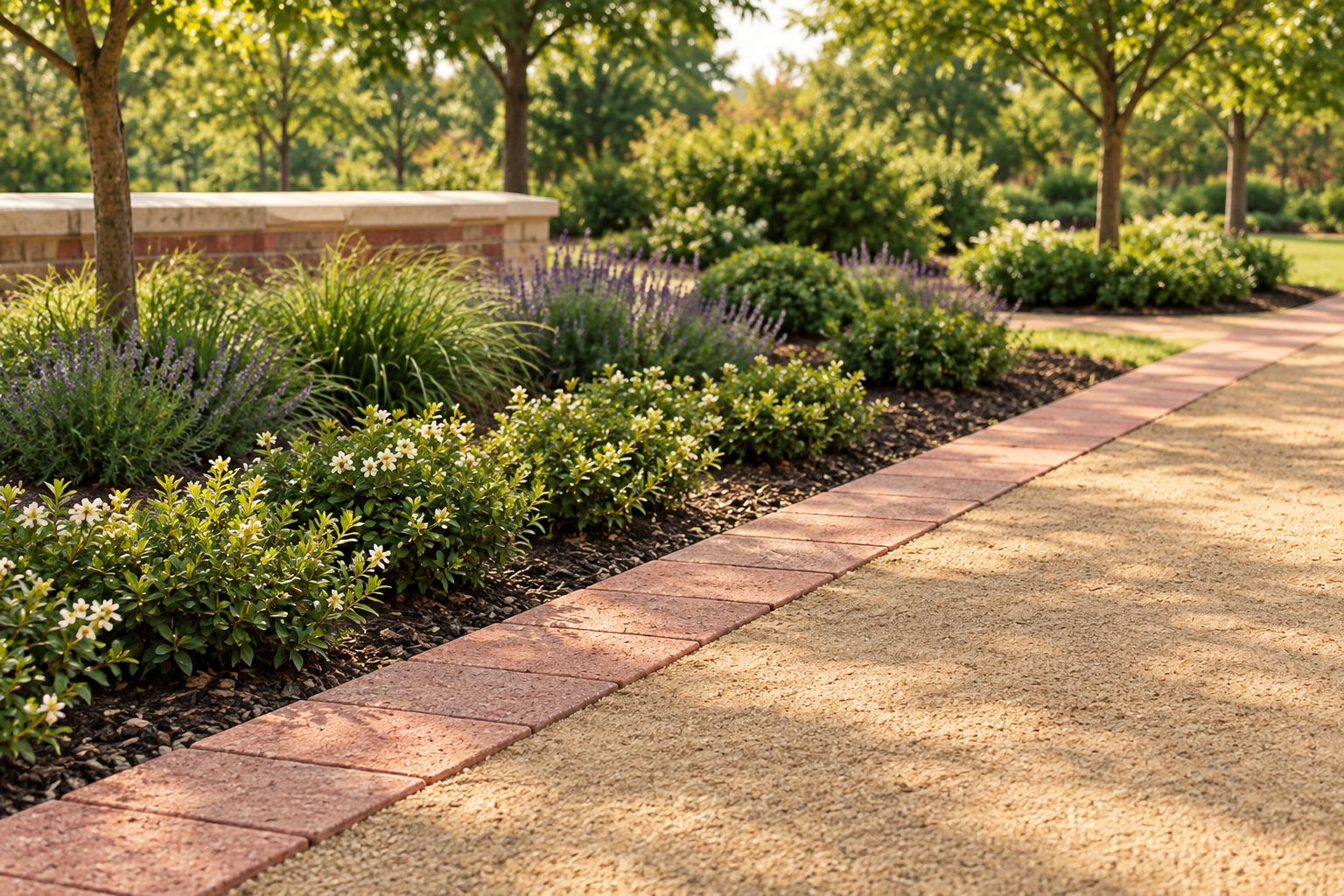
Border dedication band pros:
- Creates a defined recognition area around planting.
- Keeps the center available for another garden use.
- Provides an easily described boundary for the initial layout.
Border dedication band cons:
- Overhanging plants or seasonal debris can cover inscriptions.
- A narrow edge leaves limited room for future additions.
Best for: Compact municipal gardens where a larger inscription field would dominate the space.
Ask the grounds team to review mature planting size, edging, and routine maintenance access before approving the band. Churches planning quiet remembrance gardens and schools working within established courtyards should make the same check.
Verdict: Buy into a border band when viewing access is clear; skip placements that require visitors to enter planting beds.
4. Themed remembrance sections: best for distinct community groups
Themed sections group tributes under an approved purpose, such as veterans, first responders, or community volunteers. Keep the inscription format consistent across the garden so categories do not unintentionally create different levels of recognition.
This layout needs a written policy as much as a drawing. Explain who qualifies for each section, how overlapping eligibility is handled, and where a tribute belongs when no existing category fits.
Themed remembrance sections pros:
- Helps visitors find a defined group of tributes.
- Connects each section to an explicit remembrance purpose.
- Supports distinct community observances within a shared garden.
Themed remembrance sections cons:
- Ambiguous categories can leave families unsure where they belong.
- Uneven demand can fill one section while another remains largely unused.
Best for: Municipal memorial gardens with an established, approved recognition purpose for each group.
Use the same care in partner projects. A school or university needs a remembrance policy; a church needs clear wording guidance; a sports organization needs a consistent approach to honoring teammates. Nonprofits should define recognition eligibility before inviting submissions.
Verdict: Hold themed sections until eligibility and exceptions are approved; skip categories created only to fill the drawing.
5. Central gathering court: best for remembrance gatherings
A central gathering court arranges memorial pavers around a shared open space. The layout gives organizers a place to plan remembrance events while keeping individual tributes connected to the garden's common purpose.
Have the site team distinguish standing, seating, circulation, and inscription-viewing areas. A drawing should explain how the garden works during both a gathering and an ordinary quiet visit.
Central gathering court pros:
- Gives remembrance gatherings a defined setting.
- Connects individual names to a shared civic space.
- Allows seating and circulation to be considered together.
Central gathering court cons:
- Gathering layouts can obstruct access to particular inscriptions.
- An open central space needs deliberate planning for quiet individual visits.
Best for: Municipal gardens that explicitly include organized remembrance gatherings in their purpose.
Ask event organizers and maintenance staff to review the same drawing. Keep temporary equipment placement separate from permanent recognition decisions, and check that a visitor can still locate a loved one's name outside event arrangements.
Verdict: Buy into a gathering court when events are an agreed use; hold if everyday visitor access remains unresolved.
Turn the preferred design into an approval-ready plan
Use 3 review stages for your 2026 project. Assign a named owner to each stage so questions do not pass indefinitely between volunteers, municipal staff, and families.
Site review
Confirm the recognition boundary, circulation, planting relationships, and future installation areas with the site team. Ask the responsible professionals to assess drainage, surface transitions, and applicable accessibility requirements rather than treating an attractive pattern as a construction specification.
Inscription review
Require 2 approvals: one from the person authorized to approve the tribute and one from the organization's designated reviewer. Check spelling, punctuation, dates when included, and permission for personal wording. Establish a separate procedure for inscriptions without an available family contact.
Record handoff
Keep 1 master register connecting approved wording, approval records, and the installed location. Assign responsibility for corrections and future additions. A record that only one departing volunteer can interpret is not a workable long-term plan.
Bricks R Us brings over 35 years of experience, free fundraising tools, and hands-on support to fundraising projects. Request a free sample brick to review the engraved result before your committee finalizes its inscription instructions; a sample does not replace site-specific installation review.
Request a free sample brick
Review an engraved sample before your committee finalizes inscription guidance.
How the designs are ranked
The uniform grid ranks first because its repeated format directly supports equal recognition and clear inscription instructions. The other designs lead in distinct situations: future additions, compact boundaries, defined groups, or gatherings.
This ranking compares layout decisions, not tested material performance. It makes no claim about a particular paver's durability, engraving capacity, or suitability for your site.
Which memorial paver design should you choose?
Choose a uniform name-and-tribute grid unless your project has a specific reason to use another layout. Choose the modular walk when additions are expected, and the border band when recognition needs to follow a compact garden edge.
For Bricks R Us memorial pavers, bring the approved recognition purpose and proposed layout into the planning conversation. Your 2026 brief should explain who is honored, who approves wording, where future names belong, and who maintains the records.
FAQ
What's the best memorial paver design for a municipal garden?
A uniform name-and-tribute grid is the best default when equal individual recognition is the priority. Use consistent inscription rules and decide how later names will be placed before collecting submissions.
How do we choose memorial pavers for memorial gardens?
Choose memorial pavers by reviewing the engraved sample, inscription needs, proposed layout, and site requirements. Have the responsible site professionals assess installation and accessibility separately from the engraving review.
Is a memorial walk better than a central gathering court?
A memorial walk is the better fit for a phased recognition route; a central gathering court fits a garden planned around remembrance gatherings. The choice depends on the garden's approved purpose, not appearance alone.
Can we add more names after the memorial garden opens?
Plan a designated area and placement rule for later names before the garden opens. Confirm the addition process with your supplier and site team, and record each installed location in the master register.
Who should approve a memorial paver inscription?
The person authorized to approve the tribute and the organization's designated reviewer should approve the inscription. Municipal organizers should also establish a process for eligibility questions, sensitive wording, and cases without a family contact.
Should donor names and memorial tributes use the same layout?
Decide whether fundraising recognition and personal remembrance serve the same purpose before combining them. If they serve different purposes, give each a clearly explained area and consistent recognition rules.
Can our committee request a sample before deciding?
Bricks R Us offers a free sample brick as a practical next step for planning. Use it to discuss the engraved result and inscription guidance while your site team reviews the proposed garden layout.
One last thing
Test whether someone unfamiliar with the project can find a particular name using your proposed register and drawing. If the answer depends on asking the original organizer, improve the location system before installation. A memorial should remain understandable after committee membership changes.