Best overall: a uniform name grid. Best for ongoing additions: modular sections. Best for tributes: dedicated memorial panels. This guide compares five design approaches to engraved tiles for donor walls, helping you choose a layout that fits your community, approval process, and future recognition needs.
- A uniform name grid is the best default for engraved tiles for donor walls with equal recognition.
- Modular sections suit donor recognition programs that need room for future additions.
- Dedicated memorial panels keep tribute messages distinct from general donor recognition.
- Bricks R Us supports organizations planning custom engraved-brick, paver, and donor-recognition projects.
Why this matters
A donor wall needs to work for the person submitting a name, the volunteer checking it, and the visitor reading it. Start with recognition rules, not decoration. A clear layout cannot correct an unclear policy about whose names belong together.
For your 2026 project, separate two decisions: the recognition format and the physical material. This guide ranks design patterns, not specific tile products or installation systems. Bricks R Us designs and sells custom engraved bricks, pavers, and donor-recognition products; confirm the proposed material and wall application before choosing a final design.
Bricks R Us is best suited to organizations seeking custom engraved bricks, pavers, and donor-recognition products. Request a free sample brick as a useful first step for discussing engraving appearance, while keeping wall-material and mounting questions separate.
What makes the best engraved tiles for donor walls
Judge each design against these criteria before reviewing drawings:
- Readable names: Give names a clear visual priority. Assess a proof at its intended size rather than relying on an enlarged screen view.
- Consistent recognition: Decide how individuals, families, organizations, and anonymous donors will appear before collecting inscriptions.
- Future additions: Establish where later names belong and how the layout will stay organized.
- Manageable approvals: Use a defined route for spelling, message consent, and final authorization.
- Site suitability: Ask the supplier and installer to confirm the proposed material, mounting approach, and care requirements for the actual location.
The best design is the one your organization can administer after the opening ceremony. Use this guide to organizing donor names for a donor recognition wall before approving a layout that depends on alphabetical order, campaign groups, or recognition categories.
Engraved donor wall designs at a glance
| Design approach | Best for | Standout feature | Key limitation |
|---|---|---|---|
| Uniform name grid | Equal recognition | Repeated name placement and spacing | Alphabetical order becomes harder to preserve with additions |
| Modular sections | Ongoing campaigns | Separate areas for later recognition | Requires clear section labels and a placement policy |
| Dedicated memorial panels | Family-approved tributes | A distinct setting for remembrance | Needs consent and sensitive wording review |
| Class or cohort panels | Schools and universities | Names grouped around shared affiliation | Requires rules for people with multiple affiliations |
| Sponsor panels | Sports and community partnerships | Organization names separated from personal recognition | Logos and changing sponsors complicate consistency |
These approaches are not mutually exclusive. Choose one organizing system for the wall, then use a separate section only when it serves a clearly different recognition purpose.
1. Uniform name grid: best for equal donor recognition
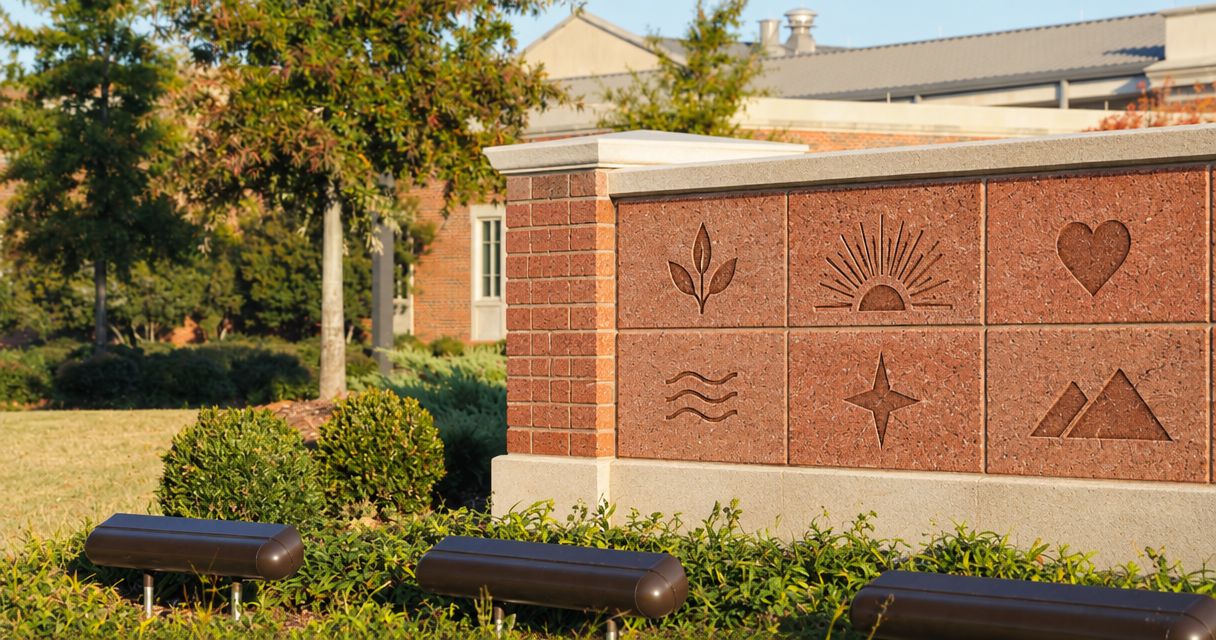
A uniform name grid repeats the same tile arrangement, text placement, and spacing across the wall. It gives each inscription a consistent place without requiring a separate visual treatment for every donor.
This is the strongest default for nonprofits and churches that want names presented on equal terms. Define the ordering rule before inviting submissions; equal tile treatment does not automatically explain why one name appears before another.
Uniform name grid pros:
- Creates a consistent reading pattern.
- Gives volunteers a repeatable proof format.
- Keeps personal recognition visually separate from campaign messaging.
Uniform name grid cons:
- Later additions disrupt a fixed alphabetical sequence.
- Long names need an agreed formatting rule.
For a 2026 campaign, approve examples using different name lengths before releasing the inscription form. Do not solve each long name with a new type size or an unapproved abbreviation.
Best for: Organizations that prioritize equal recognition over separate donor categories.
Verdict: Choose a uniform name grid as your default; skip fixed alphabetical placement if additions will continue.
2. Modular sections: best for ongoing donor recognition
Modular sections divide the wall into defined areas that follow the same design rules. A section can represent a campaign phase, a facility project, or another category your organization can explain clearly.
Municipalities, community centers, and nonprofits can use this approach when recognition continues beyond an initial dedication. The essential decision is what opens a new section: a new campaign, an approved project, or another documented milestone.
Modular section pros:
- Provides a defined place for future names.
- Supports staged proofing and approval.
- Keeps separate campaign groups identifiable.
Modular section cons:
- Section labels need ongoing administrative consistency.
- Uneven participation leaves sections with different visual weight.
Plan the full composition before filling the first section. Ask how unused areas will look and who will decide where the next group belongs. A modular layout still needs confirmation that the proposed physical system supports the intended additions.
Best for: Organizations with recurring campaigns or continuing donor recognition.
Verdict: Choose modular sections when future additions are part of the plan, not an afterthought.
3. Dedicated memorial panels: best for family-approved tributes
Dedicated memorial panels place remembrance inscriptions in a clearly identified area rather than mixing them into general donor listings. Names, relationships, and tribute wording follow a separate approval policy.
Churches, community memorial committees, and nonprofits should settle consent before design. A donation does not replace family approval of a personal tribute, and the committee should decide how it handles sensitive wording before receiving submissions.
Dedicated memorial panel pros:
- Gives remembrance a distinct purpose and setting.
- Allows a tribute-specific proofing process.
- Separates personal messages from general acknowledgments.
Dedicated memorial panel cons:
- Personal wording requires additional review.
- Conflicting family requests need a clear resolution process.
For a 2026 dedication, identify who approves each inscription and who resolves disputed details. Offer a restrained format that works without requiring families to share a personal story publicly.
Best for: Churches and community projects where remembrance is the central purpose.
Verdict: Choose dedicated memorial panels when consent and tribute wording need their own process.
4. Class or cohort panels: best for schools and universities
Class or cohort panels organize names around a shared affiliation, such as a graduating class or an academic department. The grouping helps visitors understand the relationship between the people recognized and the institution.
Schools and universities should define which affiliation controls placement. A donor who is an alumnus, parent, and employee needs a consistent rule or a clear opportunity to select an approved category.
Class or cohort panel pros:
- Makes shared affiliations easy to identify.
- Gives alumni groups a clear recognition structure.
- Supports consistent wording within each cohort.
Class or cohort panel cons:
- Multiple affiliations complicate placement.
- Smaller cohorts need deliberate spacing within the overall design.
Keep institutional labels separate from the donor's personal inscription. If a department name changes, the school needs to understand which parts of the design are permanent and which require a separate update process.
Best for: Schools and universities recognizing donors through a shared institutional connection.
Verdict: Choose cohort panels when affiliation helps visitors find names; skip them when categories overlap without clear rules.
5. Sponsor panels: best for sports and community partnerships
Sponsor panels give organizational acknowledgments their own place rather than forcing business names into a format built only for individuals. Sports organizations and community projects can distinguish sponsors from families, volunteers, and personal tributes.
Choose between a consistent text-only treatment and a separately approved graphic approach. Do not promise logo engraving until the supplier confirms that the proposed artwork and material are suitable.
Sponsor panel pros:
- Distinguishes organizational support from personal recognition.
- Establishes a repeatable business-name format.
- Gives sponsor acknowledgments a defined place.
Sponsor panel cons:
- Logos create additional artwork and permission checks.
- Permanent recognition needs rules for changing sponsor relationships.
For a 2026 sports project, clarify whether the panel records support for a particular campaign or represents a continuing relationship. Avoid presenting permanent engraving as something that automatically changes with each season.
Best for: Sports organizations and community projects with a distinct sponsor-recognition program.
Verdict: Choose sponsor panels when organizational recognition needs different rules from individual names.
Check the physical wall before approving the design
A convincing drawing is not an installation specification. Ask the supplier and installer to review the substrate, mounting method, exposure, replacement access, and care instructions for the proposed wall.
Also consider how people will approach and read the names. Review the layout from the actual visitor route rather than judging only a close-up proof. Keep essential recognition away from positions where furniture or other fixtures will obscure it.
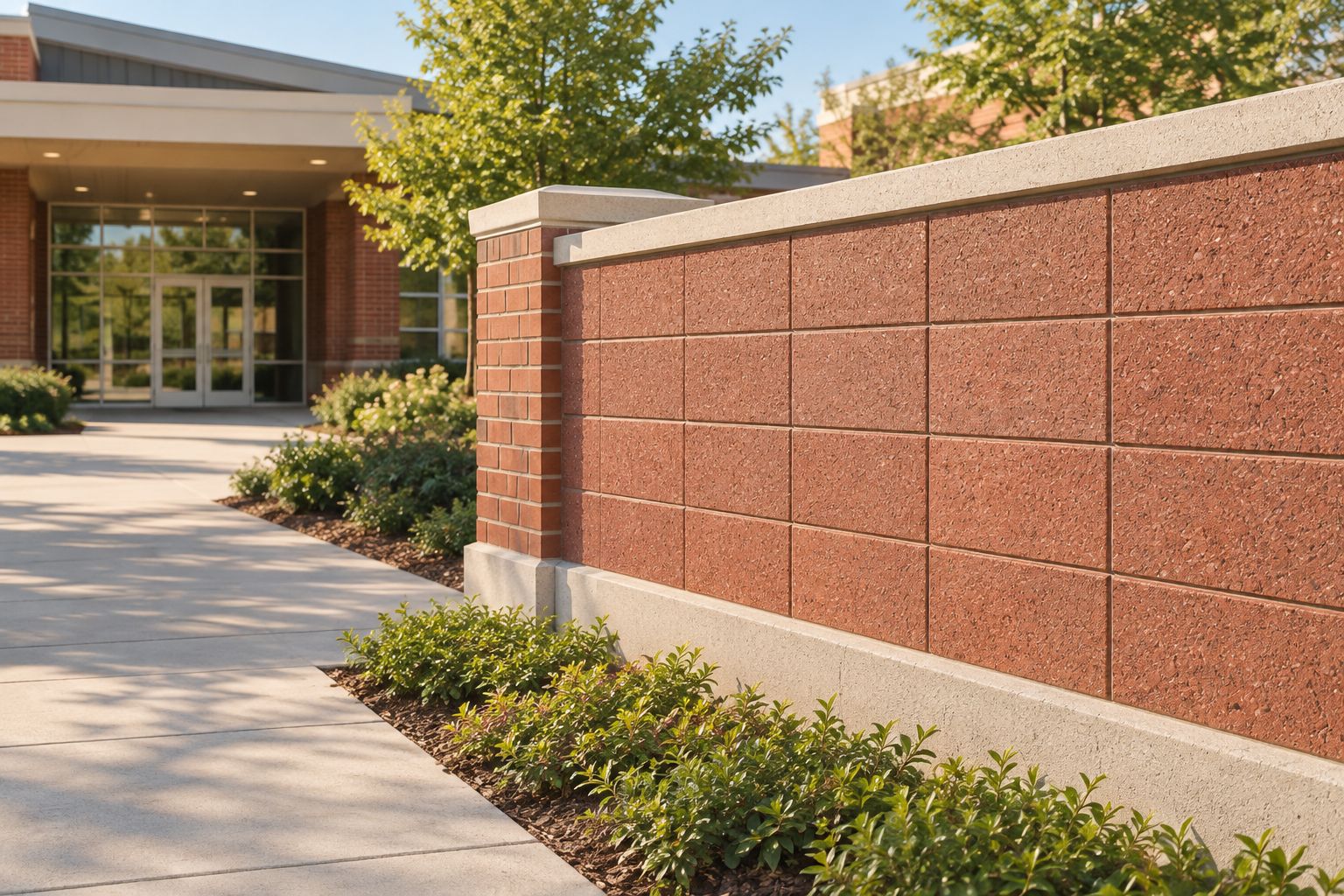
A sample brick helps you discuss a physical engraved object with your committee. It does not establish that a different tile, backing, or mounting system is appropriate for your wall. Keep those approvals explicit.
Move from a preferred design to an approved plan
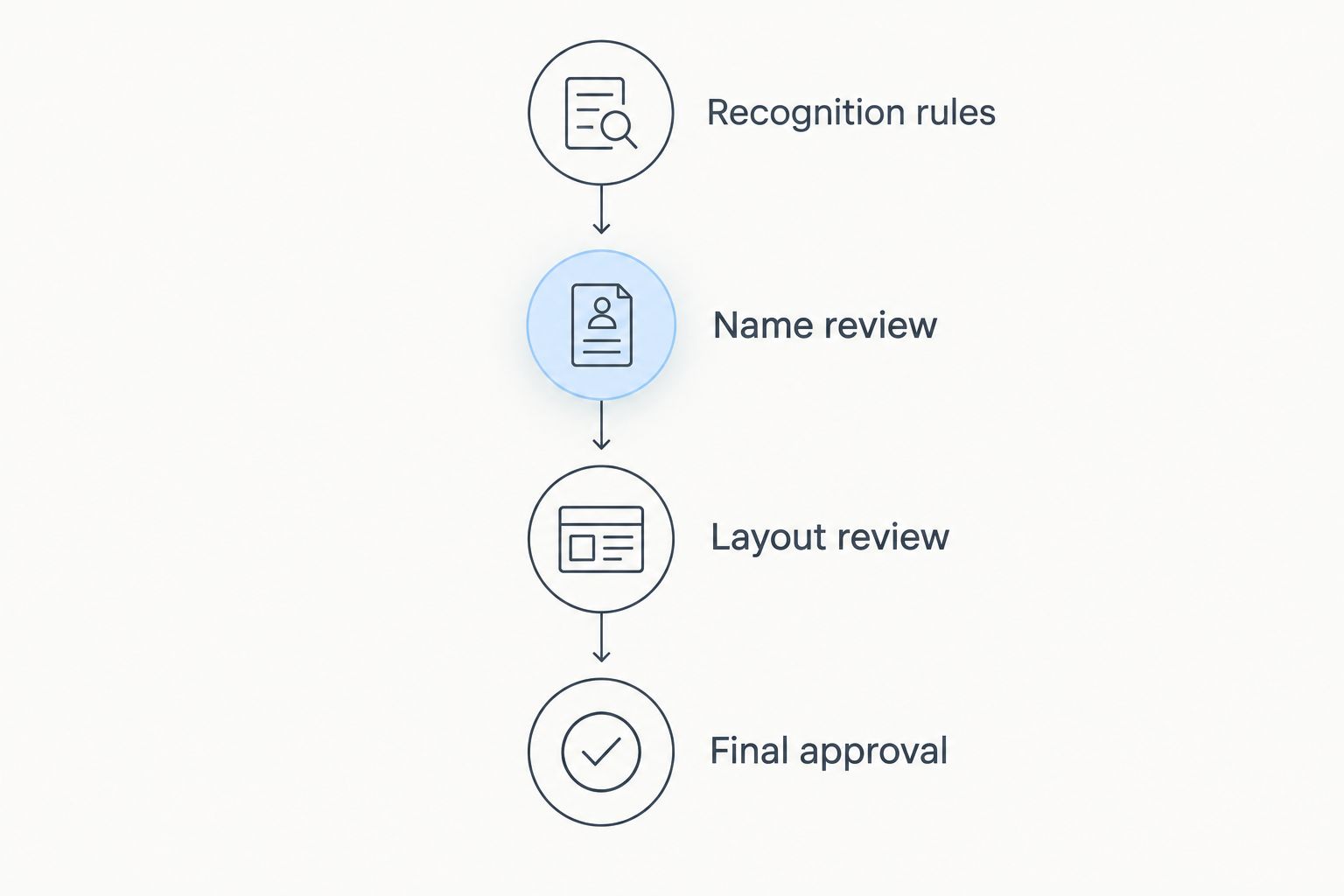
Use this sequence before requesting final production approval:
- Recognition rules: Write down who qualifies, how names are ordered, and how anonymous recognition works.
- Name review: Confirm spelling, punctuation, organizational names, and permission for personal details.
- Layout review: Check hierarchy, spacing, future additions, and placement within the complete wall.
- Final approval: Assign responsibility for authorizing the exact inscriptions and layout.
Prepare 2 proofs: one showing each inscription clearly and one showing the overall wall arrangement. These serve different purposes; an accurate name can still appear in the wrong section.
Assign 1 coordinator to maintain the approved record, even when several volunteers help. Before authorization, complete 3 checks: confirm the donor-approved wording, confirm its placement, and confirm the version being sent for production. Keep correction requests in that same record rather than scattered across messages.
Bricks R Us brings over 35 years of experience to fundraising and donor-recognition projects. Ask about free fundraising tools and hands-on support while discussing which parts of your approval and ordering process need help.
Start with a free sample brick
Request a free sample brick to help your committee discuss engraving appearance before finalizing its plan.
How these designs were ranked
The ranking prioritizes readable names, consistent recognition, manageable approvals, and a clear plan for additions. It compares design approaches, not tested products or supplier performance. A uniform grid ranks first because it provides a straightforward default; specialized layouts serve more specific recognition needs.
Which donor wall design should you choose?
Choose a uniform name grid unless your recognition rules require another structure. Move to modular sections for continuing additions, memorial panels for family-approved tributes, cohort panels for institutional affiliations, or sponsor panels for organizational acknowledgments.
For your 2026 plan, settle those rules before debating decorative details. A design that the next volunteer can explain and maintain is more useful than one that depends on undocumented committee decisions.
FAQ
What's the best design for engraved tiles for donor walls?
A uniform name grid is the best default when you want equal donor recognition. Choose a specialized layout when ongoing additions, memorial messages, affiliations, or sponsors require different rules.
Can we add donor names after the wall is installed?
Plan for additions before approving the wall. Modular sections provide a design structure for later names, but the supplier and installer must confirm how the physical system accommodates them.
Should a church donor wall include memorial messages?
Use a dedicated memorial section when remembrance needs different wording and consent rules. Confirm who can approve each tribute before collecting inscriptions.
How should schools organize donor recognition tiles?
Schools can group recognition by class or cohort when that affiliation helps visitors find names. Establish a placement rule for donors with multiple school connections.
Are business logos better than names on sponsor panels?
Text-only sponsor names provide a consistent format without a separate logo treatment. Use logos only after artwork permission and suitability for the proposed engraving are confirmed.
Does a sample brick confirm that a tile can be mounted on our wall?
No. A sample brick helps you assess a physical engraved example; wall suitability requires confirmation of the actual material, substrate, mounting method, and installation conditions.
What should our committee approve before ordering?
Approve the exact inscriptions and the overall layout before authorizing production. Keep donor consent, placement decisions, and the final approved version in one controlled record.
One last thing
Test the recognition form with your most awkward inscription, not your shortest name. Try a long family name, an organizational name, and a donor who requests anonymity. If the rules handle all three clearly, your committee has a stronger foundation for reviewing the rest.